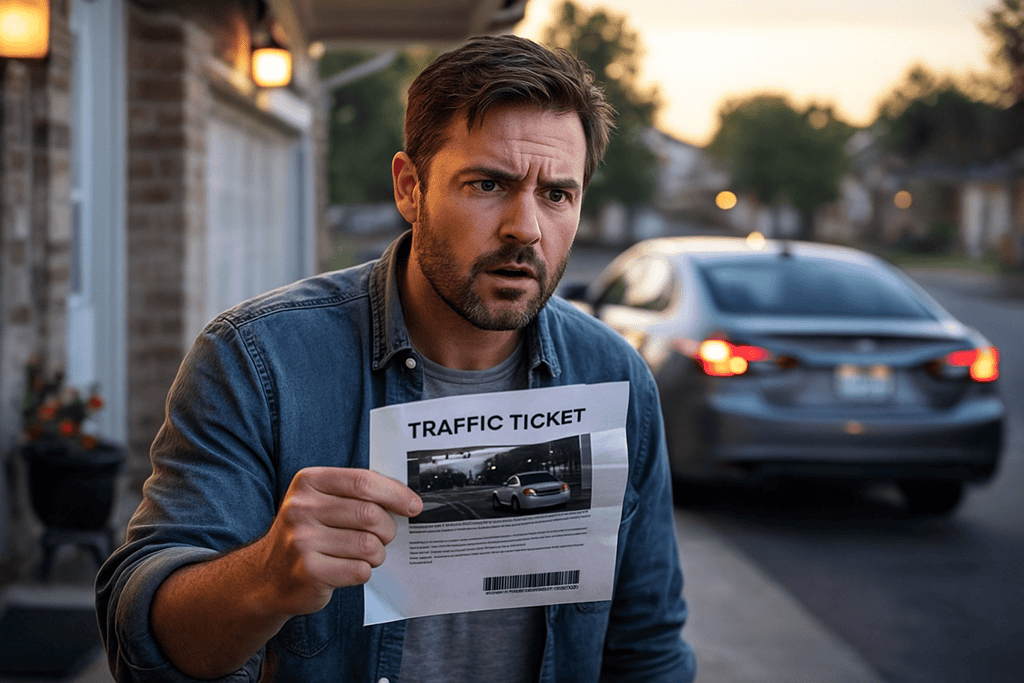
When Enforcement Turns Into an Ambush
There’s nothing quite like the sinking feeling of walking through your front door after a long drive… only to find a fresh traffic ticket already waiting for you. Not a warning. Not a courtesy notice. A fine—cold, impersonal, and timestamped before you even pulled into the driveway.
At that moment, the illusion shatters. This is no longer about safety. This is a revenue machine—and you’ve just been processed through it.
Across cities and suburbs, automated enforcement is accelerating, morphing from a tool intended to curb reckless driving into a taxation pipeline with penalties steeper than anything the tax man could have dreamed up. These aren’t corrective measures anymore. They’re invoices.
The Shift From Public Safety To Public Shake-Down
We used to think of traffic enforcement as something tethered to human judgment—an officer observing, assessing, deciding. Even when imperfect, that process carried nuance. A warning here. A teaching moment there.
But AI-enhanced cameras don’t do nuance.
- They do detection.
- They do automation.
- They do volume.
If a single intersection camera can issue thousands of citations per day—accurately, instantly, relentlessly—then why wouldn’t a revenue-hungry municipality crank the dial as high as it can go?
And many have.
It’s become nearly impossible to drive even a routine route without brushing against some obscure infraction. Tailgating by a foot. Drifting a few inches over a line. Touching 6 mph over the limit for 2 seconds on a downhill stretch. Misreading a parking sign written like a legal contract.
We’re not talking about drag racers and stunt drivers here. We’re talking about ordinary people trying to get from point A to point B without triggering a financial trap.
Confiscatory Fines Are The New Stealth Tax
Let’s be honest: these fines aren’t about discouraging bad behavior; they’re about capturing revenue.
If government officials wanted to correct behavior, the penalties would be reasonable, consistent, and aligned with actual risk. Instead, fines have ballooned to levels that feel punitive, confiscatory, and utterly detached from the offense.
- A $200 speeding ticket for going 8 mph over in light traffic?
- A $350 red-light camera ticket for stopping two feet over the line?
- A $400 fee for interpreting a sign the way any ordinary human would?
These aren’t penalties. These are withdrawals, taken without consent, debate, or representation, and enforced by the threat of jail time.
Taxation via traffic enforcement isn’t voted on. It isn’t debated publicly. It isn’t capped. It just… appears. And it grows.
The Progressive Communist Democrat Pitch: “Fewer Police, More Cameras”
Some progressive municipalities openly admit it: automated enforcement is a way to reduce police presence on the streets.
- Fewer officers.
- More cameras.
- More algorithms.
- More systems are watching, recording, and generating fines that flow straight into government coffers.
It’s enforcement without accountability, safety without oversight, and policing without the police.
And who suffers most? Regular drivers who now need to navigate not just roads, but an ever-tightening web of regulations enforced by machines that never miss a thing.
Bottom Line: Driving Shouldn’t Feel Like Running A Gauntlet
We’ve reached a point where the average driver can hardly complete a single trip without technically violating something. Not intentionally, but because the rulebook has swollen beyond comprehension and the automated eye never blinks.
If your ticket arrives before you do, that’s not safety. That’s surveillance monetized. And, with the progressive communist democrats, it’s not a leap to imagine automatic payments deducted from your bank account or tacked on to your tax bill. I have even seen some companies exploring short-term, high-interest traffic ticket loans for driving under the influence.
And unless citizens push back, speak up. Demand limits. This cascade of automated fines will keep intensifying until the simple act of driving feels less like transportation and more like an ongoing extraction scheme.
We are so screwed.
— Steve