Today, the Brits, Once Again, Are Screwing Up the World
So today, to revive the hope of peace and a two-state solution, I state clearly as Prime Minister of this great country that the United Kingdom formally recognises the state of Palestine. We recognised the state of Israel more than 75 years ago as a homeland for the Jewish people.
Today, we join over 150 countries who recognise a Palestinian state also. I pledge to the Palestinian and Israeli people that there can be a better future. I know the strength of feeling that this conflict provokes.
In the face of the growing horror in the Middle East, we are acting to keep alive the possibility of peace and a two-state solution. That means a safe and secure Israel alongside a viable Palestinian state. At the moment, we have neither.
Ordinary people, Israeli and Palestinian, deserve to live in peace, to try to rebuild their lives free from violence and suffering. That’s what the British people desperately want to see.
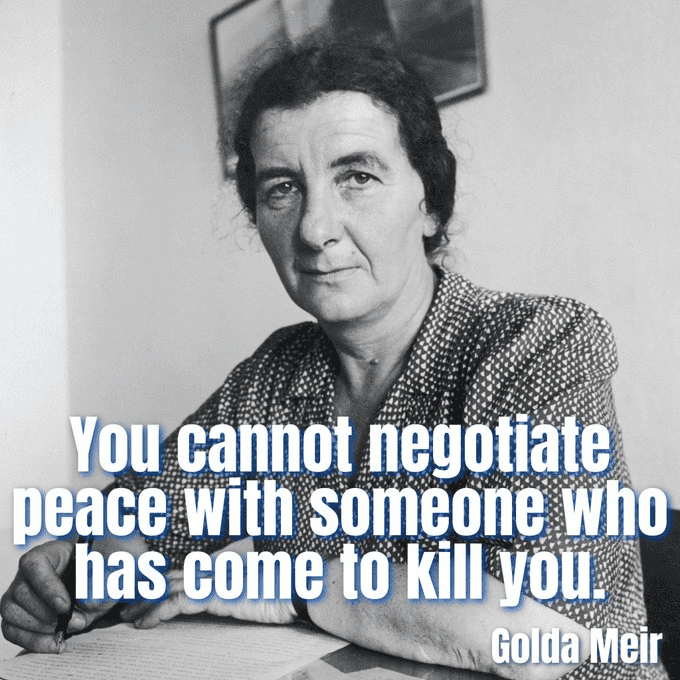
Our call for a genuine two-state solution is the exact opposite of their hateful vision. So we are clear, this solution is not a reward for Hamas because it means Hamas can have no future, no role in government, no role in security. We have already prescribed and sanctioned Hamas and we will go further.
The Modern Origins of Conflict
The Sykes-Picot Agreement (1916): As World War I drew to a close, Britain and France secretly negotiated this agreement to partition the Ottoman Empire’s territories. It largely ignored existing ethnic and religious boundaries and national aspirations. This arbitrary division laid the groundwork for modern states like Iraq, Syria, and Lebanon, often grouping disparate and competing populations under new, artificial borders, which resulted in conflicts.
Israel-Palestine
The Israeli-Palestinian conflict remains one of the most enduring and emotionally charged geopolitical disputes in the world. The proposed solution, two independent states living side-by-side in peace, has been the subject of decades of negotiation, yet it remains elusive. While the political and territorial complexities are well known, one often-overlooked challenge is religious, particularly rooted in Islamic doctrine and political ideology.
Unless Islamic theology is reformed and Islamic states recognize Israel’s right to exist and defend itself, a durable peace is unlikely.
1. Islamic Theology and the Rejection of Israel’s Legitimacy
A key religious obstacle to peace is the perception within much of the Islamic world that Israel is not a legitimate state but an occupier of sacred Muslim land. Traditional interpretations of Islam view Palestine, particularly Jerusalem, as Waqf, a land endowed to Islam forever. As a result, the very existence of a Jewish state in this territory is viewed as a theological affront.
In classical Islamic jurisprudence, lands under Muslim rule that are lost to non-Muslims become part of Dar al-Harb (the realm of war), necessitating their eventual return to Dar al-Islam (the realm of Islam). This deeply rooted framework makes recognizing Israel as a permanent, sovereign state extremely difficult without a profound shift in religious interpretation.
2. The Role of Islamist Movements and Extremist Ideology
Islamist movements such as Hamas, Hezbollah, and the Iranian regime have amplified this theological rejection into political and militant doctrine. These groups openly call for the destruction of Israel, using religious language to frame the conflict as a sacred struggle. Concepts like jihad and martyrdom are invoked not as spiritual paths but as military imperatives.
Their influence extends beyond armed conflict. Through religious education, propaganda, and media, they shape how millions of Muslims perceive Israel, not just as a political adversary, but as a religious enemy. As long as these ideologies remain dominant in the discourse, peace is not a viable option.
3. Reforming Islam: Can a Literal Faith Accommodate Modern Political Realities?
One of the most pressing theological questions is whether Islam can be reformed to accommodate peaceful coexistence with non-Muslim nations like Israel. The challenge lies in the nature of the Qur’an, which is believed by most Muslims to be the literal, unchangeable word of Allah.
While the Qur’an itself cannot be altered, Islamic law (Shari’a) and its interpretation (tafsīr) have continually evolved through a process known as ijtihād, which involves independent reasoning by scholars. Over centuries, this has allowed for contextual re-readings of scripture to address changing social, political, and technological realities.
In this context, reform is not about altering the Qur’an, but about reinterpreting key concepts such as:
- Jihad: Moving away from militant interpretations and toward nonviolent struggle and personal spiritual growth.
- Dar al-Islam vs. Dar al-Harb: Reframing this binary to allow for coexistence with sovereign non-Muslim states.
- Religious pluralism: Recognizing the legitimacy of other faiths and their right to statehood and security.
This type of reformation requires courage and leadership from within the Muslim world — particularly among scholars, imams, and policymakers.
4. The Role of Islamic States in Diplomatic Recognition
Beyond theology, Islamic states, particularly in the Arab world, have historically denied Israel’s legitimacy as a state. This has less to do with religion and more to do with pan-Arab nationalism, internal politics, and a fear of public backlash. However, this posture has begun to shift.
The Abraham Accords demonstrated that states like the UAE, Bahrain, and Morocco can recognize and cooperate with Israel while still supporting Palestinian rights. These agreements represent a pragmatic acknowledgment of the benefits of peace, including trade, innovation, security, and regional stability.
Still, powerful actors like Iran and Hezbollah remain committed to Israel’s destruction, using religious rhetoric as justification. Until more Islamic states break from this ideological stranglehold, peace negotiations will remain hostage to extremism.
5. Israel’s Right to Self-Defense Must Be Recognized
Any legitimate peace process must include the unqualified recognition of Israel’s right to defend itself. Israel faces ongoing threats from militant groups, state sponsors of terrorism, and missile attacks on its civilian population. It cannot be expected to enter a peace agreement without credible guarantees of its security.
The conversation around Palestinian rights must also include Israel’s rights, including the right to exist as a Jewish state, and to defend its borders and citizens from existential threats.
6. Israel as a Convenient Excuse: How Arab Regimes Use the Conflict to Mask Internal Failures
Another major, and often underdiscussed, factor is how Arab regimes have historically used Israel as a scapegoat to deflect attention from their own domestic failures. By positioning Israel as the ultimate enemy, these regimes redirect public anger away from:
- Authoritarianism and lack of political freedom
- Economic stagnation, unemployment, and inequality
- Corruption and nepotism
- Underfunded healthcare, education, and infrastructure
This diversionary strategy has enabled many regimes to evade accountability and suppress internal dissent. Instead of addressing the grievances of their own citizens, they channel frustration outward, toward Israel, Zionism, and the West.
Performative Solidarity with Palestine
Some states loudly proclaim their support for the Palestinian cause while doing little to actually help Palestinians.
This performative solidarity masks the fact that:
- Syria bombed Palestinian camps while claiming to defend them.
- Iran suppresses its own population while funding militias under the banner of “resistance.”
- Gulf states offer symbolic gestures but little meaningful aid.
The conflict becomes a political shield rather than a humanitarian concern.
The Price of Prolonged Blame
This blame game has real costs. It:
- Delays reforms critical to social and economic progress
- Justifies repressive security states and bloated military budgets
- Fuels radicalism among disillusioned youth
- Blocks diplomatic solutions that could benefit everyone in the region
Peace will remain elusive as long as blaming Israel is more politically useful than reforming broken systems.
Bottom Line: A Path Forward
The Israeli-Palestinian conflict will not be resolved solely through negotiations. It requires a fundamental shift in ideology, particularly within the Islamic world.
That means:
- Reforming Islamic theology to allow for peaceful coexistence with Israel
- Challenging extremist ideologies rooted in religious absolutism
- Holding Arab governments accountable for their own governance failures
- Recognizing Israel’s right to exist and defend itself
Islamic reform is possible, not by changing the core tenets of faith, but by reviving the tradition of thoughtful interpretation and adapting to modern realities.
Until these changes take place, a two-state solution will remain more of a political slogan than a practical path to peace.
We are so screwed.
— Steve