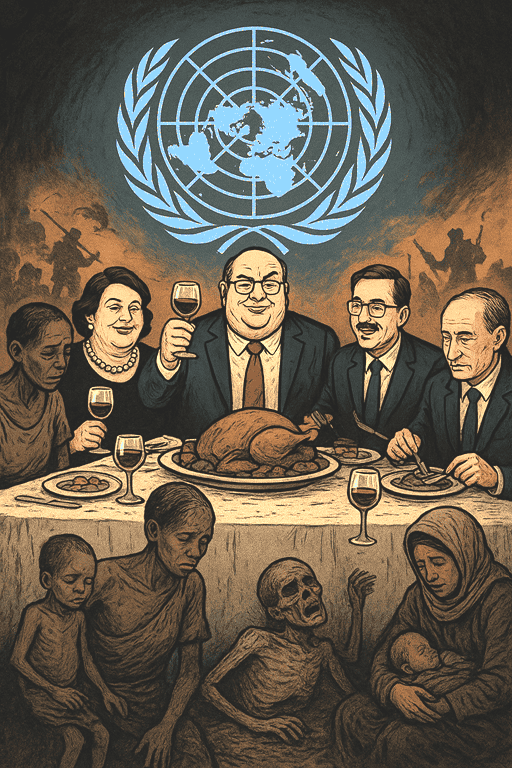
The Promise That Went Missing
The United Nations loves big vows. “Never again.” “Responsibility to protect.” “Eliminate genocide.” These phrases echo through polished halls and glossy reports. But when Christians are abducted from churches in Nigeria by the hundreds, when farmers are hunted off their land, when pastors are executed and communities erased, the silence is deafening. If this is what “never again” looks like, then the promise has collapsed under the weight of indifference.
Kidnapped In Plain Sight
In Nigeria, armed militants storm churches during worship and drag entire congregations into forests. This isn’t a rumor or propaganda. It’s a recurring tactic. Hundreds seized. Thousands killed. Millions displaced. And yet the international response is a shrug wrapped in diplomatic language. Meetings are held. Statements are issued. Meanwhile, the kidnappers calculate ransom totals and move on to the next village.
Africa’s Blood Discount
Why does mass violence in Africa get discounted as background noise? Why are death tolls treated like weather reports instead of emergencies? When atrocities erupt elsewhere, sanctions fly and cameras swarm. In Africa, the suffering is framed as “complex,” “historic,” or “tribal,” as if that excuses paralysis. Fragile governments are cited as obstacles, not as reasons for urgent protection of civilians.
Weapons Without Will
Foreign powers ship equipment and announce partnerships, hoping hardware will substitute for resolve. But weapons don’t dismantle a terror economy when denial and delay protect it. Airstrikes look decisive on paper, yet kidnappings continue on the ground. Militants adapt. Ransoms roll in. The cycle repeats. Without accountability, without consequences for officials who suppress the truth, violence becomes a business model.
The U.N.’s Selective Vision
Where is the U.N. Security Council emergency session that matches the scale of the crisis? Where are the peacekeeping mandates designed to protect targeted communities rather than to observe their destruction? Where is the special envoy who treats religious slaughter with the same urgency as border disputes? The absence isn’t accidental. It reflects priorities skewed toward optics over outcomes.
When Faith Becomes A Death Sentence
In parts of Nigeria, religious identity determines whether you live as a full citizen or a tolerated outsider. Entire regions operate under legal systems that punish conversion and marginalize minorities. This isn’t coexistence. It’s coercion. And when militants exploit that imbalance with guns and torches, the world debates terminology instead of deploying protection.
Terrorism That Pays
Kidnapping thrives because it works. Ransoms are negotiated. Profits are recycled. Communities are terrorized into silence. Each successful abduction teaches the next gang that the risk is low and the payoff is high. International actors know this. So does the U.N. Yet the response remains toothless, as if naming the problem is the same as stopping it.
Moral Outrage Without Muscle
Lawmakers call it a moral crisis. Advocates tally the dead. Analysts warn of expansion. All true. All insufficient. Genocide prevention without enforcement is theater. Protection without persistence is surrender. The world cannot keep pretending that concern equals action while graves multiply.
Bottom Line
If the U.N. still claims a mission to eliminate genocide, Africa is the test it is failing in real time. Silence has consequences. Delay has victims. And every ignored massacre teaches killers that the world will look away. This isn’t a failure of information. It’s a failure of will.
I am surprised that the U.N. hasn’t linked the kidnappings to a secret cabal involving Israel, as they are wont to do for everything bad that happens in the world.