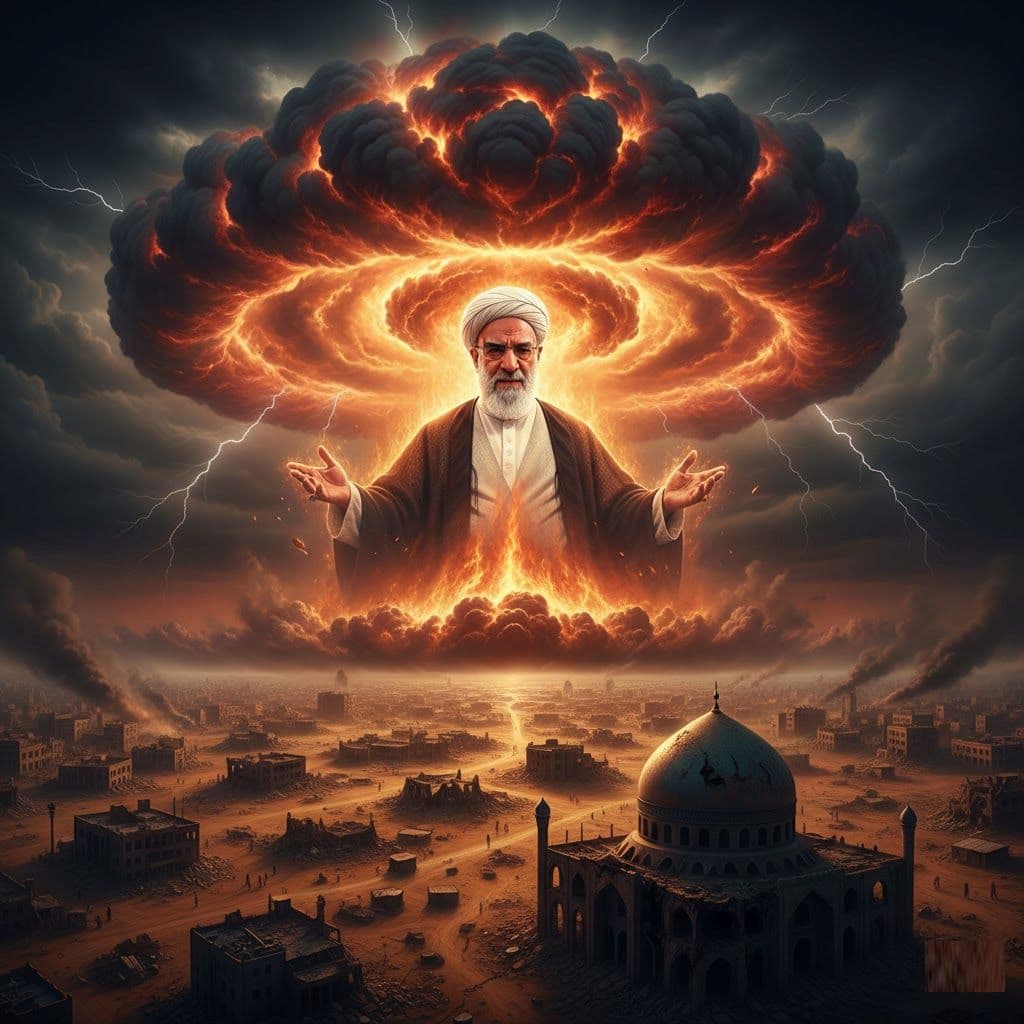
The Theater Of “Positive” Talks While The Clock Ticks.
We are told the latest round of US-Iran nuclear negotiations was “positive.” We are told there was “significant progress.” We are told technical teams will meet in Vienna. We are told flexibility is in the air.
And while we are being told bedtime stories, the centrifuges keep spinning.
According to recent reporting, Omani mediators described “creative and positive ideas” exchanged between Washington and Tehran. Iranian officials floated a new proposal promising “maximum possible flexibility” within their so-called red lines. The next round is scheduled in Vienna, framed as technical, deliberate, and careful.
Careful. That’s the word that should terrify you.
Because every day spent parsing diplomatic adjectives is another day in which enriched uranium sits in storage — or worse, moves quietly somewhere else.
Negotiating With A Regime That Lies As A Strategy
Let’s drop the euphemisms. The regime in Tehran has a four-decade record of deception, hostage-taking, proxy warfare, ballistic missile expansion, and regional destabilization. It chants “Death to America” in its parliament and then sends diplomats to smile for the cameras.
And we’re shocked — shocked — that “zero enrichment” is suddenly controversial?
Iranian media says talks paused over US demands that all 60% enriched uranium be handed over. Of course they did. Why would a regime so close to weapons-grade material willingly surrender its leverage?
The more alarming question is this: while diplomats debate enrichment levels, what prevents a malign third party — North Korea, Pakistan, or another willing proliferator — from quietly assisting in processing material into a demonstration device?
A single underground test with the right isotopic signature changes the strategic equation overnight.
“Why didn’t anybody say something?” people will ask afterward.
We are saying something. Right now.
The Illusion Of The Fatwa
Iranian officials continue to cite a religious decree from Supreme Leader Ayatollah Khamenei banning weapons of mass destruction. That talking point is rolled out every negotiation cycle like a sacred shield against scrutiny.
But fatwas are not arms control treaties. They are political tools.
This same leadership claims its missile program is non-negotiable. It insists on retaining the fuel cycle. It demands sanctions relief upfront. It boasts it is prepared for both war and peace.
Prepared for war — while insisting it seeks peace.
We know who the enemy is. We know what they think. We hear what they say. We know how they act.
So what exactly are we discussing?
Our Forces Are In Place — So Why The Fan Dance?
The United States has deployed additional naval and air assets to the Middle East. Aircraft carriers. Fighter squadrons. Strategic capabilities unmatched by any regional adversary.
Nobody can match American military assets in the region. Nobody.
And yet we perform this careful choreography with a regime that openly prepares for “both options.”
This fan dance has gone on long enough. Each round of talks becomes a “last chance to avoid confrontation.” Each delay becomes a strategic gift to Tehran.
Isolationists warn against escalation. They call for patience. They sound eerily like the 1960s protestors who believed that wishful thinking could neutralize hostile ideologies.
History does not reward that naiveté.
The Demonstration Bomb Scenario No One Wants To Discuss
Here is the nightmare: Iran enriches just enough, transfers material through covert channels, and detonates a “peaceful” underground test device at an Iranian site. Not a deployable warhead — just a demonstration.
- A signal.
- A proof of capability.
- Suddenly, every red line becomes retroactive. Every warning becomes hollow. Every “technical meeting in Vienna” becomes a historical footnote.
- Deterrence flips. The Middle East recalibrates overnight. Allies panic. Adversaries celebrate.
- And Washington wonders how the breakthrough slipped through.
Last Chance Or Last Illusion?
Diplomatic sources frame this moment as pivotal — the final opportunity to avoid broader conflict. That may be true. But pivotal moments cut both ways.
A deal that leaves enrichment intact, sunsets restrictions, or relies on paper guarantees will not prevent a bomb. It will simply delay the headline.
The regime in Tehran understands leverage. It understands power. It understands deadlines.
The question is whether Washington does.
Bottom Line
Negotiations are only meaningful if both parties fear the consequences of failure. Tehran has shown it will stretch talks, test limits, and exploit hesitation. The United States has unmatched military strength in the region and clear intelligence about Iran’s intentions. At some point, endless dialogue becomes a strategic form of self-deception. Waiting for the “BIG BOOM” is not a policy — it is a gamble with catastrophic stakes.
I find it both ironic and idiotic that the United States sends two Jews to negotiate with a Jew-hating nation.
We are so screwed.
— Steve