The pitch was simple and seductive: discipline, professionalism, and a hard reset at an FBI that had lost public trust. When Kash Patel and Dan Bongino stepped forward to serve as Director and Deputy Director, it felt like a long-overdue reckoning. Pair that with Pam Bondi confirmed as Attorney General, and there was real hope that federal law enforcement might finally remember who it works for—and why.
One year into Trump’s second administration, that hope feels naïve.
Attorney General Pam Bondi: High Expectations, Rapid Disillusionment
The DOJ didn’t need slogans or personalities. It needed leadership. It needed adults who understood that law enforcement credibility is earned quietly, through restraint, competence, and independence. Instead, what we’ve seen is a slow-motion collapse of seriousness at the top.
Pam Bondi has not emerged as the nation’s chief law enforcement officer. She has emerged as something far smaller and far more damaging: a political enforcer whose primary qualification appears to be loyalty. An Attorney General is supposed to protect institutions from political pressure, not act as a megaphone for it. Bondi’s tenure has reinforced the worst fears of critics who warned that the Justice Department would become a weapon rather than a guardian of the law.
FBI Director Kash Patel: When Image Replaces Leadership
Kash Patel’s transformation has been even more disappointing. The man who promised discipline now seems addicted to appearances. Media hits, soundbites, and personal brand-building have replaced the unglamorous work of managing a sprawling, fragile institution. The FBI Director should be nearly invisible to the public—measured, cautious, and relentlessly focused on internal integrity.
Instead, Patel has behaved more like a pundit than a steward. When leadership becomes performance, morale collapses. When internal reform takes a back seat to external validation, professionalism erodes. The FBI does not need a celebrity at the helm. It needs a leader who understands that silence, not spectacle, is often the mark of strength.
The Loss Of Dan Bongino As Deputy FBI Director
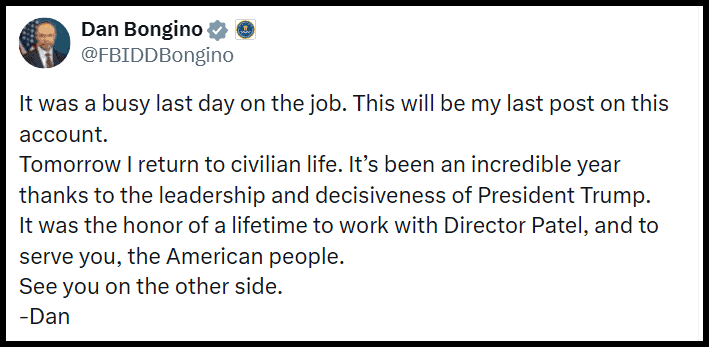
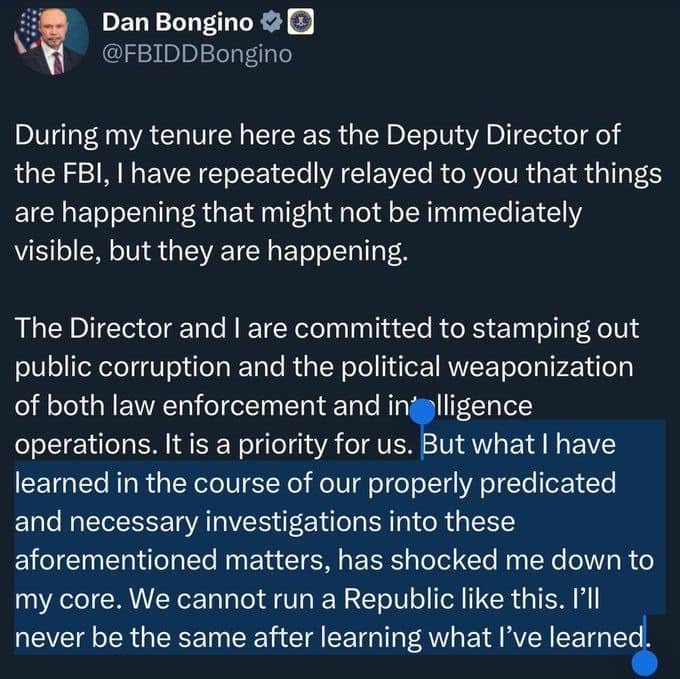
Dan Bongino’s resignation is the clearest signal yet that this experiment is failing. Whether crushed by bureaucratic resistance, worn down by internal politics, or pulled away by personal priorities, his departure leaves a vacuum that matters. Bongino brought energy, conviction, and an outsider’s urgency. His inability—or unwillingness—to keep fighting speaks volumes about the institutional headwinds inside the Bureau.
When reformers leave early, it’s rarely because the job is done. It’s because the system won.
Andrew Bailey: An Unprecedented Appointment, An Uncertain Future
Now comes the unprecedented appointment of former Missouri Attorney General Andrew Bailey as co–Deputy Director, now effectively the remaining Deputy Director. This is uncharted territory, and optimism should be cautious at best. Bailey inherits an agency battered by public distrust, internal cynicism, and leadership whiplash.
Titles alone will not fix this. Structural rot cannot be cured by rearranging the org chart. Without a clear commitment to depoliticization, internal accountability, and professional restraint, this appointment risks becoming another footnote in a growing list of missed opportunities.
What Now?
What is the question everyone inside and outside the FBI is asking now? The answer is uncomfortable: either the administration recommits to real reform, or it accepts responsibility for accelerating institutional decline. Law enforcement cannot function as a loyalty club. Justice cannot survive as a branding exercise.
The FBI needs leaders who are boring, disciplined, and relentless about process. It requires an Attorney General who understands that restraint is power. And it needs a White House willing to tolerate independence, even when it’s inconvenient.
Bottom Line
This was supposed to be a course correction. Instead, it feels like another chapter in the politicization of institutions that once demanded respect by refusing to seek it. If this is the future of federal law enforcement, the damage won’t be measured in headlines—but in trust that may not come back.
We are so screwed.
— Steve