The World Whiffed—And Hamas Filled The Vacuum
Let’s stop pretending this is complicated. The world whiffed. Europe whiffed. The U.S. whiffed. The so-called “international community” practically pulled a groin muscle avoiding eye contact with the truth: Hamas never lost control, not for one hour.
Everyone acted like disarming Hamas was a checkbox on a clipboard instead of a brick wall; they had no plan to break through. Two months of diplomatic throat-clearing later, not a single Hamas fighter laid down a weapon. Why would they? They know the West’s playbook by heart: delay, euphemism, and wishful thinking. Meanwhile, Hamas keeps running Gaza like a mafia state with a PR department.
And now Hamas officials dare to dictate terms to international stabilization forces: stay by the border, don’t enter our cities, and by the way, we won’t guarantee your safety. Translation: We’re still in charge, and we dare you to say otherwise.
The world blinked. Hamas didn’t.
The NGO Shell Game: How Hamas Outsmarted Everyone
While global leaders pontificate about humanitarian pathways and “post-conflict frameworks,” Hamas has been running a shadow government with a network of NGO “guarantors” acting as its loyal handlers.
Documents show that Hamas doesn’t just cooperate with international organizations, it infiltrates them. Requires them to staff Hamas-approved loyalists. Embeds operatives as “administrative directors.” Punishes NGOs whose employees are the wrong ethnicity. Uses aid work as political leverage.
This isn’t a conspiracy theory. It’s paperwork.
The world keeps pretending NGOs run freely in Gaza. They don’t. They operate under Hamas consent, Hamas surveillance, and Hamas leverage. And if the West goes back to the same “aid partnership” structure it used before, it’s not nation-building for the people of Gaza. It’s nation-building for Hamas.
The Real Conflict No One Wants To Touch
Here’s where everyone suddenly gets squeamish.
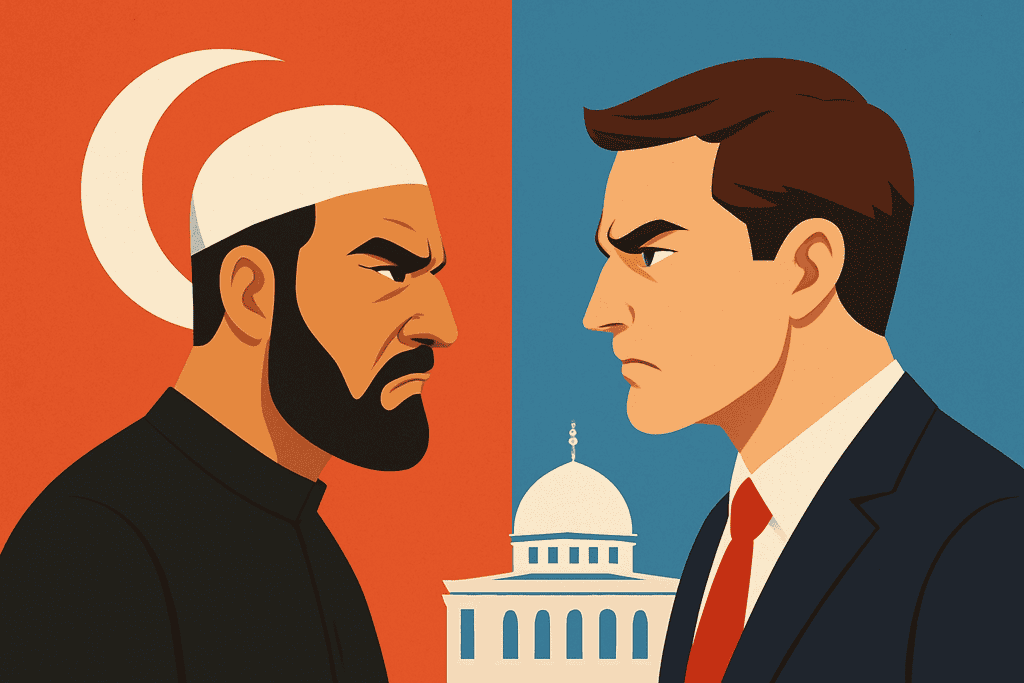
The conflict isn’t only about land, borders, or cease-fires. It’s a collision of worldviews—cultures, identities, political power, and fundamentally incompatible visions of society.
One side prioritizes liberal democracy, individual rights, open expression, and secular governance. The other elevates religious authority above civil authority, sees dissent as treason, and views compromise as moral weakness.
We keep acting like this is just a negotiation problem, like someone misplaced the correct map, and once it’s found, everyone will hold hands and get back to business. But the deeper struggle is ideological. Cultural. Civilizational. And no diplomatic whiteboard is big enough to hide that.
Western leaders whisper this privately, then flee from it publicly, terrified of being accused of bigotry for acknowledging a reality: this is a conflict between fundamentally different systems of belief and governance.
The Fire We Pretend Isn’t Burning
When people tiptoe around the ideological component, they make the eventual explosion worse. If you refuse to identify the core of the conflict, you can’t contain it, and history has a bleak sense of humor when it comes to unresolved cultural wars.
If the world keeps pretending Hamas is just a “local political faction,” if it continues feeding a system where militant control masquerades as civil society, if it keeps refusing to confront ideological incompatibility, then yes, this conflict is going to metastasize.
- Possibly into something nuclear.
- Possibly into something regional that becomes global.
- Possibly into the kind of cultural war people will study centuries from now, if they’re lucky enough to have a world left to study it in.
Bottom Line: Hatred Has Consequences
Hamas’s obsessive hatred of Israel didn’t liberate Gaza. It didn’t build infrastructure. It didn’t improve life. It led the region into deeper chaos, destabilized neighbors, and invited a level of retaliation and geopolitical escalation that Hamas never fully understood.
But the world’s refusal to confront underlying ideological tensions helped create this mess.
- Hatred has consequences.
- Naïveté has consequences.
Denial has consequences.
And unless global leaders stop blinking, stop dodging, and stop hiding behind jargon, those consequences are going to hit harder—and bloodier—than we’re prepared to handle.
We are so screwed.
— Steve