The Madness of Mandatory Gratitude
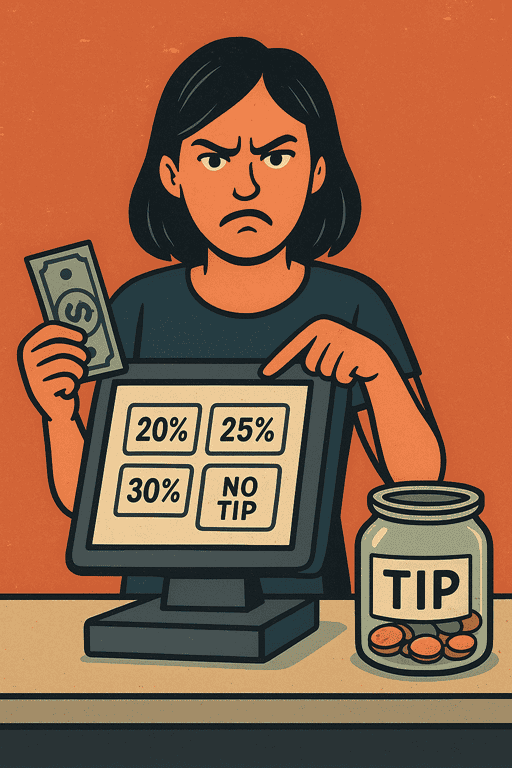
It started with baristas and waiters, fair enough. A few bucks for friendly service and a smile. But now? We’re being asked to tip for everything short of breathing. Ordering a sandwich at a chain restaurant like Subway? “Would you like to leave a tip?” Buying a bottle of water at the airport? “Add 20%?” The screen flashes, the cashier looks expectant, and you’re suddenly the villain if you press “No tip.”
Tipping has metastasized into a moral test, a digital guilt trip disguised as generosity. It’s not about rewarding good service anymore. It’s about feeding an ever-expanding culture of entitlement.
When “Doing Your Job” Became Tip-Worthy
Let’s be clear: tips were meant to recognize exceptional service. But lately, just showing up seems to qualify as “above and beyond.” We’ve all seen it, the tip jar sitting proudly next to the register at a sandwich shop where the cashier barely makes eye contact, or the iPad spinning around after a five-second transaction.
This isn’t gratitude. It’s pressure. And the worst part? It’s hollow. The money rarely goes to the people who actually earn it, especially in corporate chains where tips vanish into some mysterious “pooled system.” Workers are frustrated, customers are resentful, and the corporations laugh all the way to the bank.
The Digital Shake-Down
The tip screen is the new shakedown artist. It’s not a friendly ask; it’s a psychological ambush. The default options — 20%, 25%, sometimes even 30% — loom like judgment. The “No Tip” button sits there like a trap, daring you to prove you’re heartless.
Technology was supposed to make transactions faster and simpler. Instead, it’s turned every purchase into a social minefield. Even self-checkout kiosks are now prompting for tips — who exactly are we tipping, the robot?
The Corporate Cop-Out
Here’s the real outrage: tipping has become a way for companies to dodge responsibility. Instead of paying fair wages, they shift the moral burden to customers. They underpay employees, then expect us to make up the difference, and somehow we’re the bad guys if we refuse.
It’s a brilliant scam dressed up as kindness. The tip jar at a fast-food counter isn’t a symbol of appreciation, it’s a symptom of a broken system.
Bottom Line: Time to Say “No”
We need to stop apologizing for expecting people, and companies, to do their jobs for the wages they’re paid. Good service deserves recognition, yes. But existing in the workplace is not a tip-worthy event.
Until we collectively draw the line, the “tip culture” cancer will keep spreading, from coffee counters to dry cleaners, from delivery apps to doctor’s offices. And every time we quietly add 20% out of guilt, we’re just fueling the fire.
So next time that screen flips around, ask yourself: who am I really tipping, the worker, or the system exploiting both of us?
We are being screwed.
— Steve