Justice Denied?
If you are like me, you were taught that the U.S. Supreme Court is the “court of last resort” and the final step in protecting one’s constitutional rights. Additionally, we were taught that Supreme Court Justices were given lifetime appointments to ensure their independence and insulate them from political pressures.
Of course, if you consider the past decade of rulings, you can clearly see that the court is more interested in preserving its reputation in the media, and some justices are more interested in ideology and their reputation in their Washington, D.C. social circle.
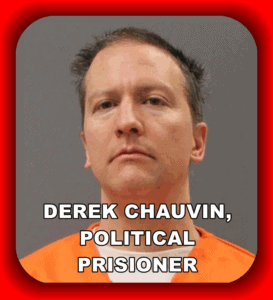
Therefore, I am concerned about the dismal prospects of justice for former Minnesota police officer Derek Chauvin, who did not get a fair trial in the death of George Floyd, a drug-addled felon with pre-existing medical conditions, with lethal consequences when he resisted arrest.
The initial request for review by the Supreme Court will fall to Associate Justice Brett M. Kavanaugh, who covers the Eighth Circuit.
Minnesota Fails
The Minnesota State Supreme Court clearly shirked its duty to review the Chauvin matter in light of prosecutorial misconduct, a biased judge, a false media narrative, and general circumstances that led to a lynch mob rather than a reasoned resolution of the case.
I am not saying that Chauvin is not guilty of using some degree of excessive force, but I believe the charges do not rise to the level of unintentional second-degree murder, third-degree murder, and second-degree manslaughter.
Consider The Following
-
Media Attention and Prejudicial Publicity: The trial received extensive media coverage, and the widespread dissemination of information and opinions about the case influenced the jury pool. The defense team argued that the extensive media coverage could make it challenging to find an impartial jury. The City inappropriately settled the complaint by the subject’s family for $27,000,000 in the middle of jury selection, sending a presumptive indication of guilt. The City was more interested in stopping a riot without resorting to additional force than in ensuring a fair trial.
-
Change of Venue Request: The Judge denied a reasonable change-of-venue request because the trial was held in an area besieged by rioters.
-
Jury Selection: There were problems with jury selection and indications of juror misconduct. Jurors were not sequestered and were transported daily through a riot zone. There were legitimate concerns about the post-trial safety of jurors if they did not convict Chauvin.
-
Police Training and Procedures: It appears that Chauvin’s actions were in line with the Minneapolis Police Department’s training and procedures, even though a politicized police department appeared more than willing to throw Chauvin under the bus. The court improperly excluded evidence of police training materials.
-
Use of Force: The actual force used to restrain the subject did not comport with its portrayal by community activists and others. There was no evidence of asphyxiation.
-
Judicial Impropriety: The Judge was clearly biased, improperly excluded testimony and evidence, failed to maintain a complete trial record, and failed to follow several standard procedures.
Some of the Questions Raised in the Appellate Brief
- Whether the venue should have been changed, the jury fully sequestered, or the trial delayed due to pretrial publicity and riots?
- Can a police officer be charged with felony-murder with assault as the predicate offense?
- Is allowing seven witnesses to testify on the reasonable use of force cumulative evidence justifying a reversal?
- Does prosecutorial misconduct justify a reversal?
- Does not allowing Chauvin to present a complete defense justify a reversal?
- Whether failure to record sidebars resulted in a violation of the fair trial right.
- Was the upward departure in the sentence justified?
Bottom Line
Chauvin was effectively lynched by community activists, a corrupt headline-seeking media, a city looking for a fast conviction, and a manifestly incompetent judge.
At the very least, a new trial for Chauvin should be ordered. However, considering the inappropriate elevation of thug George Floyd, a drug-addled felon, to an iconic civil rights hero by the media, there are extensive political issues to be overcome.
Is it any wonder that good and decent men and women are avoiding law enforcement as a profession – where a slit-second mistake can be politicized by the media and politicians into a life-altering event that can see you jailed, bankrupted, and your family destroyed?
We are so screwed.
— Steve