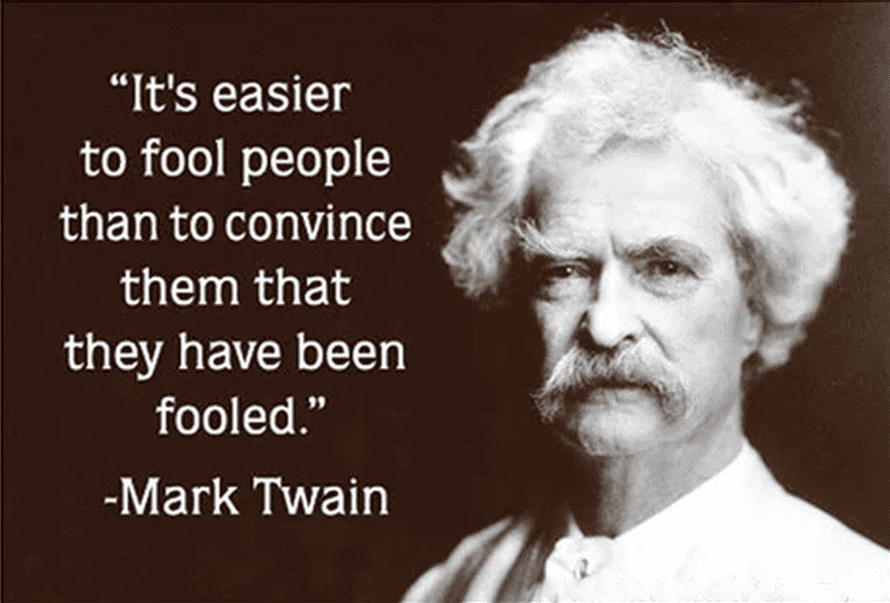
The Comfort Of Belief Over Reality
We all like to think we’re sharp, that we can spot a lie a mile away. Yet, Twain’s words cut to the bone: it’s far easier to trick someone than to convince them that their beliefs are built on lies. The human mind craves comfort. Admitting we’ve been duped requires humility, self-reflection, and the unbearable weight of responsibility. It’s no wonder so many cling to convenient falsehoods.
Media, Politics, And The Art Of Manipulation
Look around. From biased news cycles to social media echo chambers, deception is everywhere. Politicians exploit our desire to believe in narratives that make life seem simpler or more righteous. Marketers sell illusions of happiness, success, and self-worth. Once someone buys into these stories, challenging them feels like an attack. This is why exposing the truth is often met with denial, hostility, or outright rage.
Cognitive Biases Make Fooling Us Easy
We are wired to deceive ourselves. Confirmation bias ensures we notice facts that align with our beliefs and ignore those that don’t. The Dunning-Kruger effect gives the unqualified an overconfidence in their understanding. Add tribalism, fear, and pride into the mix, and you get a recipe for mass deception. The shocking part? Recognizing a lie is just the first step—the real struggle is convincing someone else to see it.
The Pain Of Realizing We’ve Been Fooled
Admitting deception is excruciating. Ego bruised, social identity threatened, worldview shaken—this is why people double down instead of surrendering to the truth. Twain’s observation isn’t just witty; it’s a warning. The longer someone remains convinced of a falsehood, the harder it becomes to pry reality into view.
Bottom Line
Mark Twain wasn’t exaggerating. Humanity’s stubborn attachment to illusion makes lies more powerful than facts. The real challenge isn’t spotting deception—it’s helping ourselves and others confront it without collapsing under the weight of our own misconceptions. Truth may be liberating, but it’s also hard, uncomfortable, and rarely welcomed.
We are so screwed,
— Steve
Top 10 Cognitive Biases That Trick Your Brain
Confirmation Bias – We favor information that supports what we already believe and ignore evidence that contradicts it.
Anchoring Bias – The first piece of information we receive shapes our decisions, even if it’s irrelevant or misleading.
Dunning-Kruger Effect – People with limited knowledge overestimate their competence, making them more prone to deception.
Availability Heuristic – We judge the likelihood of events based on how easily examples come to mind, often distorting reality.
Bandwagon Effect – We adopt beliefs because “everyone else” does, even without critical evaluation.
Hindsight Bias – We perceive events as more predictable after they happen, making past errors seem obvious and easy to misread.
Sunk Cost Fallacy – We stick with bad decisions or beliefs because we’ve already invested time, money, or effort.
Optimism Bias – We underestimate risks and overestimate positive outcomes, leaving us vulnerable to scams and false promises.
Self-Serving Bias – We attribute successes to ourselves and failures to external factors, clouding judgment and accountability.
In-Group Bias – We trust and favor information from people like us, sometimes at the cost of truth.