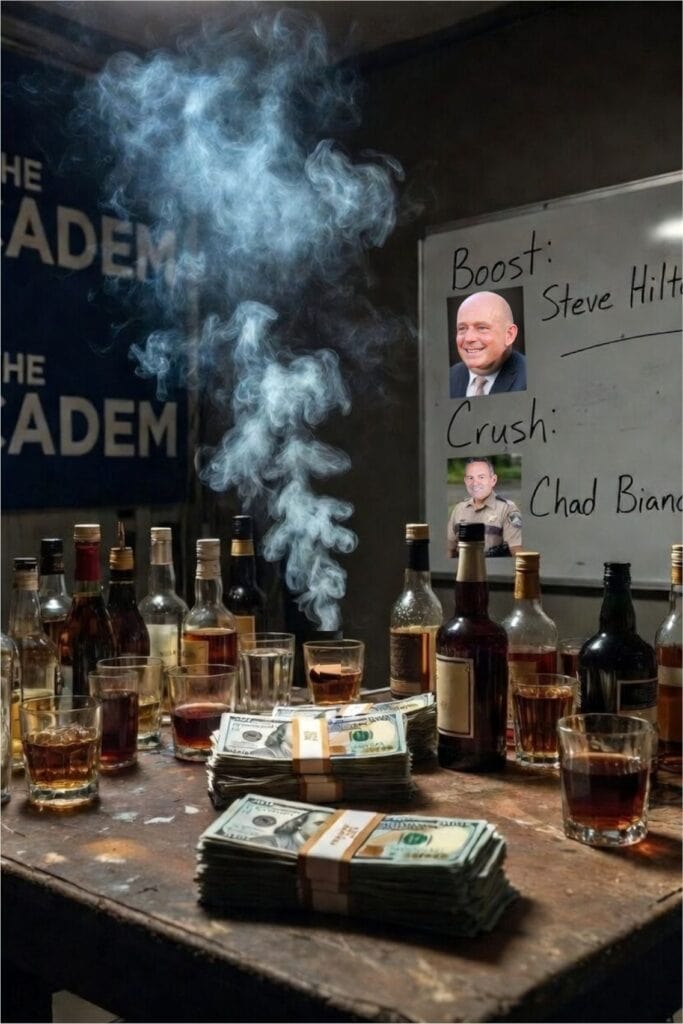
Something smells rotten in California politics, and it isn’t subtle anymore. Behind the scenes, insiders tied to the California Democratic Party appear to be carefully arranging the chessboard for the upcoming governor’s race — not by persuading voters, but by manipulating the field of candidates before voters even get a real choice.
If the reports and political whispers are accurate, party power brokers aren’t just supporting their preferred candidate. They’re actively engineering the outcome of the primary itself.
And the strategy is as cynical as it gets.
Clearing The Field Before Voters Even Show Up
California’s “top-two” primary system was supposed to empower voters. Instead, party strategists are treating it like a puzzle to solve.
The first step in the playbook appears to be simple: thin out the Democratic field.
Several non-competitive Democratic candidates are allegedly being nudged — or outright pressured — to drop out before the primary. The logic is brutally pragmatic. A crowded Democratic field risks splitting the vote, allowing two Republicans to sneak into the top two slots.
That nightmare scenario would lock Democrats out of the general election entirely.
Party leaders clearly view that possibility as unacceptable. So rather than letting the electorate sort it out naturally, insiders are reportedly pushing lesser candidates aside in order to concentrate Democratic votes behind a single front-runner.
It’s not a democracy. It’s pre-screening.
Choosing Your Opponent Before The Election
But the maneuvering doesn’t stop there.
According to the emerging strategy, some Democratic voters and operatives are quietly being encouraged to cross over and support the weaker Republican candidate in the primary.
Yes — you read that right.
Instead of simply defeating Republicans outright, the idea is to hand-pick the Republican opponent most likely to lose in November.
And in this case, that preferred opponent is reportedly Steve Hilton.
Hilton, a media personality and conservative commentator, may energize certain Republican voters. But Democratic strategists apparently believe he would be easier to defeat statewide than his GOP rivals.
So the plan — if insiders are to be believed — is simple: boost Hilton just enough to push him into second place.
That way, the general election becomes Strongest Democrat vs. Weakest Republican.
Mission accomplished.
Gaming The “Top Two” System
California’s top-two primary system allows the two highest vote-getters to advance regardless of party.
In theory, it encourages moderation and competition.
In practice, it has created an environment where parties can game the math.
Instead of campaigning solely on ideas, strategists obsess over vote distribution. If too many Democrats run, they cannibalize each other. If Republicans consolidate early, they could capture both general-election slots.
That’s the nightmare scenario Democratic leaders are desperately trying to avoid: a fractured Democratic plurality that produces two Republican finalists.
So instead of letting the process unfold organically, party operatives appear to be managing candidate exits, nudging alliances, and subtly influencing crossover votes.
It’s not illegal.
But it sure isn’t inspiring.
Voters Are Supposed To Choose — Not Party Reprobates
The most disturbing part of this strategy is what it says about political confidence.
If your candidate is truly strong, why the need for this level of manipulation?
Why pressure weaker Democrats to disappear?
Why quietly boost the opposition candidate you believe will be easiest to beat?
The answer is uncomfortable but obvious: modern political parties increasingly treat elections as risk-management exercises, not contests of ideas.
Voters become variables. Candidates become tools. And the primary becomes a controlled environment rather than an open competition.
Whether this strategy succeeds or backfires remains to be seen. Political engineering often works beautifully — until voters notice they’re being managed.
And when they do, the backlash can be brutal.
Bottom Line
If reports about the California Democratic Party strategy are accurate, the governor’s race is already being shaped long before ballots are cast. By shrinking the Democratic field and quietly boosting Steve Hilton as the preferred Republican opponent, party insiders appear determined to stage the most favorable general election possible. It’s clever politics — but it raises a troubling question: when parties start engineering outcomes this aggressively, are voters still choosing their leaders, or just ratifying decisions already made behind closed doors?
We are so screwed.
— Steve