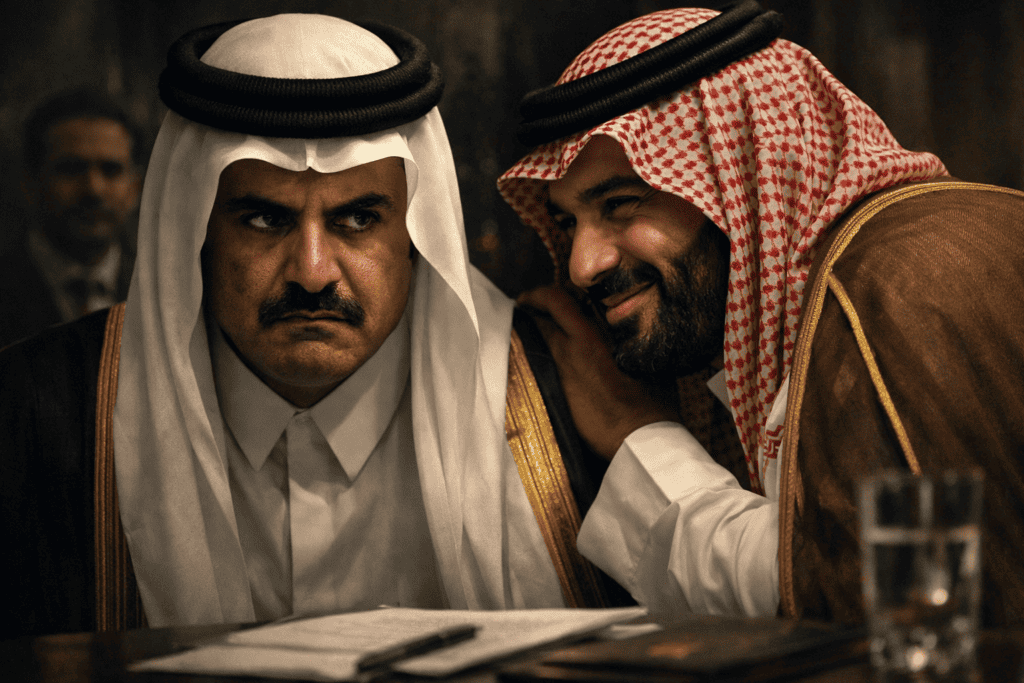
The Hidden Enemy In Plain Sight.
It’s time to wake up. The world isn’t divided neatly into allies and enemies, and nowhere is this more obvious than in the Gulf. For decades, Americans have been led to believe that Qatar and Saudi Arabia are steadfast partners. The reality? Both nations have agendas that run counter to U.S. interests, and our leaders keep pretending otherwise. Qatar, in particular, has been playing a dangerous double game—publicly smiling at Washington while quietly supporting the Iranian regime, a sect whose goals are apocalyptic and hostile to Western values.
Meanwhile, Saudi Arabia, despite its shiny PR campaigns and reformist rhetoric, has repeatedly shown that its priorities lie in self-preservation and regional dominance, not in supporting America. For years, we’ve funded, protected, and invested in these states, yet when the chips are down, we find ourselves paying the price for their duplicity. Enough is enough.
Qatar’s Deceptive Playbook
Qatar’s behavior isn’t subtle; it’s theatrical. From stopping liquefied natural gas production to creating artificial energy crises, Doha has made it clear that its first loyalty is to Tehran, not Washington. Every move they make—every leak, every fabrication, every broadcast on Al-Jazeera—is designed to manipulate public perception and tilt events in favor of Iran. They pretend to be allies in a war against Tehran while quietly advancing Iranian interests.
Even the supposed expulsions of Hamas leaders are hollow gestures. The Qatari government flaunts these announcements as proof of loyalty to the U.S. and Israel, but the reality is that Hamas still operates freely within their borders. Qatar’s actions reveal a consistent pattern: deception and self-interest disguised as diplomacy.
Saudi Arabia’s Compromised Agenda
Don’t be fooled by flashy announcements from Riyadh. Saudi Arabia may appear more cooperative, but their involvement in regional conflicts often aligns with its own power plays rather than genuine support for American objectives. Oil policies, strategic alliances, and covert communications with Iran have all at times contradicted U.S. interests. Pretending that Saudi Arabia is a reliable partner is not just naïve—it’s dangerous.
For too long, American policy has been caught between the rhetoric of these Gulf states and the reality on the ground. Leaders like President Trump recognized it: when Qatar and Saudi Arabia speak of de-escalation or “peace,” what they are often really saying is “keep Iran alive and strong.” These are not words of allies—they are words of hidden adversaries.
Media Complicity Makes It Worse
If it weren’t bad enough that these nations manipulate behind the scenes, mainstream media outlets amplify the deception. Journalists with ties to Qatari and Saudi interests push narratives that paint Tehran’s allies as innocent peacemakers while demonizing anyone who challenges the Gulf monarchy’s duplicity. Al-Jazeera broadcasts missile targets in real time, while networks like CNN inadvertently echo Qatari talking points. This isn’t reporting—it’s propaganda that jeopardizes American lives and interests.
Bottom Line
Qatar and Saudi Arabia are not our friends. Their actions, their alliances, and their media strategies reveal a consistent pattern of deception, manipulation, and self-interest. The U.S. must stop pretending otherwise. True allies act in concert with American interests, especially in times of crisis. These Gulf states act for themselves first and foremost—and history has shown us the consequences of ignoring that reality. It’s past time for Washington to treat Qatar and Saudi Arabia not as partners, but as what they really are: opportunistic nations whose loyalties lie elsewhere.
We are so screwed.
— Steve