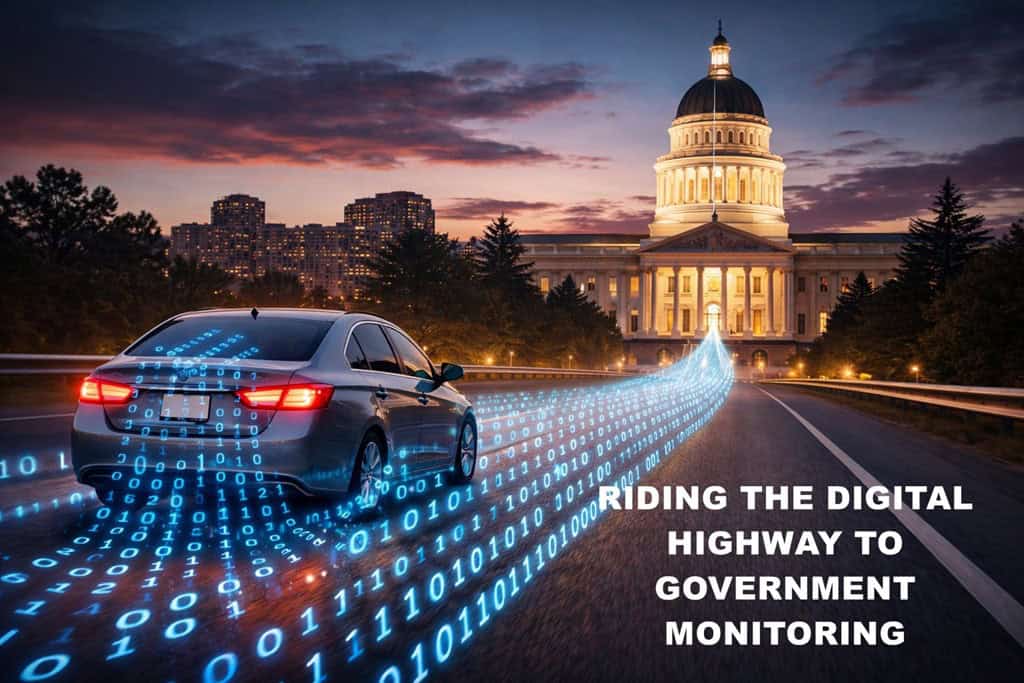
Mileage Fees Aren’t About Roads—They’re About Control.
We’re told “pay as you go” driving schemes are just a sensible replacement for the gas tax. Cleaner. Fairer. More modern. That sales pitch collapses the moment you scratch the surface. These programs aren’t simply about funding roads. They’re about discouraging driving, expanding state surveillance, and quietly redefining freedom of movement as a privilege to be rationed by bureaucrats.
Gas taxes are blunt, transparent, and voluntary in the only way taxes ever are: you drive, you pay at the pump. Mileage-based schemes are different. They require monitoring. Tracking. Data collection. And once that infrastructure exists, it won’t stop at counting miles.
From Revenue Replacement To Behavioral Engineering
States pushing mileage tracking are upfront about one thing: they want fewer car trips. The language is always sanitized—“net-zero goals,” “reasonable pathways,” “emissions reduction.” But the policy outcome is obvious. If you tax something per use, you aim to reduce its use. That’s not an accident; it’s the point.
What starts as a “replacement” for lost gas tax revenue quickly becomes a tool to reshape behavior. Drive less. Live closer. Stay local. Choose state-approved transportation options. The message isn’t subtle: personal vehicles are a problem, and you are expected to adapt.
Monitoring Mileage Means Monitoring People
You can’t implement pay-per-mile without knowing how much—and eventually where—you drive. Today, it’s odometer checks at inspections. Tomorrow it’s onboard devices, roadside sensors, apps, and automated reporting. Officials may promise anonymity now, but the incentives always point in one direction: more granular data.
Miles driven are not just numbers. They imply destinations, routines, work commutes, school runs, medical appointments, vacations, religious services, and family obligations. Once the state normalizes tracking movement for taxation, it becomes effortless to repurpose that data for enforcement, planning mandates, congestion pricing, or access restrictions.
Freedom Of Movement Becomes Conditional
Pay-as-you-go schemes hit hardest where public transit doesn’t exist or doesn’t work. Suburbs. Rural areas. Working families juggling jobs, childcare, and errands. People who don’t have the luxury of designing their lives around train schedules and bus routes dreamed up in affluent city offices.
For them, driving isn’t a lifestyle choice. It’s survival. Mileage taxes punish necessity and reward proximity to state-favored infrastructure. The further you are from urban cores, the more you pay. That’s not fairness. That’s enforced locality.
Electric Vehicles Are Just The Wedge
We’re told mileage fees are needed because electric vehicles don’t pay gas taxes. But EVs are merely the justification, not the endpoint. Once the framework is in place, every driver is pulled in. Gas, hybrid, electric—it doesn’t matter. The goal is universal participation in a system that measures, prices, and ultimately constrains movement.
And don’t be fooled by assurances that “no one is limiting choices.” When the state sets mileage reduction targets, tracks compliance, and builds financial penalties into daily life, choices become theoretical.
This Isn’t Innovation—It’s Central Planning On Wheels
The same politicians who claim mileage tracking “doesn’t impose taxes” also talk openly about revenue gaps, traffic reduction, and long-term driving cuts. That contradiction tells you everything. If it walks like a tax, bills like a tax, and requires surveillance like a control system, it’s not reform, it’s expansion.
Gas taxes fund roads. Mileage schemes manage people.
Even Worse
California is considering requiring monitoring software to be included in your car’s systems. Already, they have access to crash data, which can only be considered a violation of your Fifth Amendment right not to be compelled to testify against yourself. Insurance companies will be able to purchase this information. Along with information from in-car GPS systems, every route you take will be stored, evaluated, and used to exert further control.
Bottom Line
Pay-as-you-go driving doesn’t replace the gas tax; it replaces freedom of movement with permission-based travel. It’s not just about money, emissions, or infrastructure—it’s about monitoring where you go, discouraging how often you go, and conditioning citizens to accept that mobility must be approved, priced, and limited. Once that line is crossed, it won’t be uncrossed.
If you haven’t noticed, the progressive communist democrat asswipes in Sacramento have looted the fuel tax reserve for road maintenance, repair, and build-out to fund their mass transit fever dreams and illegal alien social welfare programs. And have converted roads that you paid for into “toll roads” to increase the pain.
We are so screwed.
— Steve