Hollywood Has Officially Lost It
Think Hollywood has limits? Ha. Think again.
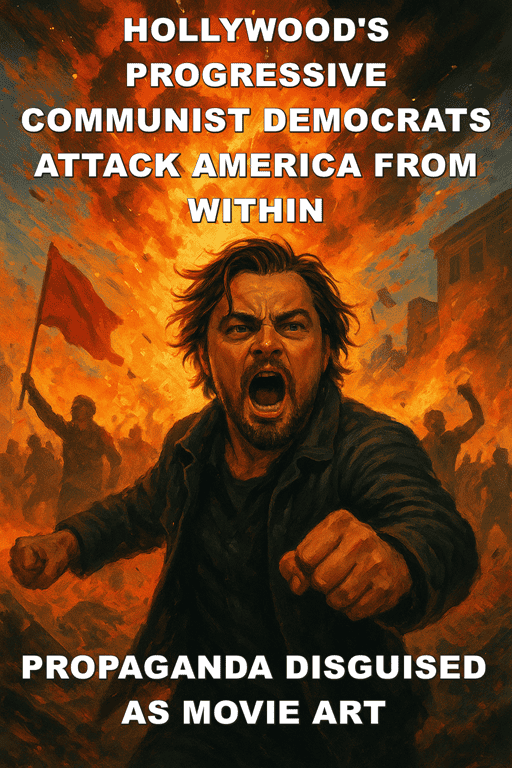
Paul Thomas Anderson’s One Battle After Another is nearly three hours of cinematic chaos with Leonardo DiCaprio scowling like the world personally offended him and progressive, communist Democrat politics shoved down your throat. Critics swoon. Conservatives scream. It’s not a movie. It’s an ideological grenade dressed in gold and Oscar buzz.
Glorifying Violence Like It’s High Art
From scene one: ICE raids, government agents mowing down civilians, “peaceful protests” rigged to explode in flames. DiCaprio’s revolutionary doesn’t just fight authority: he preaches murder as a moral imperative. Family? Optional. Friendship? Optional. Decency? Optional. Violence? Mandatory and heroic.
Ben Shapiro: “It’s an apologia for radical left-wing terrorism.” Translation: Hollywood has lost the plot, and apparently the moral compass too.
Terrible Timing (Or Just Plain Insane?)
Releasing this just after real attacks on conservative figures like Charlie Kirk isn’t bold—it’s reckless. David Marcus called it “ill-timed.” Understatement of the century. Hollywood portrays radicals as glamorous, intelligent, and orally untouchable. Meanwhile, reality isn’t a movie, and bullets don’t pause for Oscar season.
Plot? Who Needs One When You Have Ideology
The story isn’t there to entertain; it’s there to provoke. Nuance? Forget it. Villains are cartoons, heroes are flawless, and subtlety got left on the cutting room floor. Anderson’s opus is basically a sermon wrapped in a three-hour special-effects extravaganza.
Hollywood Stars: Actors Or Activists?
DiCaprio and Sean Penn didn’t just show up; they brought their progressive communist democrat politics with them (like a marching band of leftist messaging). Penn, carrying his family’s Marxist torch, doesn’t act; he preaches. When acting becomes advocacy, the movie stops being entertainment and starts being a political PSA.
Half The Country = Enemy #1
Watching DiCaprio yell “¡Viva la revolución!” while blowing stuff up isn’t thrilling—it’s a statement. Guns, borders, conservative beliefs? In Anderson’s world, that makes you a villain. Style, humor, and star power make chaos look fun. The message: obey the ideology—or face consequences.
Satire? Sure, If You’re Joking
Supporters say it’s satire. “It’s exaggerated!” Right. And saying “I only borrowed your car” is technically true. Exaggeration doesn’t cancel indoctrination. The New Republic admits audiences cheer rebellion without thinking. That’s the point, whether Anderson admits it or not.
Hollywood’s Left-Wing Message Machine
Writers, producers, financiers—they’re all in on it. This isn’t accidental. This is Hollywood’s elite using a blockbuster to mold minds. When the same clique controls the scripts, the money, and the awards, films stop reflecting culture—they dictate it.
Cultural Damage: Now Showing
Movies shape culture. With A-list stars, massive budgets, and awards hype, Anderson’s film doesn’t tell a story—it normalizes rebellion and mocks restraint. Burning institutions? Heroic. Defending tradition? Weak. This isn’t art, it’s a blueprint for moral chaos, wrapped in cinematic polish.
Art Or Ideology? Hint: It’s Ideology
One Battle After Another isn’t art. It’s a manifesto. Penn’s Marxist pedigree, DiCaprio’s moral grandstanding, Anderson’s smug direction—it’s a one-two punch of political propaganda. Conservatives call it the “year’s most irresponsible movie.” And they’re right. When destruction is glamorous and chaos is cool, outrage isn’t exaggeration—it’s sanity.
Bottom Line: Hollywood Goes Full Commie
Paul Thomas Anderson may have delivered a visual spectacle. But he’s also handed audiences a provocation. Challenging ideas? Fine. Endorsing chaos? That’s precisely what this movie does. Hollywood’s progressive elite aren’t just “doing the work.” They’re doing the damage: dangerous, expensive, and explosive.
We are so screwed.
— Steve
— Steve