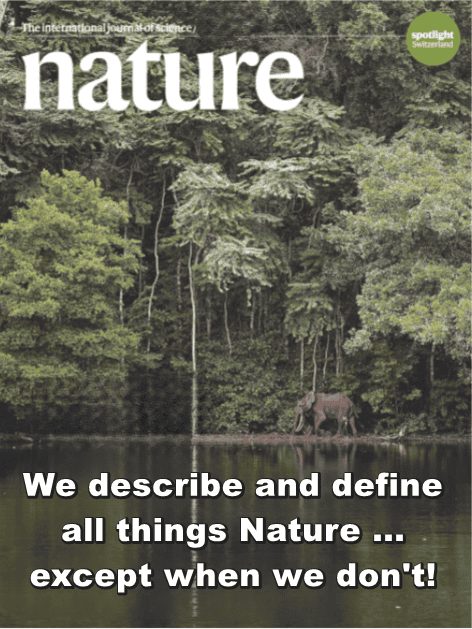
When Prestige Journals Stop Pretending To Check Facts.
Imagine this: a study claims climate change will obliterate the global economy by 62% by 2100 and cost $38 trillion per year by 2049. Naturally, it lands in Nature, the journal that once made “peer review” sound like a sacred ritual. Headlines explode, politicians cite the numbers, activists wave them like holy scripts, and suddenly everyone’s convinced the world is a few heatwaves from total ruin.
And yet… a tiny blip in Uzbekistan’s 1995–1999 economic data was enough to topple the entire study. Yes, you read that right. One country, one data set, and—poof!—the cataclysmic projections collapse like a house of cards.
Uzbekistan Kills $38 Trillion. Seriously.
Let’s get this straight: Nature’s editors and supposedly “knowledgeable” peer reviewers didn’t notice that the study’s numbers were built on shaky foundations. Spatial autocorrelation? Ignored. Data inconsistencies in Uzbekistan? Ignored. Uncertainty ranges? Underestimated. The result? A headline-grabbing apocalypse forecast that falls apart when real scrutiny is applied.
Post-publication, the authors had to correct the Uzbekistan data, adjust for higher-order trends, and account for spatial dependencies. Suddenly, the certainty drops, the doom factor diminishes, and the sky isn’t exactly falling anymore. Nature’s “prestigious” stamp? Tarnished. The paper? Retracted.
Peer Review Or Peer Complacency?
Here’s the uncomfortable truth: peer review failed spectacularly. And the editors? Apparently asleep at the wheel. How do you let a study with such massive policy implications slip through? Conformity bias is a likely suspect. Nobody wants to challenge a paper screaming “the world is doomed” because, well, that’s the politically correct narrative.
When ideology trumps methodology, peer review becomes a punchline. The public notices. Trust evaporates. Meanwhile, central banks and financial regulators were already factoring this garbage into climate stress tests. Yes, your money may have been influenced by Uzbekistan’s 1995–1999 GDP data.
The Real Cost Of Bad Science
Let’s be clear: this is not just a minor academic hiccup. This is a $38 trillion punch in the face to scientific credibility. Headlines misinform millions. Policy decisions are based on flawed data. And yet the study was treated as gospel for months.
For climate researchers, the lesson is brutal but simple: validate your data. Check your math. And, for the love of science, don’t rely on one tiny country to determine the fate of the global economy. For the rest of us, it’s a reminder: the apocalypse sells—but not all doom predictions are created equal.
Nature’s reputation may have survived previous controversies, but this one? It’s a crater-sized dent. And until peer review stops being a polite nod and starts being a rigorous check, we’re going to see more headlines that should have never been printed.
Bottom Line: Wake Up, Academia
So here’s the takeaway: stop pretending the system works perfectly. Peer review is broken when politics, ideology, and hype outweigh scrutiny. Editors, reviewers, and the scientific elite—wake up. The public is watching, and credibility isn’t infinite.
One country’s flawed data should never have driven a global apocalypse narrative. But here we are. Nature retracted it, sure. But the bigger scandal? How easily garbage masqueraded as science for months.
We are so screwed.
— Steve