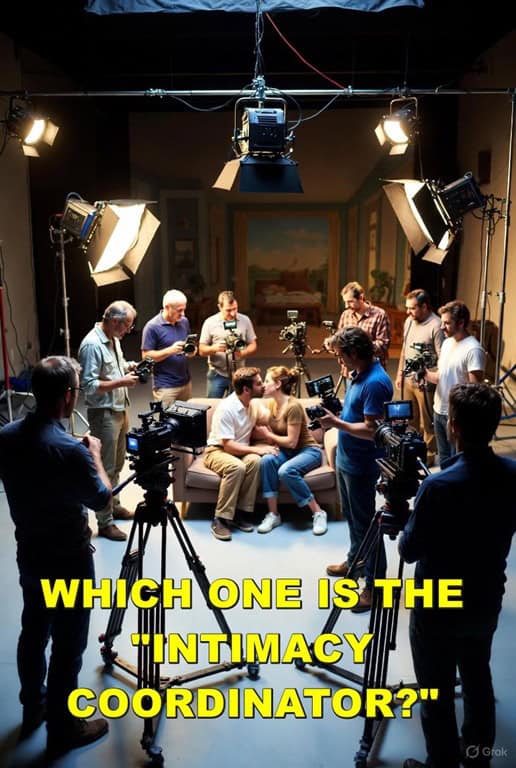
Another Layer Of Paperwork Nobody Asked For
Hollywood has done it again. In an industry already choking on permits, compliance officers, HR trainings, and legal clearances, we’ve added yet another mandatory gatekeeper: the unionized intimacy coordinator. What used to be a conversation among directors, actors, and producers has now been formalized into contracts, minimum rates, overtime rules, meal penalties, benefit contributions, and union jurisdiction. Congratulations—movies just got more expensive, slower to make, and less spontaneous.
This isn’t about protecting people from abuse. It’s about bureaucratizing creativity until nothing risky, raw, or human survives the process.
From Creative Collaboration To Contractual Obstacle Course
Filmmaking thrives on trust, timing, and momentum. Intimate scenes—awkward as they can be—have historically relied on clear communication and professional boundaries. Now they’ll be routed through a checklist culture that treats every interaction like a potential lawsuit. Directors won’t just direct. They’ll schedule, justify, document, and accommodate. Producers won’t just budget for talent and locations. They’ll budget for yet another union position with guaranteed wages, overtime, benefits, penalties, and enforcement mechanisms.
Every added rule sounds harmless in isolation. Together, they form a maze. And mazes cost money.
Independent Films And Small Studios Get Squeezed
Big studios will shrug and pass the costs along. Independent filmmakers won’t. When margins are already razor-thin, adding mandatory union roles with fixed pay scales and benefits can be the difference between a greenlight and a dead script. The result is predictable: fewer films get made, fewer risks are taken, and fewer new voices break through.
Hollywood claims to champion diversity and innovation. Then it builds barriers that only billion-dollar companies can afford to climb.
Creativity Doesn’t Thrive Under Constant Supervision
There’s a deeper problem here than budgets. It’s the creeping assumption that artists cannot be trusted to behave professionally without a monitor present. The message is clear: actors are victims-in-waiting, directors are liabilities, and every human interaction must be overseen by a credentialed authority.
That mindset poisons collaboration. It replaces adult consent with institutional permission. It turns creative chemistry into a regulated activity. And it flattens performances into something safe, sterile, and approved by committee.
Union Logic: If It Exists, It Must Be Organized
This deal isn’t unique—it’s part of a broader pattern. If a role exists, it must be formalized. If it’s formalized, it must be unionized. If it’s unionized, it must have minimums, penalties, and benefits. And if you can’t afford it? Too bad. The machine keeps rolling.
Unions once protected workers from exploitation. Increasingly, they protect turf, expand jurisdiction, and lock in costs regardless of outcomes. The industry doesn’t get better films. It just gets more paperwork.
Audiences Pay, Even If They Don’t Know It
Every added cost shows up on screen—or doesn’t. It’s the scene that gets cut. The risk that isn’t taken. The edgy moment rewritten into something bland and inoffensive. Viewers wonder why movies feel safer, duller, and less honest than they used to. This is why.
Art made under layers of compliance rarely surprises anyone.
Bottom Line: Hollywood’s Addiction To Process Over Product
The defenders will call this “progress.” They always do. But progress that prices out creators, slows production, and discourages risk isn’t progress—it’s decay wrapped in good intentions. Movies don’t need more administrators. They need courage, talent, and trust.
Instead, Hollywood chose another rulebook. Another badge. Another invoice.
And somehow, the people making these decisions are shocked when audiences stop caring.
Wait for the next fight over what is “nudity” and how much skin must be exposed before the union contract is triggered – this from unionized progressive socialist democrats who still can’t define womanhood or correctly count genders.
We are so screwed.
— Steve