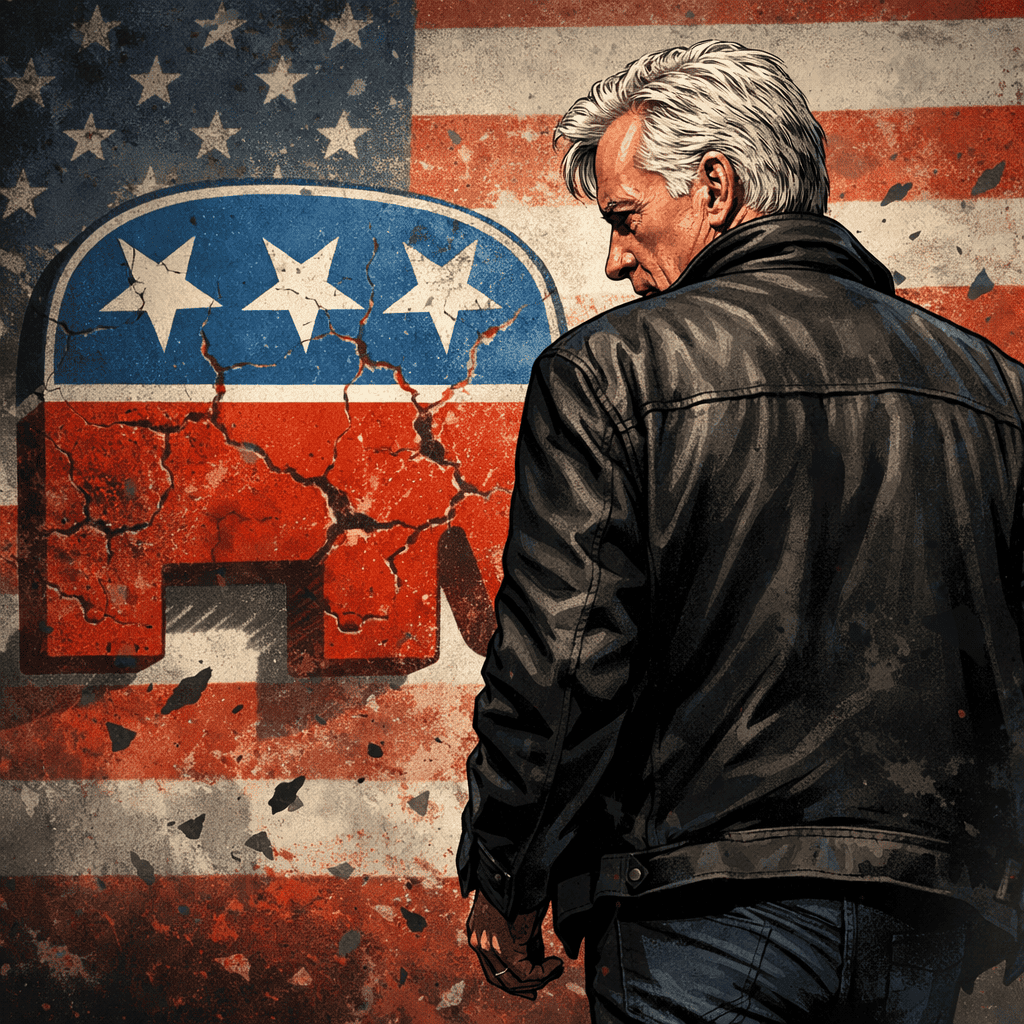
When Even Loyal Conservatives Say “Enough.”
There is nobody smarter in Hollywood than actor James Woods, and when this lifelong conservative throws up his hands and walks away from the Republican Party, it should set off alarm bells across the political landscape. Woods, never known for sugarcoating his opinions, recently declared that he’s done with the GOP and is switching his party affiliation to Independent.
His reason? What he calls a growing army of “uniparty traitors” inside Republican leadership who seem more interested in protecting the Washington system than confronting it.
For millions of voters who expected a political counterpunch after years of progressive dominance in Washington, Woods’ frustration feels painfully familiar. The anger isn’t just about Democrats anymore. Increasingly, it’s about Republicans who campaign like warriors but govern like caretakers of the status quo.
Two recent flashpoints pushed Woods over the edge.
The Ilhan Omar Records Fight That Never Happened
Representative Nancy Mace attempted to do something simple: seek immigration records related to Representative Ilhan Omar and members of her family. The goal was to investigate long-standing questions surrounding Omar’s immigration history and past relationships.
Whether the allegations are true or not is beside the point. Congress subpoenas documents all the time when questions arise about public officials.
But in this case, the investigation never even got off the ground.
Why? Because Republicans themselves reportedly killed the motion.
To many conservatives watching from the outside, the optics were stunning. A Republican lawmaker tried to initiate oversight of a controversial Democratic figure—and members of her own party shut it down.
The message sent to voters was unmistakable: some Republicans appear more comfortable burying politically explosive questions than pursuing them.
For critics of the Washington establishment, this is exactly what the “uniparty” accusation is about. Behind the partisan theater, too many politicians on both sides protect the same power structure.
The SAVE Act Stall And The Voter ID Question
The second breaking point for Woods concerns the SAVE Act, a proposal requiring proof of citizenship and voter identification in federal elections.
Poll after poll shows overwhelming support for voter ID requirements among Americans. Majorities of Republicans, independents, and even many Democrats support basic identity verification at the ballot box.
Yet despite that public backing, the legislation remains stalled in the Senate.
Senate leadership has argued that there simply aren’t enough votes to overcome the filibuster, which requires 60 senators to move forward. Rather than pushing procedural fights or forcing public votes, leadership has chosen a slower, more cautious approach.
That strategy infuriates many conservative activists who believe the issue is fundamental to restoring confidence in elections.
From their perspective, even a losing vote would force politicians to publicly declare where they stand. Instead, critics say the issue is quietly buried in procedural limbo.
When voters see overwhelming public support ignored while politicians cite parliamentary roadblocks, it feeds the perception that the system is designed to avoid accountability.
The Growing “Uniparty” Revolt
The phrase “uniparty” has become a rallying cry among grassroots conservatives who believe both political parties ultimately serve the same institutional interests.
The argument goes like this: Democrats push progressive policies aggressively, while Republicans promise resistance but often settle for caution, delay, or compromise.
For voters who expected sweeping confrontations over immigration, election integrity, and government transparency, that gap between rhetoric and action has become intolerable.
James Woods’ decision to abandon the GOP may not change congressional math, but symbolically it reflects a deeper rebellion simmering inside the conservative base.
And if more voters begin to feel the same way, the political consequences could extend far beyond one actor’s party registration.
Bottom Line
James Woods’ break with the Republican Party highlights a widening rift between grassroots conservatives and GOP leadership. Whether the issue is investigating controversial figures or advancing voter ID legislation, many voters believe their party is failing to fight for the priorities it campaigns on. If Republican leaders continue to avoid confrontations that their own voters demand, the anger fueling accusations of a political “uniparty” is only going to grow louder.
This is the canary in the coal mine… if a staunch conservative like James Woods is giving up the GOP, something is drastically wrong in Washington; and it appears that many politicians may have been captured, or are being blackmailed, by the opposition and our enemies.
We are so screwed.
— Steve