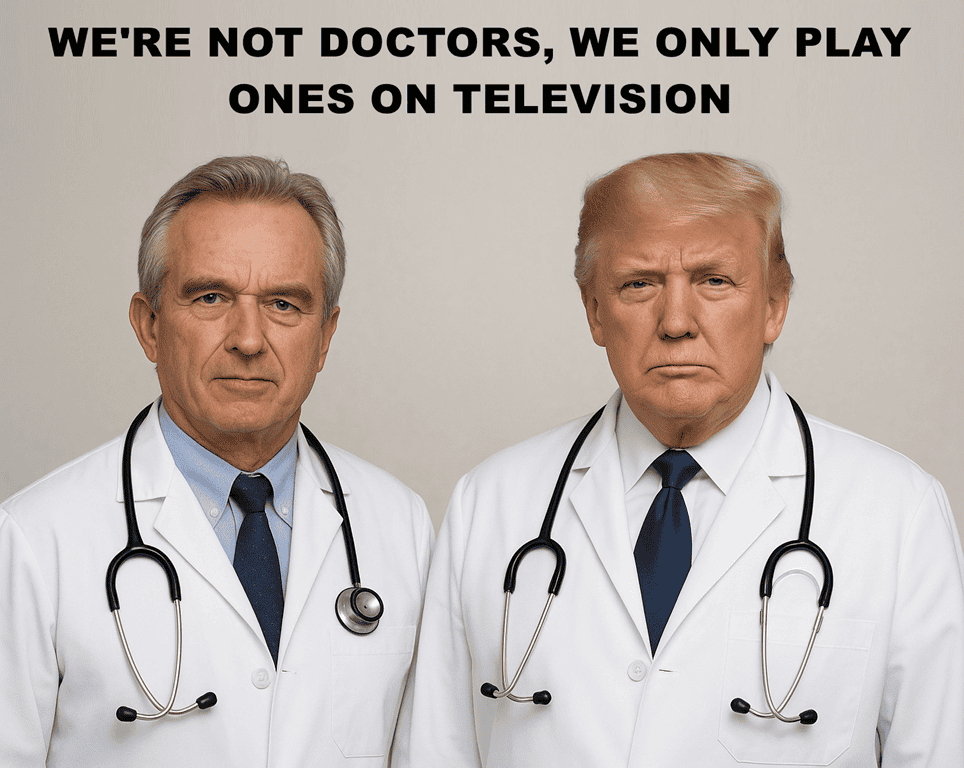
Weasel Words: The Slippery Slope of Scientific Clickbait
It’s time to call out the emperor’s new clothes. In today’s media landscape, phrases like “may suggest,” “could indicate,” and “preliminary findings show” are weaponized to generate clicks, clicks, and more clicks. Scientific nuance, once a hallmark of rigorous inquiry, has been gutted and twisted into clickbait headlines designed to incite panic, outrage, or obsessive curiosity.
Take the recent spectacle involving Health and Human Services Secretary Robert F. Kennedy Jr., who finally admitted, after a flurry of sensational reporting, that there is “not sufficient” evidence to link Tylenol use during pregnancy or circumcision to autism. Yet what did the headlines scream? “Tylenol Causes Autism—Scientists Shocked!” or “New Autism Risk Revealed!” That’s the power of a single, carefully weasel-worded sentence: the truth becomes optional.
“With Tylenol, we’ve all said from the beginning that the causative association between Tylenol given in pregnancy and the perinatal periods is not sufficient to say it definitely causes autism, but it is very suggestive. And it’s suggestive in animal studies and core blood studies and observational studies from nation to nation. And so there should be a cautious approach to it.”
The Political Circus of Suggestive Science
The cherry on top? Enter President Trump, eager to ride the media wave. On September 20, he promised “one of the most important announcements” on autism. By the next day, the hype machine was in full swing: “We found an answer to autism!” Reality, however, is far less cinematic. The announcement centered on acetaminophen (Tylenol) guidance, cerebral folate deficiency treatments, and cautious, evidence-based recommendations, not a miracle cure. Yet the public was left dangling on a cliff of dramatic expectation, thanks to strategic phrasing. [Source: HHS Press Release]
Notice the common thread: “suggestive,” “potential,” “may”—terms designed to protect the speaker while inflating the story. Politicians, bureaucrats, and journalists alike exploit these hedging words, presenting uncertainty as revelation. The endgame? Attention metrics, not truth.
Why Weasel Words Are Dangerous
You might shrug and think, “It’s just semantics.” But this is where lives and public perception collide with journalistic laziness. When parents read headlines implying Tylenol is a known cause of autism, fear and confusion follow. Families make medical decisions, schools debate interventions, and policymakers face public pressure, all based on statements that, in the speaker’s own words, are “not sufficient to say it definitely causes autism.”
The problem isn’t just Kennedy or Trump; it’s a media ecosystem that rewards uncertainty dressed as certainty. Scientists hedge. Journalists spin. Social media amplifies. And the audience? They’re left with a potent cocktail of fear and misinformation.
Bottom Line: How to Fight Back Against the Clickbait Monster
Stop reading headlines. Stop trusting phrases like “studies suggest” without digging deeper. Demand context, nuance, and evidence. Reporters, for their part, need to abandon the instinct to inflate tentative findings into front-page hysteria. The public deserves information, not entertainment masquerading as science.
Until then, we will continue to live in a world where “suggestive evidence” becomes “autism caused by Tylenol,” where the nuanced truth is buried under clickbait bravado, and where politicians and media alike profit from fear. Weasel words may seem harmless, but in the hands of headline-hungry media, they’re weapons of mass misinformation.
We are being screwed.
— Steve