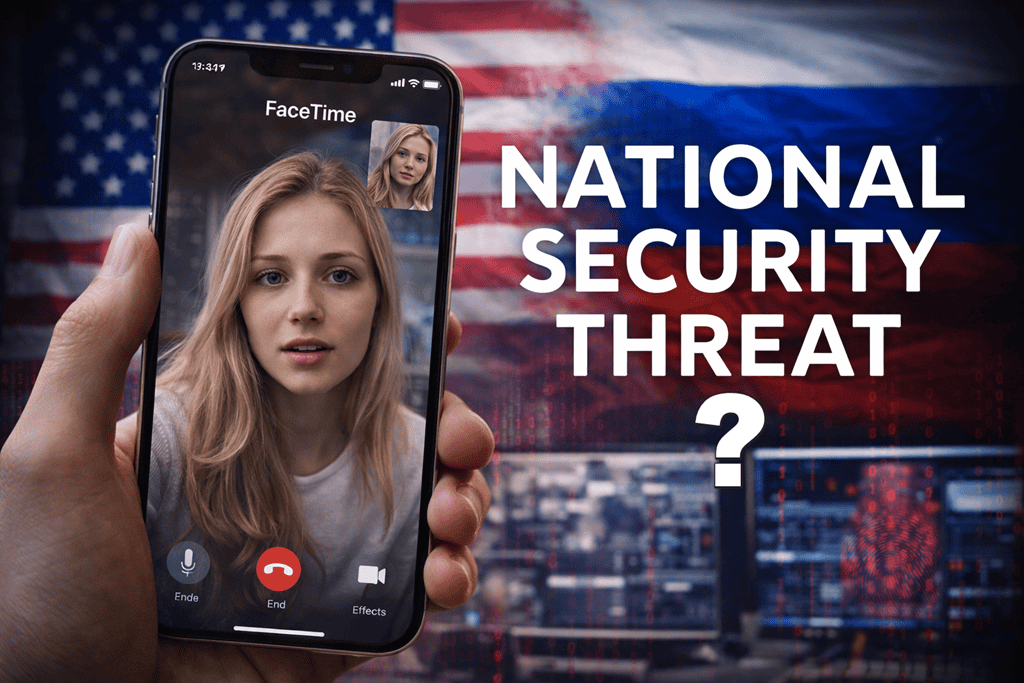
The legacy media wants you focused on the feel-good angle: a dramatic rescue, a frantic FaceTime call, a young man doing the “right thing.” And yes — if the reported facts hold, calling emergency services during a violent assault was the correct human response. Full stop.
But here’s the question they don’t want to touch with a ten-foot pole: how does the teenage son of a U.S. president end up forming a close FaceTime friendship with a Russian national living in the United Kingdom in the first place?
That’s not heartwarming. That’s alarming.
A Hero Story That Conveniently Skips The Hard Questions
We’re told Barron Trump met this woman on social media. We’re told they became friends. We’re told the relationship was close enough that she instinctively called him during a life-or-death emergency.
Pause right there.
The child of a former president is not an ordinary teenager. He is a permanent intelligence interest. His digital footprint is not just his business. Every call, every app, every online “friendship” is a potential access point — not just to him, but to his family.
And yet we’re expected to accept that a cross-border, cross-national relationship involving a Russian citizen and a Trump family member raises zero red flags?
That’s not realism. That’s willful blindness.
Social Media: The Back Door Everyone Pretends Isn’t There
This is exactly how modern intelligence compromise works. Not through trench coats and dead drops — but through apps, casual chats, and “friends of friends” met online.
No accusation is being made against the woman involved. None. She may be exactly who she says she is. She may also be a victim in every sense of the word.
But security professionals don’t assess intent — they assess exposure.
A FaceTime call is not just a conversation. It’s metadata. Location cues. Behavioral patterns. Emotional leverage. And in this case, it connects a Trump family member to an alleged violent incident involving a Russian national, UK police, and recorded emergency communications.
That alone should trigger security reviews. Instead, we get applause and silence.
Where Were The Safeguards?
Here’s the uncomfortable truth: Barron Trump should not be meeting foreign nationals on social media without safeguards in place. Not because he’s done anything wrong — but because the world he lives in is not forgiving, fair, or benign.
- Where was the digital security oversight?
- Where were the filters?
- Where was the protective boundary between a teenager’s private life and geopolitical reality?
If this had been the child of a Democrat president, the media would be screaming about kompromat, exposure, and national risk. Panels. Experts. Breaking news banners.
Instead, we’re told to clap and move on.
Compassion Does Not Cancel Risk
You can acknowledge a decent human act and recognize systemic failure simultaneously. These ideas are not enemies.
Calling the police during a violent assault is commendable.
Allowing a high-profile political family member to drift unguarded through international social media spaces is negligent.
The danger isn’t what happened — it’s what could have happened.
And pretending otherwise isn’t kindness. It’s stupidity dressed up as sentiment.
Bottom Line
This story isn’t just about a rescue. It’s about exposure, vulnerability, and the fantasy that political families can live like normal influencers in a hostile digital world. Barron Trump may have done the right thing in a crisis — but the situation that put him there should never have existed. Ignoring that reality doesn’t make it disappear. It just guarantees the next story won’t end so cleanly.
We are so screwed.
— Steve