Who can you believe anymore?
Not the Democrats, with their history of manufactured scandals and conveniently funded “hoaxes.” Not the Republicans, whose reflexive outrage often seems more about scoring points than finding truth. Not the Administration, which bends facts to fit the moment. Not the legacy media, which can spin trivialities into days of outrage. And certainly not social media, where anyone with a keyboard and a grievance can broadcast to the world. Even NGOs and foundations, cloaked in virtue, often conceal their donors and motives.
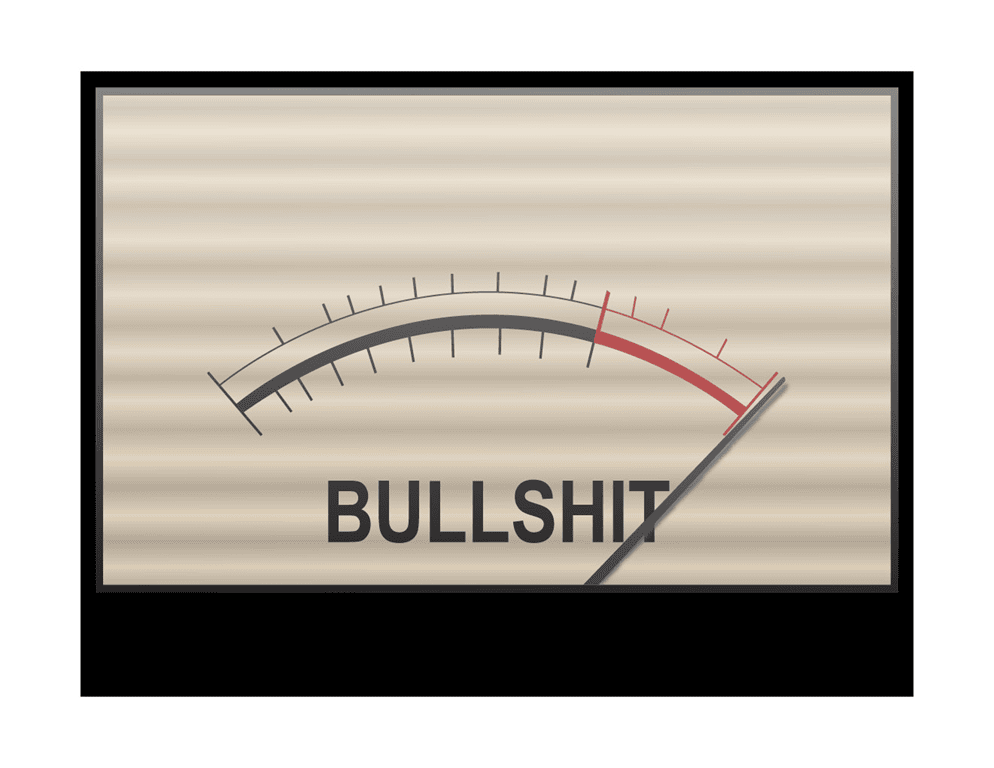
In an age where every source seems compromised, how do you separate signal from noise? How do you tell truth from narrative? What we need, more than ever, is a bullshit detector to combat the swarm of half-truths, hidden agendas, and click-chasing manipulators. If you don’t build your own bullshit*t detector, someone else will think for you — and that should terrify you.
Stop Believing Everything That Looks “Official”
Just because a site looks sleek and professional doesn’t mean it’s honest. Anyone with a laptop can slap together a “news” page that looks legit. Before you share or believe a single word, ask yourself: Who’s behind this? What’s their motive? Are they selling a product, pushing an agenda, or trying to scare you into submission?
Experts don’t always get it right, but credentials and transparency still matter. If someone’s hiding behind anonymity, refusing to cite evidence, or spewing claims without proof — that’s your cue to walk away. The first rule of survival in the information jungle: always trace the source.
Fake Handles, Real Deception
Scammers love disguises. They’ll tweak a social media handle or URL by a single letter and suddenly they’re “CNNN.com” or “WashingtoPost.com.” Check the fine print. Cornell University’s library warns that domain names reveal a lot — sites ending in .edu, .org, or .gov generally exist to inform, while .com is often there to profit. Money motives aren’t inherently evil, but they do muddy the truth.
When profit, politics, or ego enter the equation, facts become flexible. That’s when your detector should start screaming.
Don’t Trust the Chorus Until You Check the Song
Just because everyone’s repeating something doesn’t make it true or accurate; it just means the same falsehood is echoing louder. Real verification comes from independent sources. If every site points back to the same shaky claim, that’s not consensus — that’s copy-paste deception.
Look for outside confirmation. Books, reputable experts, or firsthand observation still count for more than digital noise.
Use the IMVAIN Test and Stop Being a Passive Consumer of Information)
Here’s a simple system: IMVAIN.
- I – Independent – Ask yourself: Is this source free from bias or conflict of interest and personal gain?
If the person or group behind the message stands to make money, win influence, or boost their brand, their objectivity is instantly questionable. True credibility comes from people who don’t benefit from the outcome — those without a dog in the fight. - M – Multiple Sources – Are other credible voices saying the same thing?
When several unrelated outlets confirm the same facts, that’s a good sign. But beware of what looks like consensus — a thousand identical posts could all trace back to the exact faulty origin. Real verification means truly independent agreement, not an echo chamber of repetition. - V – Verifiable – Can the claim be proven?
Honest information leaves a paper trail: documents, data, eyewitnesses, or credible studies. If a statement can’t be checked or confirmed, it’s opinion — maybe even manipulation. The truth always welcomes inspection; lies demand blind faith. - A – Authoritative – Does the source actually know their stuff?
Credentials aren’t everything, but expertise counts. A scientist who’s studied infectious diseases for decades is more trustworthy on vaccines than a self-proclaimed “health warrior” with a YouTube channel. Authority comes from demonstrated experience and consistent accuracy, not loud confidence. - I – Informed (or “Independent Verification”) – Is this information rooted in real knowledge or firsthand evidence?
An informed source relies on research, credible studies, or direct involvement. Be skeptical of anyone who bases sweeping claims on “someone I know said…” or anecdotal hearsay. Solid facts stand on substance, not gossip. - N – Named – Who’s actually talking?
Anonymous claims deserve extra suspicion. While anonymity can protect whistleblowers, in most online spaces it shields trolls and manipulators. A credible source signs its work and stands by it. If you can’t find a name, you can’t judge the motive — and that’s reason enough to doubt.
If a claim fails even one of these tests, treat it like radioactive waste.
Your Bias Is the Weak Link
The most brutal truth: your detector is only as good as your self-awareness. We all live in algorithmic bubbles. The internet feeds us what we want to hear — not what we need to know. When you search “proof my side is right,” you’re programming your own delusion.
Challenge yourself. Search for the opposite viewpoint. Follow people who make you uncomfortable. That’s how you escape the echo chamber and build a bullshit detector that actually works.
Bottom Line
Misinformation doesn’t spread because liars are powerful. It spreads because too many of us stopped questioning. The cure isn’t censorship — it’s skepticism. Build your own bullshit*t detector, sharpen it daily, and don’t outsource your thinking to anyone — not a pundit, not a platform, not even me.
We are being lied to and then screwed.
— Steve