A Leader Hidden, A Nation Speculating
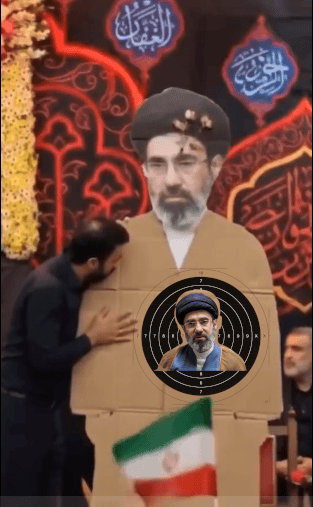
In the bizarre theater of modern authoritarian politics, Iran may have introduced a new act: the paper Ayatollah. Mojtaba Khamenei, named Supreme Leader days after his father’s death, has not been publicly seen. Reports suggest he is injured, possibly even in a coma, after surviving a U.S.-Israeli strike that wiped out much of his family. Yet, despite his physical absence, Iran’s Revolutionary Guard pledged allegiance to him—and the nation is left staring at a cardboard stand-in, pondering the impossible: do they have their own Joe Biden? A leader alive in title only, while subordinates quietly pull the levers of power.
Revenge Over Reality: A Message Without a Presence
Through Iranian state television, Mojtaba released a written statement promising vengeance for his family and country. The rhetoric is fiery—threats against U.S. and Israeli forces, attacks in the Strait of Hormuz, and continued hostility toward Gulf Arab states. Yet the delivery was odd: no live appearance, no human presence, only words on a screen. Reports indicate he may have lost a leg, suffered abdominal injuries, and is being treated at Sina University Hospital in Tehran. Meanwhile, a cardboard cutout stands in his place at public events, a surreal symbol of a leadership that exists more as image than reality.
Cardboard Politics and Viral Speculation
Social media erupted with memes, jokes, and theories. The “cardboard supreme leader” quickly became a global sensation. Was Mojtaba missing? Dead? Incapacitated beyond recognition? The crude life-size prop only fueled speculation. In Iran’s wartime secrecy, such symbolic imagery is routine—but in the age of viral content, nuance disappears. A cardboard figure, intended as a visual placeholder, became proof of a regime on the brink of absurdity. The line between propaganda and reality blurred, leaving the world—and perhaps Iran itself—questioning who is truly in charge.
Subordinates Running The Show?
If Mojtaba is incapacitated, it begs the question: who is making the decisions? Analysts suggest the Revolutionary Guard and other senior officials may be operating in his name. This echoes the concerns often leveled at leaders perceived as figureheads, where loyalty to the title eclipses loyalty to the person. The resemblance to a certain Western leader known for reliance on aides and advisors is uncanny. In both cases, power flows through surrogates, while the nominal leader becomes a symbol rather than an active commander.
Chaos in the Gulf: Actions Speak Louder Than Words
While the world wonders if Mojtaba is alive or just a cardboard figure, Iran is still striking targets. Oil tankers are attacked in the Strait of Hormuz, ports are temporarily shut down, and the rhetoric of vengeance continues unabated. The absence of a visible, functioning leader does not slow operations. If anything, it intensifies the danger: decisions may be made by unseen actors, operating in secrecy, yet fully capable of destabilizing global oil markets and regional security.
Bottom Line
Iran’s new Supreme Leader is a study in uncertainty. Whether Mojtaba Khamenei is wounded, comatose, or merely a symbolic figure, the combination of propaganda, secrecy, and viral misinformation has created a leadership vacuum that few can parse. Subordinates may run the state while a cardboard Ayatollah graces public rallies, leaving the nation and the world guessing at who actually wields power. If Iran has a Joe Biden, he may not be in control at all—only the image of control, projected through words, cardboard, and the silent hand of the Revolutionary Guard.
We are being screwed.
— Steve