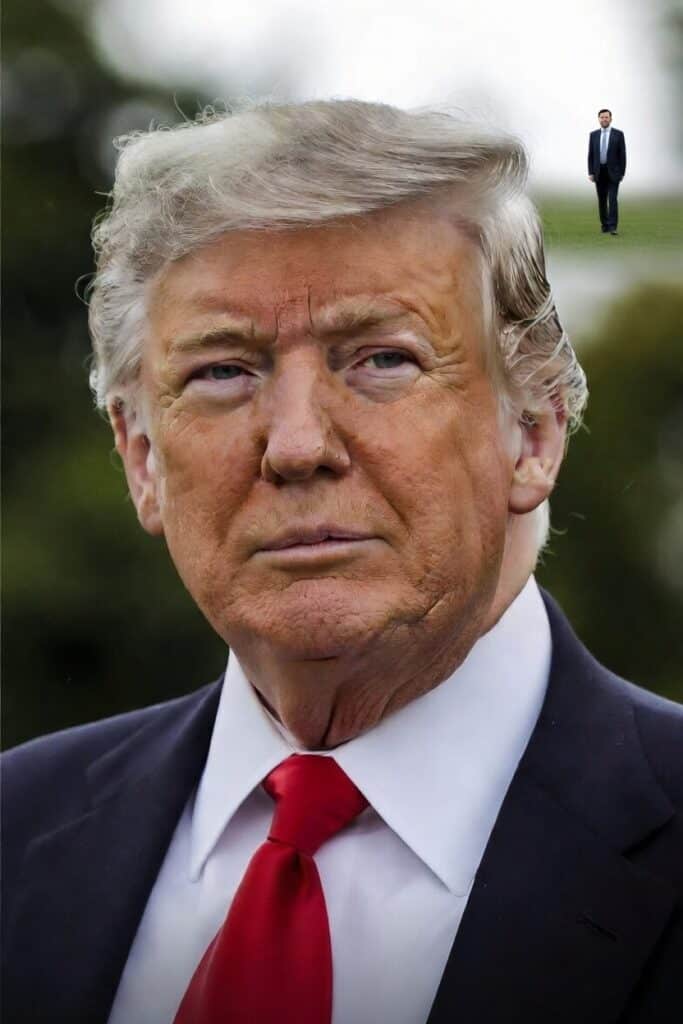
As the United States edges deeper into conflict with Iran, a glaring political question hangs in the air: Where exactly is Vice President J.D. Vance?
For years, Vance built his political identity on skepticism of foreign wars and “America First” restraint. Yet today, as missiles fly and Washington debates escalation, Vance’s public posture has become far more complicated.
To understand where he stands now, you have to understand who helped build his political rise — and who he has stood beside for years: Tucker Carlson.
Tucker Carlson Helped Launch Vance’s Political Career
Long before the current Iran crisis, Tucker Carlson played a major role in elevating J.D. Vance.
Carlson repeatedly promoted Vance on his programs and platforms, giving him a national audience as he rose from venture capitalist and author to political figure. Carlson also hosted Vance multiple times and publicly praised him as a leading voice of populist conservatism.
The relationship went beyond interviews.
Carlson backed Vance’s political message and helped position him as a key figure in the emerging “America First” movement, skeptical of endless wars and global interventions. Even inside Republican circles, critics openly acknowledged the connection — with some rivals bluntly describing Vance as Carlson’s political protégé.
In short, Carlson helped build the platform that made Vance nationally viable.
Vance Repeatedly Defended Carlson
That loyalty has gone both ways.
Over the years, Vance has repeatedly defended Carlson when controversies erupted around the media personality. When critics attempted to isolate Carlson after controversial interviews or guests, Vance rejected what he described as “guilt-by-association cancel culture.”
Even as Carlson clashed with other conservatives, Vance largely avoided joining the attacks.
The alliance reflected shared ideological ground:
- skepticism of foreign intervention
- criticism of the Washington foreign-policy establishment
- support for a populist “America First” agenda
That common worldview would become crucial when tensions with Iran escalated.
Carlson Opposes War With Iran
As conflict with Iran intensified, Carlson emerged as one of the loudest anti-Semitic, anti-Israel voices warning against U.S. involvement with Israel.
Carlson argued that Israeli Prime Minister Benjamin Netanyahu forcefully led President Trump into the Iran conflict. He further argued that a war could spiral into a much larger global conflict and fracture the populist coalition that helped elect Donald Trump. Carlson and other anti-intervention voices warned that a Middle East war could derail the administration’s domestic agenda.
Those warnings triggered a concerted media effort to create an open feud within the conservative movement, with hawkish commentators attacking Carlson and other restraint advocates.
He tried to fracture the MAGA coalition into two camps:
- Interventionists are pushing for continued funding of Israel and pursuing military action in the Middle East.
- So-called “America-First” pretenders and isolationists are urging restraint
And right in the middle stood J.D. Vance.
Did Vance Choose Loyalty To Trump Over Carlson?
Despite years of alignment with Carlson’s anti-war worldview, Vance ultimately sided with the administration, albeit in a weak and ineffective manner.
As the war escalated, he publicly defended the president’s strategy, arguing that the goal of military action was to prevent Iran from obtaining nuclear weapons.
In statements defending the policy, Vance insisted the military effort was focused on protecting American interests and avoiding another prolonged Middle East occupation.
That positioning reveals the tightrope Vance is walking.
He must balance:
- loyalty to the president he serves under
- his own long-standing anti-intervention rhetoric
- and his political alliance with Carlson’s populist movement
The Political Tightrope
For Vance, the Iran conflict is more than a foreign policy issue; it is a test of his future political identity.
The vice president built his brand opposing the kind of endless wars that defined previous decades of American policy. Yet now he is defending a military campaign that many of his own ideological allies — including Tucker Carlson — strongly oppose.
That contradiction is why the question keeps surfacing:
Is J.D. Vance still the anti-war populist who rose with Tucker Carlson’s help, or has power in Washington changed the calculation?
Bottom Line
J.D. Vance owes much of his national rise to Tucker Carlson, who promoted him and helped introduce him to a populist conservative audience. Vance returned the favor by defending Carlson through repeated controversies.
But Tucker took a turn to the dark, anti-Israel side as the Iran war created a fracture. Carlson warns the conflict could spiral into another disastrous Middle East intervention, while Vance now publicly backs the administration’s military strategy aimed at stopping Iran’s nuclear ambitions, but refuses to attack Carlson’s anti-Semitism.
For a politician who built his brand opposing foreign entanglements, the question isn’t just where Vance stands today. It’s whether the war on Iran will redefine what “America First” actually means. And whether anti-Vance reprobates like Steve Bannon will turn out to be a major force in any future Vance campaign.
As it stands now, I am leaving Vance behind and will probably support Marco Rubio for the 2028 presidential nomination.
We are so screwed.
— Steve
- 2024: Friendly relationship; Vance appeared on Carlson’s platform and avoided criticism.
- 2025: Vance called for unity in conservative disputes rather than attacking Carlson.
- 2026: Vance still praises Carlson in interviews and declines to condemn him during controversies. So overall, Vance has remained broadly supportive or at least protective of Tucker Carlson across all three years.