Déjà Vu All Over Again
If you’re experiencing a strange sense of political déjà vu, you’re not alone. The script feels recycled. The characters look suspiciously familiar. And once again, we’re told that a shadowy “whistleblower” has uncovered explosive wrongdoing—this time involving Director of National Intelligence Tulsi Gabbard and a classified intercept allegedly touching on Jared Kushner.
Sound familiar?
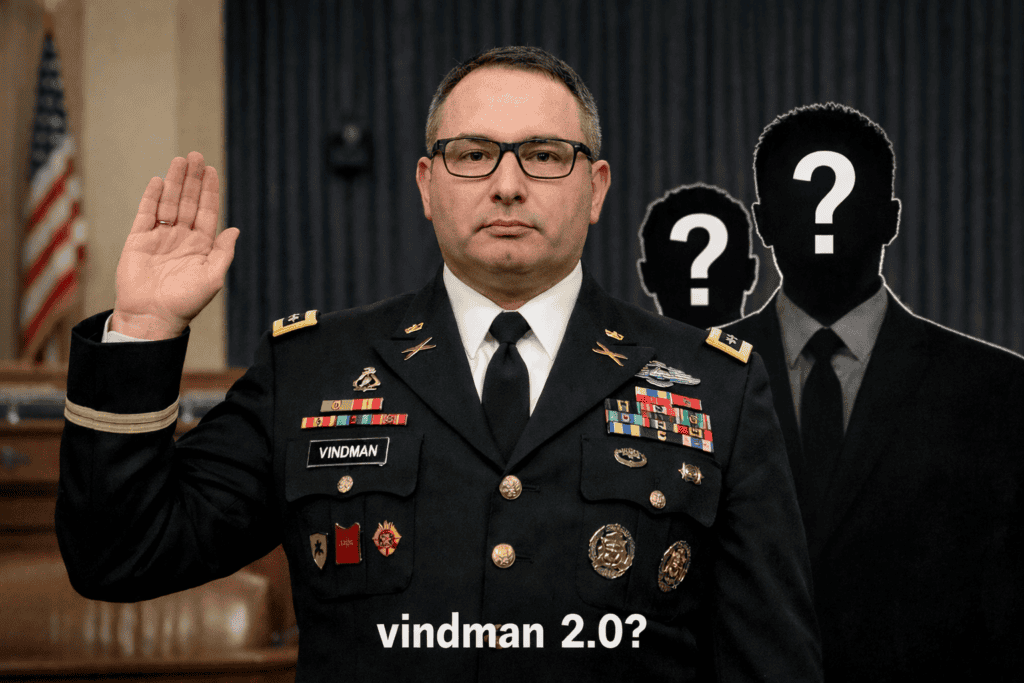
Because many Americans remember when Lt. Col. Alexander Vindman became the centerpiece of the first impeachment of Donald Trump. Back then, we were told that a phone call—yes, a phone call—was so egregious, so damning, that it justified overturning a national election.
Now, once again, we’re told that a classified conversation, intercepted by the National Security Agency, contains allegations so serious that Congress must be alerted immediately—even if the substance is redacted beyond recognition.
History doesn’t repeat, but it often rhymes. And this rhyme is loud.
The Original Blueprint: The Vindman Episode
For those who may not remember, Alexander Vindman was the raison d’être for Trump’s first impeachment. A National Security Council staffer, Vindman testified that Trump’s call with Ukrainian President Volodymyr Zelensky was improper.
The call transcript was released. The American public could read it. Yet the narrative was locked in: abuse of power, quid pro quo, high crimes and misdemeanors.
Vindman’s objections to the call, combined with an anonymous whistleblower complaint, triggered a constitutional earthquake. The impeachment proceedings consumed Washington. Cable news ran wall-to-wall coverage. Careers were made. Reputations were shredded.
And what were the lasting consequences?
Trump was acquitted in the Senate. Vindman was eventually reassigned and later retired from the military. The so-called resistance class elevated him to hero status. Book deals followed, and cable interviews flowed. And Washington marched on.
There were a few minor consequences—but no systemic reckoning.
Which brings us to today.
Now We Find That…
Now we find that a “highly classified whistleblower complaint” has emerged involving Tulsi Gabbard and an intercepted conversation between two foreign nationals discussing Jared Kushner.
- The substance of the conversation? Unknown.
- The country of origin? Unknown.
- The veracity of the claims? Uncorroborated.
Senior administration officials reportedly state that the claims about Kushner were demonstrably false. Yet because the underlying intelligence is classified, they cannot provide further detail without risking exposure of sensitive surveillance methods.
Meanwhile, Democrats are questioning why the complaint allegedly stalled for eight months inside Gabbard’s office. Republicans argue that the entire spectacle is orchestrated to undermine the Trump administration.
The complaint accuses Gabbard of limiting intelligence sharing for political reasons after meeting with the White House chief of staff. A second allegation claims that the NSA’s general counsel failed to refer a potential crime to the Justice Department.
But here’s the catch: the allegations lack corroboration. A career official reportedly determined that a referral wasn’t necessary because the claims lacked merit. The inspector general did not determine whether the NSA-related allegation was credible.
Even more telling, lawmakers were only allowed to review a heavily redacted version of the complaint in a secure setting—on a “read-and-return” basis. No notes. No copies. No transparency.
We are being asked, once again, to trust a narrative built on fragments, redactions, and anonymous sourcing.
The Power Of The Word “Whistleblower”
The term “whistleblower” carries moral weight. It suggests courage, integrity, and sacrifice. It implies someone stepping forward to expose corruption at great personal risk.
But what happens when that label becomes a political weapon?
In the Vindman episode, the word “whistleblower” shut down skepticism. To question the narrative was to attack democracy itself. To request the full context was to undermine accountability.
Now, in this new case, the pattern feels eerily similar:
- Classified intelligence.
- Unspecified foreign actors
- Intelligence intercepts
- Limited public access.
- Claims of political obstruction.
- Media amplification.
- Demands for further investigation.
And yet the underlying facts remain obscured.
Foreign officials sometimes plant disinformation when they suspect surveillance. Intelligence intercepts can capture gossip, deliberate falsehoods, or strategic deception. The mere existence of a conversation does not prove its truth.
But in Washington’s theater, insinuation often outruns evidence.
Kushner, Power, And The Convenient Target
Jared Kushner is hardly a neutral figure. He played a central role in Middle East diplomacy during Trump’s first term. He remains involved in high-level negotiations concerning Gaza, Ukraine, and Iran. His investment firm, Affinity Partners, has drawn significant funding from Arab monarchies.
That makes him a high-value target—politically and geopolitically.
An intercepted conversation about him, even if unverified, can ignite speculation. And speculation, when strategically amplified, becomes narrative. Narrative becomes pressure. Pressure becomes process.
And the process becomes punishment.
The Bigger Question
Is this legitimate oversight? Or is it another attempt to recreate the “whistleblower moment” that once fueled impeachment?
The structure is familiar: an intelligence fragment, a bureaucratic dispute, accusations of political interference, selective disclosure, and intense media focus. All before the public can evaluate the core evidence.
Perhaps this complaint will ultimately prove substantive. Perhaps it will unravel into nothing more than diplomatic gossip overheard by spies.
But if we’ve learned anything from the Vindman saga, it’s that the process can become the objective. The spectacle can be the point.
There were a few minor consequences for Vindman, his as-yet-unnamed co-conspirator (Eric Ciaramella?), and the rest of the cabal. So why not try it again?
Bottom Line
When classified intelligence intercepts become political weapons and whistleblower complaints become strategic tools, the line between accountability and orchestration blurs. Americans deserve transparency, not redacted theater. Before we sprint toward another crisis, perhaps we should demand full context—not just the headline.
This is a national security issue and perhaps the best indication that the progressive communist democrat conspiracy is ongoing.
We are so screwed.
— Steve