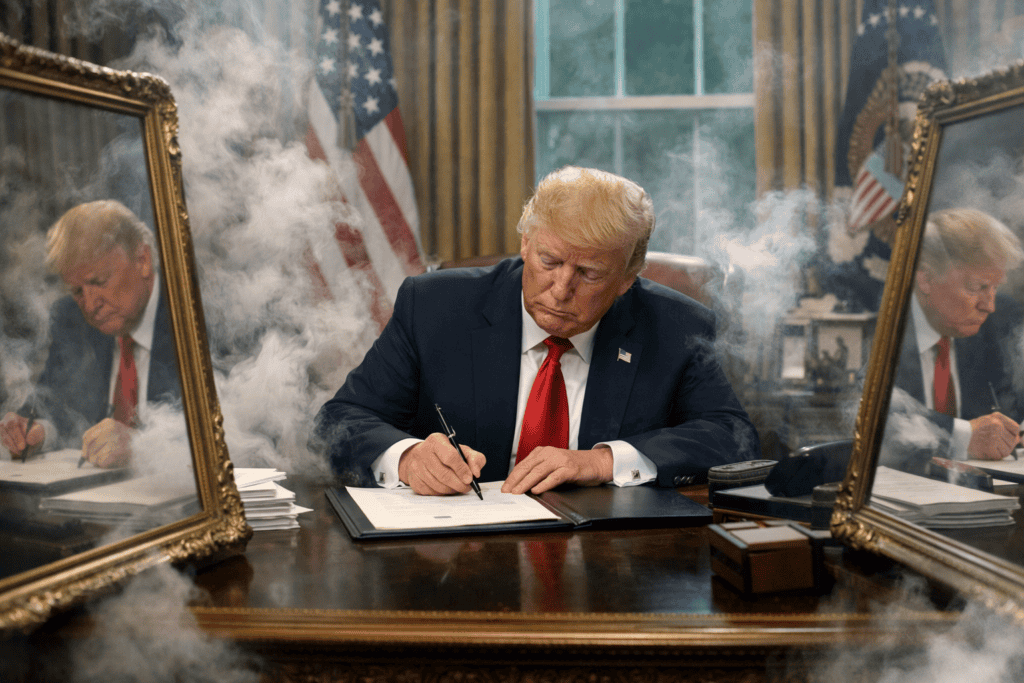
Executive Orders Are Not Reform—They’re Performance Art
Donald Trump loves the optics of action. The signing ceremony. The stack of papers. The Sharpie flourish. It looks like power. It sounds like progress. But strip away the stagecraft and what’s left is mostly vapor: executive orders dressed up as reform, temporary gestures sold as permanent victories.
This isn’t governance. It’s political cosplay.
Executive orders are the laziest tool in Washington. They bypass the hard work of legislating, avoid coalition-building, and skip the messy accountability that comes with durable law. And Trump has leaned on them obsessively—not because they work, but because they look like they work.
Shock And Awe Without Staying Power
Trump’s defenders call it speed. Critics call it impatience. Either way, the result is the same: a flood of unilateral actions that create headlines today and unravel tomorrow. Trump averaged roughly 55 executive orders per year in his first term—more than Obama—signaling a preference for instant gratification over lasting change.
This “shock and awe” approach is great for cable news. It’s terrible for permanence.
Immigration, deregulation, agency policy—Trump blasted through all of it with executive fiat, daring courts and future presidents to clean up the mess. And clean it up they did. The Biden administration erased large chunks of Trump’s agenda with ease, proving what was obvious from the start: if it can be done with a pen, it can be undone with a pen.
Temporary Power, Permanent Failure
Here’s the dirty secret Trump never liked to admit: executive orders are constitutionally fragile. They don’t create law. They interpret it—often aggressively—and that makes them sitting ducks in court.
The numbers tell the story. A vast majority of Trump’s major deregulatory actions were successfully challenged in lower courts. Judges didn’t just disagree; they dismantled them. Why? Executive orders are a poor substitute for statutes passed by Congress.
Trump didn’t just gamble on temporary measures. He normalized them. And that set his entire agenda up for reversal the moment political winds shifted.
The Illusion Of Toughness
There’s a reason Trump favored executive orders: they create the illusion of dominance without the inconvenience of compromise. Legislation requires patience, persuasion, and sometimes swallowing your pride. Executive orders require none of that—just a compliant bureaucracy and a press office.
Observers across the ideological spectrum have noted the real purpose of this strategy: generate momentum, claim quick wins, and provoke constitutional showdowns. It’s not about building a durable policy. It’s about feeding the base and declaring victory before the ink dries.
But governing isn’t a campaign rally. The Constitution isn’t impressed by vibes.
Why This Matters Now
Trump’s second-term mandate—real or imagined—was supposed to be about permanence. About locking in change so it couldn’t be casually reversed. Instead, the same old habit persists: temporary fixes, avoided final judgments, and policy decisions designed to disappear quietly rather than stand up in court.
This isn’t just incompetence. It’s malpractice.
When administrations choose executive shortcuts over legislative backbone, they ensure that nothing sticks. Every win becomes provisional. Every loss becomes inevitable. The country lurches back and forth, not because voters demand it, but because leaders refuse to do the hard work of lasting reform.
Bottom Line
Executive orders are not bold leadership. They are borrowed time. Trump’s reliance on them wasn’t a masterstroke—it was smoke and mirrors masquerading as strength. Until real legislation replaces Sharpie politics, every so-called victory is just a pause button, waiting for the next president to hit play in reverse.
We are so screwed.
— Steve