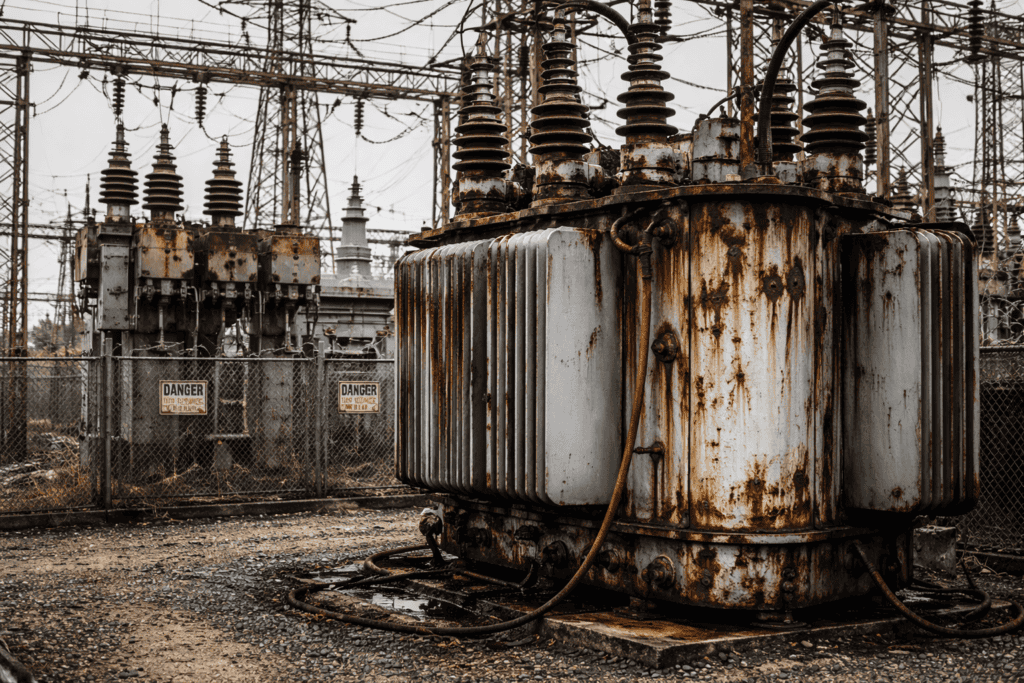
No enemies, no storms, no cyberwar—just neglected metal quietly reaching the end of its lifespan.
A Fragile Civilization Powered By Wires And Wishful Thinking
We like to believe modern America is resilient. Smart. Prepared. But scratch the surface, and you find a civilization balanced on a thin lattice of aging wires, overstressed transformers, and regulatory negligence. Roughly 2% of Americans feed the other 98%, and every single step of that miracle—irrigation, harvesting, processing, refrigeration, transport—runs on electricity. No power, no food. No food, no society.
This isn’t abstract. It’s arithmetic. Electricity is the hidden prerequisite for survival, right up there with air and water. Yet the system that delivers it is increasingly brittle, increasingly exposed, and increasingly mismanaged by people who have never hardened a grid component in their lives.
FERC’s Mission On Paper, Failure In Practice
The Federal Energy Regulatory Commission is supposed to ensure reliable interstate energy infrastructure and fair wholesale markets. It regulates transmission, oversees grid reliability standards, and licenses major projects. What it does not do—despite having the authority and the warnings—is force meaningful grid hardening against known threats.
Why? Look at who’s in charge.
FERC is largely comprised of lawyers and policy professionals, not engineers, not grid security specialists, not people who have ever had to keep electrons flowing under stress. These commissioners are fluent in rulemaking and market theory, but dangerously detached from physical reality. Reliability is treated as a compliance exercise, not a survival imperative.
An Aging Grid Facing Modern Threats
Seventy percent of U.S. transmission lines are past their intended lifespan. A majority of circuit breakers are decades old. Critical transformers take years to replace and are often manufactured overseas. Substations—those unglamorous nerve centers of the grid—remain lightly protected despite repeated warnings that a small number of coordinated attacks could trigger cascading failure across entire regions.
This isn’t science fiction. We’ve already seen near-misses from tree branches, squirrels, cyber intrusions, gunmen, extreme weather, and grid frequency collapses. Solar storms and electromagnetic pulses are known, modeled risks. The technology to protect against them exists. The cost is manageable. What’s missing is regulatory will.
Regulatory Hot Potato And Convenient Paralysis
When accountability is due, everyone passes the buck. Defense says it’s an energy issue. Energy says it’s national security. Homeland Security says it’s regulatory. FERC points to industry-run reliability organizations. Meanwhile, private utilities lobby aggressively to delay mandates that might dent short-term profits.
The result is a system where everyone knows the risks, no one owns the responsibility, and the public is left assuming someone, somewhere, has this under control. They don’t.
The Stakes Are Measured In Days, Not Decades
A prolonged grid failure wouldn’t be an inconvenience. It would be a countdown. Communications fail within hours. Hospitals strain within days. Water and sanitation collapse within a week. Food distribution evaporates shortly after. Modern farming grinds to a halt without power and fuel. Urban centers empty or implode.
This is not alarmism. It’s logistics.
A Dangerous Dependence On China For Critical Components
As if age and neglect weren’t enough, the U.S. power grid suffers from another self-inflicted vulnerability: foreign dependence, especially on China, for critical components like high-voltage transformers. These aren’t off-the-shelf parts you grab at Home Depot. Large power transformers take one to two years to manufacture, are custom-built, and are absolutely essential to grid recovery after an attack or failure. And a significant share of them is made overseas.
That means replacement timelines are at the mercy of foreign supply chains, geopolitical tension, shipping delays, and trade disputes. Worse, it introduces serious national security concerns. Hardware-level backdoors, compromised firmware, or remote shutoff capabilities aren’t paranoid fantasies when dealing with adversarial states that openly describe infrastructure sabotage as modern warfare. Even if only a fraction of those risks are real, the stakes are too high to gamble on trust.
A hardened grid means nothing if the parts needed to repair it are stuck in a port, embargoed, or quietly compromised. Domestic manufacturing of transformers and key grid components isn’t protectionism—it’s basic resilience. And yet, FERC continues to regulate markets as if electrons care about trade policy, while ignoring the strategic danger of outsourcing the backbone of civilization.
North American Electric Reliability Corporation (NERC)
This is the big one.
NERC is responsible for setting and enforcing reliability standards for the U.S. bulk power system and parts of Canada. Sounds official—until you realize it’s not a government agency at all. It’s a self-regulated, industry-dominated organization operating under FERC oversight.
Translation: the utilities largely help write the rules they’re supposedly being regulated by.
NERC focuses heavily on paperwork compliance, audits, and check-the-box standards. What it does not do well is mandate expensive, physical hardening measures like transformer shielding, substation fortification, or EMP protection. Reliability becomes an exercise in documentation, not durability.
Great for lawyers. Useless against rifle fire, solar storms, or cascading failure.
Bottom Line
The U.S. power grid is fragile because we’ve allowed it to be, and FERC’s lawyer-heavy, policy-first leadership culture has failed to confront physical reality. Grid hardening isn’t optional. It’s not partisan. It’s not theoretical. It’s the foundation beneath everything we eat, drink, and depend on. Until regulators treat electrons with the same seriousness they treat market rules, we are one shock away from learning the hard way what “reliability” actually means.
We are majorly screwed while the executive bonuses of the electric utilities continue to rise.