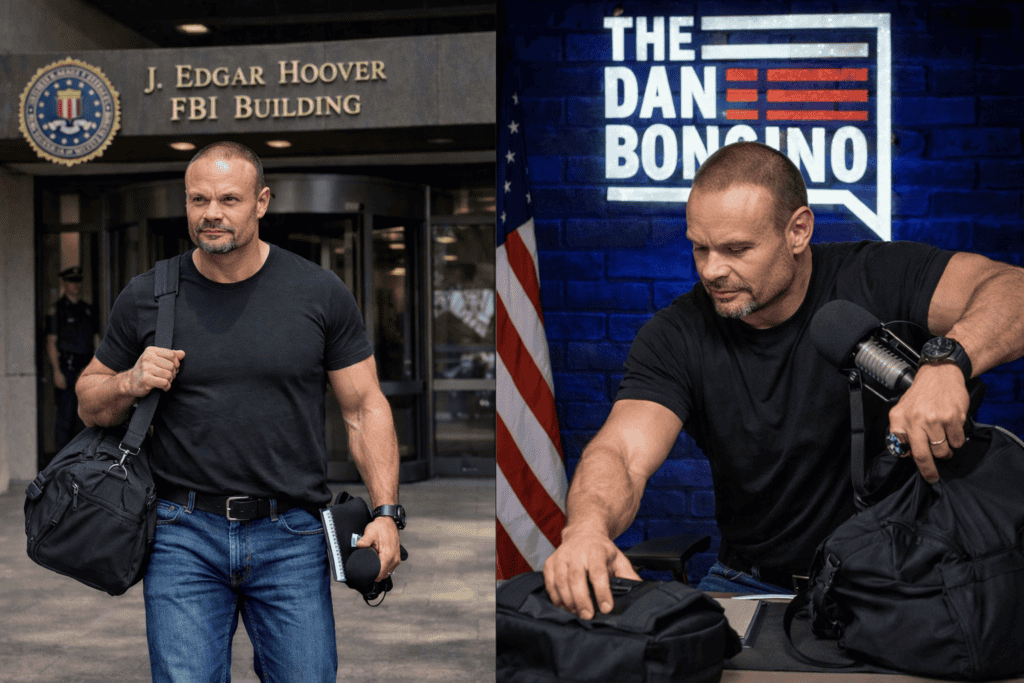
In early 2026, former FBI Deputy Director Dan Bongino announced the relaunch of The Dan Bongino Show, marking his return to podcasting less than a year after departing the Federal Bureau of Investigation. This shift from a high-level law enforcement post back to media highlights key dynamics in political narratives, media incentives, and public discourse. Understanding the mechanisms behind this move is important for interpreting how media careers and institutional roles interact to shape public information environments.
Who Is Dan Bongino, and What Roles Has He Held?
Dan Bongino is an American political commentator, former law enforcement official, and media personality. He started his career as a New York City Police Department officer, then served as a United States Secret Service agent, before moving into media and politics. Bongino hosted The Dan Bongino Show on platforms like Rumble and had a presence on Fox News prior to his appointment as Deputy Director of the FBI in March 2025 under the Trump administration.
His tenure in the FBI lasted less than a year; he officially left the position in January 2026 and soon after announced the return of his podcast.
What Is Driving His Return to the Podcast Platform?
Bongino’s podcast return is driven by both personal career incentives and broader media market dynamics. The Dan Bongino Show has historically reached a large audience, operating as a daily talk program with substantial digital and live-stream viewership. The relaunch, set for February 2, 2026, will feature a two-hour daily format distributed across major podcast platforms and livestreamed exclusively on Rumble, indicating a strategic media positioning that leverages existing audience demand and digital monetization opportunities.
His departure from the FBI role followed reports of internal tensions and public scrutiny, along with commentary from former colleagues and officials suggesting that he may have grown dissatisfied with the bureaucratic constraints of government service compared to the autonomy of media production.
Why Does This Career Shift Matter in the Context of Media Incentives?
Bongino’s career arc illustrates how media incentives and institutional roles interact. In media, personalities with large followings benefit from direct audience engagement, brand loyalty, and monetization through platform partnerships. In contrast, institutional roles like a deputy FBI director involve bureaucratic responsibilities, constrained messaging, and limited control over public narratives.
The podcasting space generally rewards controversial voices and strong branding, whereas law enforcement leadership requires adherence to procedural norms and public accountability. Shifting back to a podcast allows Bongino to capitalize on his media identity, where incentive structures prioritize audience growth and sponsorship revenue over institutional governance. This transition exemplifies how individual incentives can align more with media ecosystems than with institutional bureaucracies when public attention and personal brand equity are at stake.
When Did These Shifts Become Noticeable?
The media–institutional shift began formally in March 2025 when Bongino stepped away from his podcast and radio show to join the FBI. His announcement in December 2025 that he would resign in January 2026 signaled the start of his transition back to the media. Within weeks of resigning, networks and platforms announced the relaunch of his show, highlighting how rapidly media structures can react to personnel changes and audience expectations.
Where Are These Effects Most Visible?
The returning podcast will be visible primarily on digital platforms such as Rumble (for livestreaming) and mainstream podcast distribution services like Apple Podcasts and Spotify (for audio). This distribution strategy reflects broader trends in media, where alternative digital platforms play a significant role in political commentary and audience engagement, bypassing traditional broadcast channels and tapping into niche, highly engaged communities.
How Does This Reflect Broader Trends in Public Discourse?
Bongino’s trajectory highlights structural patterns in how public discourse is shaped by the incentives of media ecosystems versus administrative institutions. Media environments reward visibility, message control, and direct audience interaction—often at the expense of nuance and institutional constraint. Meanwhile, institutional roles, such as government leadership, emphasize procedural integrity, collective accountability, and depersonalized messaging. The transition from institutional office back to media underscores how individuals with public platforms can influence narratives and public discourse by shifting roles to where they hold the most narrative control and economic incentive.
Bottom Line
Dan Bongino’s return to podcasting after a brief tenure as FBI Deputy Director illustrates the tension between institutional responsibilities and media-driven incentives. His career shift underscores how media platforms can offer greater individual autonomy and economic rewards, while institutional roles impose structural limits on messaging—and thus shape how public narratives are formed. This case highlights broader trends in public discourse, in which media ecosystems increasingly attract high-profile individuals seeking direct influence over their audiences. media narratives, political incentives, public discourse analysis, media economics, narrative framing, information systems