A Tragic Outcome That Was Chosen, Not Imposed
Another night. Another confrontation. Another life lost because someone decided to resist law enforcement instead of complying and living to fight their case in court. While the precise second-by-second details of the Minneapolis shooting are still being debated, one fact remains stubbornly unfashionable to say out loud: the perpetrator was not an innocent bystander. He chose to interfere, to resist, and to escalate a volatile situation involving armed officers operating in a city already teetering on the edge of chaos.
This wasn’t a peaceful misunderstanding. This was a conscious decision to challenge authority in the middle of an enforcement action. Actions have consequences, and pretending otherwise is how Minneapolis ended up here in the first place.
Minneapolis Isn’t “Protesting,” It’s Revolting
Let’s drop the euphemisms. What we’re watching in Minneapolis isn’t organic outrage or spontaneous civic engagement. It’s a well-funded, well-coordinated insurrection against governmental authority, carried out under the warm rhetorical blanket of “social justice.” Activist networks, political operatives, and ideologically captured officials have combined to create a hostile operating environment where law enforcement is deliberately restrained, harassed, and second-guessed in real time.
When elected officials openly encourage citizens to swarm officers with cameras, interfere with arrests, and treat federal agents as enemies of the people, they aren’t de-escalating. They’re lighting the fuse and stepping back.
Leadership Paralysis Is Fueling The Fire
Enough is enough. The federal response has been a masterclass in weakness disguised as restraint. Strongly worded letters are not policy. Press conferences are not enforcement. Advisories do not stop mobs.
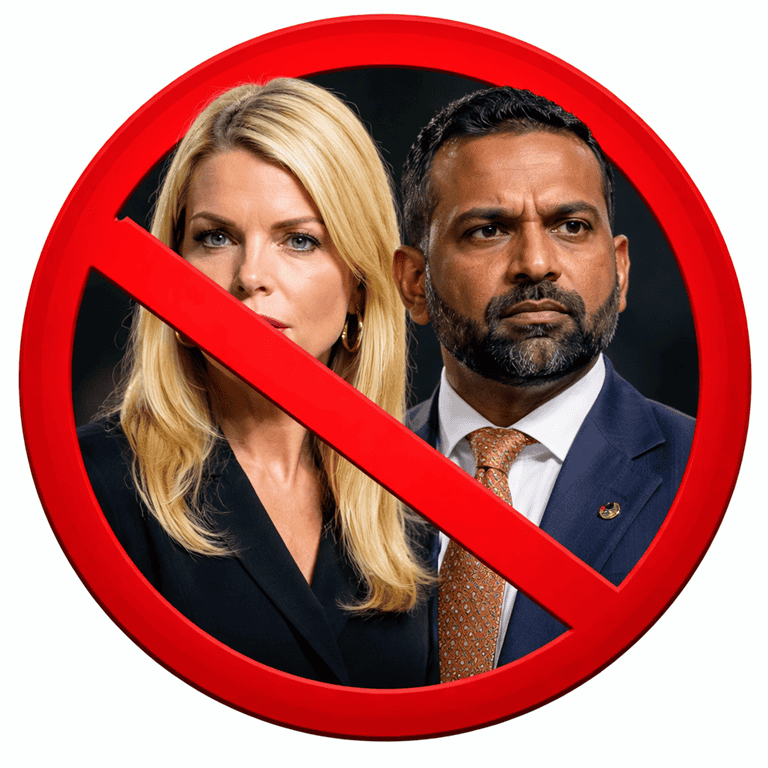
If leadership cannot or will not act decisively, then leadership must change. Attorney General Pam Bondi and a Justice Department that confuses optics with outcomes are worse than useless—they’re dangerous. FBI Director Kash Patel, more interested in media tours than institutional repair, signals to radicals that the adults have left the room.
This vacuum of authority invites escalation. And escalation gets people killed.
Local Officials Aren’t Innocent Bystanders
Governor Tim Walz and Mayor Jacob Frey didn’t just “fail” to control the streets. They actively constrained law enforcement while legitimizing street-level resistance. That combination is toxic. When police are told to stand down, and mobs are told to stand up, the result is predictable disorder.
You don’t see this level of sustained chaos in states where laws are enforced, deportations are carried out, and officials don’t flirt with insurrectionary rhetoric. Order isn’t cruelty. Enforcement isn’t fascism. And weakness is not compassion.
The Double Standard On Force And Fraud
Here’s the bitter irony: while law enforcement officers are micromanaged into paralysis, fraudsters drain public systems at the local, state, and federal levels with near impunity. The same politicians who wring their hands over enforcement rarely hesitate to excuse mass abuse of public funds or to obstruct investigations that might embarrass their allies.
If the system is going to be taken seriously again, enforcement must be aggressive, consistent, and unapologetic—against fraud, against organized disorder, and against those who exploit chaos for ideological or financial gain.
Bottom Line
This is no time for weakness. Compliance saves lives. Law enforcement cannot function when political leaders side with mobs and sabotage authority. Minneapolis didn’t stumble into this crisis—it was led here. Until officials choose order over optics and consequences over cowardice, the cycle will continue. And more lives—avoidable lives—will be lost.
We are so screwed.
— Steve