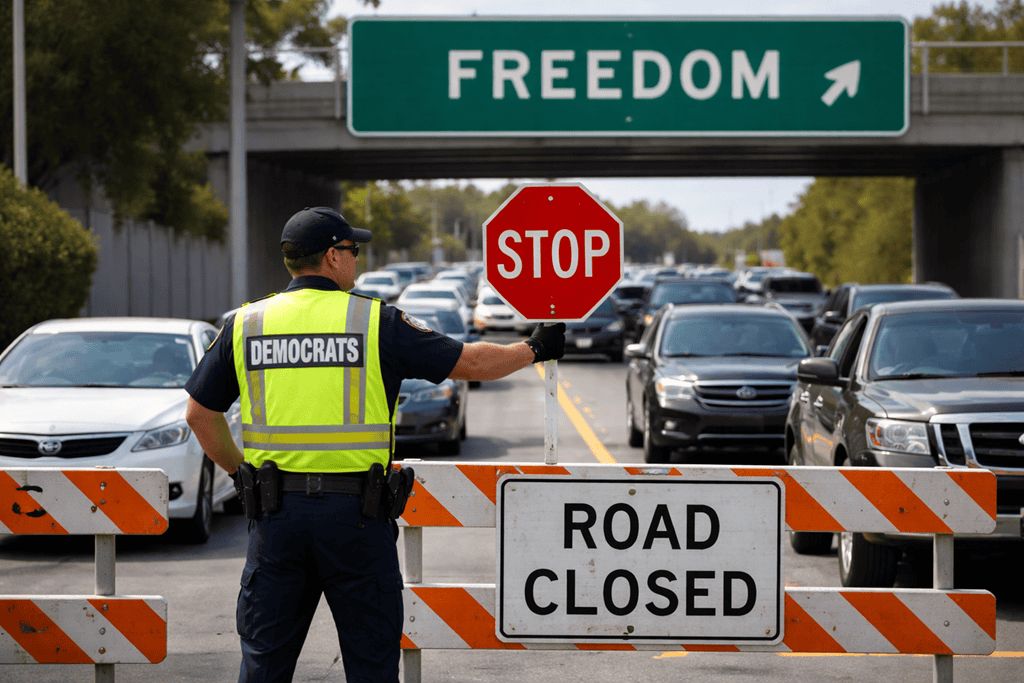
For generations, the open road has meant independence. Work, family, emergencies, vacations, opportunity — all of it depends on the ability to get in your car and go. Now that freedom is being squeezed from every direction, and it’s not accidental. It’s policy. And it’s being driven by Democratic lawmakers who have decided you drive too much, go too far, and need to be managed.
This isn’t about safety. It isn’t about roads. And it sure isn’t about helping working families. It’s about control, revenue, and forcing behavior change, whether you can afford it or not.
Mileage Tracking Is Surveillance Disguised As Climate Policy
Let’s call this what it is: government monitoring of your daily life. States are pushing plans to track how many miles you drive, how often you drive, and eventually how much driving they will allow. The justification is emissions. The mechanism is data collection. The outcome is surveillance.
Once mileage is tracked, it can be taxed. Once it’s taxed, it can be capped. Once it’s capped, you are no longer free to move without permission or penalty. Politicians insist this is harmless “planning,” but history shows that every “study” becomes a fee, and every fee becomes a mandate.
If you think this stops at data collection, you’re not paying attention.
Higher Gas Prices Are A Feature, Not A Bug
At the same time, lawmakers are talking about reducing how much you drive, but they’re supporting policies that keep fuel prices elevated. Restrict supply, increase regulation, attack domestic energy production — then act surprised when gas becomes too expensive for long trips, family visits, or vacations.
This isn’t incompetence. It’s a strategy. Make driving so painful that people will comply. When a road trip becomes a luxury and commuting eats your paycheck, behavior changes fast. That’s the point.
The politicians pushing this agenda rarely feel the pain. They live near transit hubs, work from offices with chauffeurs or expense accounts, and vacation without worrying about fuel costs. Everyone else gets told to “adjust.”
Regulations Punish The People With The Fewest Options
Rural families. Suburban parents. Tradespeople. Small business owners. Caregivers. These people don’t have the luxury of buses and subways. They don’t structure their lives around dense urban planning experiments.
More regulations mean more inspections, more compliance costs, more fees, and more hoops to jump through just to keep your car legal. Mileage fees don’t hit the wealthy hardest — they hit people who have no alternative to driving.
When lawmakers talk about “reducing trips,” what they really mean is reducing your choices.
This Isn’t About Choice — It’s About Forcing Compliance
Supporters claim these policies “expand options,” but nothing expands choice by making one option more expensive, more monitored, and more restricted. You don’t create freedom by punishing independence.
Public transportation is fine where it works. Electric vehicles are fine if you want one. But forcing people into systems that don’t fit their lives is social engineering, not progress.
And once government budgets start depending on mileage fees, do you really believe they’ll ever want you driving less?
Bottom Line
Driving is not a privilege handed out by politicians. It’s a necessity for modern life. Monitoring mileage, inflating gas prices, and burying drivers under regulations is an attack on mobility, independence, and economic reality.
Drivers need to stop treating this as an abstract policy and start recognizing it as a direct threat to their freedom. Because once the tracking is in place and the costs are locked in, the road back will be closed.
We are so screwed.
— Steve