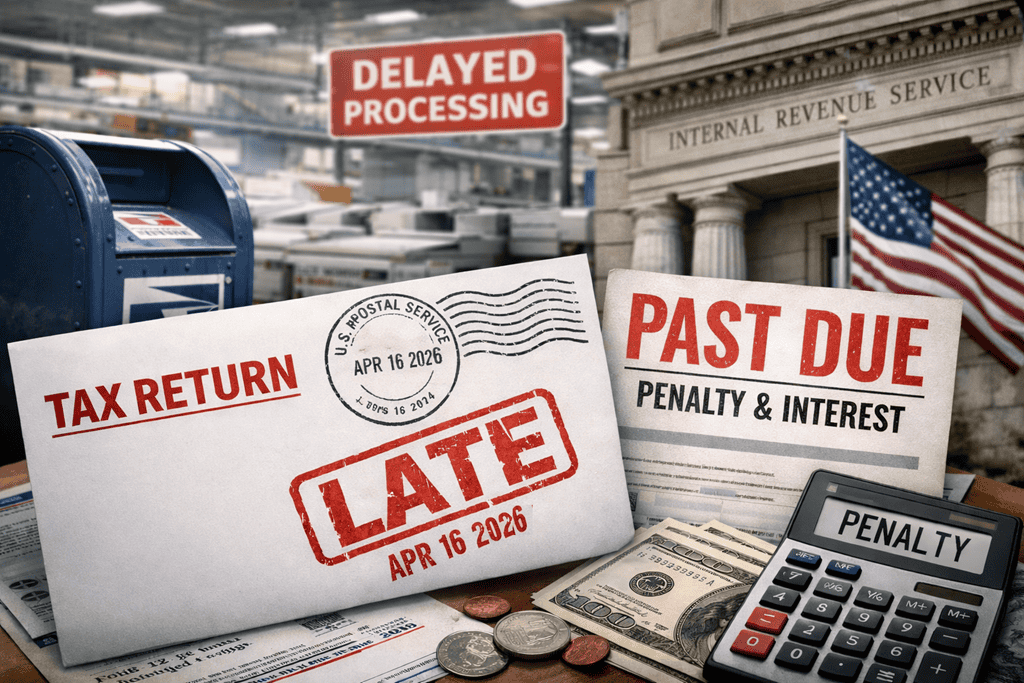
When “Neither Snow Nor Rain” Becomes “Too Bad, So Sad”
For generations, Americans trusted the U.S. Postal Service to do one basic thing right: mark the date you mailed something. That tiny black stamp used to mean certainty. It meant fairness. It meant that if you followed the rules, the system followed them too.
Not anymore.
Behind the bland bureaucratic language of “modernization” and “efficiency,” USPS procedure changes have turned postmarking into a trapdoor—one that drops squarely beneath ordinary Americans who did nothing wrong.
The Postmark Scam Nobody Voted For
Here’s the dirty little secret: today’s USPS postmark often reflects when your mail is processed, not when you actually mailed it. That’s not a small technical tweak. That’s a fundamental betrayal of how the system has always worked.
Drop your tax return in the mailbox on the deadline? Congratulations—you may still be late. Why? Because your envelope might sit unprocessed overnight, or longer, before some distant facility finally slaps a date on it. That date—not the day you mailed it—is the one that counts.
You played by the rules. The rules changed anyway.
Automation Over Accountability
USPS defenders will tell you this is about automation, efficiency, and centralized processing. Translation: machines matter more than people.
Local post offices no longer reliably postmark mail the day it’s received. Mail flows through regional hubs, where volume—not accuracy—drives decisions. If the system is backed up, too bad. If the stamp comes late, that’s on you.
There is no warning label on the mailbox. No sign telling Americans, “Depositing mail here does not guarantee timely postmarking.” The burden has quietly shifted from the institution to the individual—and that’s not an accident.
When Bureaucracy Becomes Punishment
This change hits hardest where it hurts most: taxes, legal filings, government deadlines. Missed postmark dates can mean penalties, interest, lost rights, and endless disputes with agencies that refuse to care how or when you mailed something.
Intent doesn’t matter. Common sense doesn’t matter. Your word doesn’t matter.
All that matters is a stamp you don’t control, applied by a system that no longer works the way Americans were told it works.
And if you think the IRS or a court is going to shrug and say, “Well, USPS messed up,” think again. The government always believes the government.
The Vanishing Social Contract
This isn’t just about mail. It’s about trust.
Americans are expected to comply with deadlines down to the day, the hour, sometimes the minute. Yet the institutions enforcing those deadlines feel no obligation to provide reliable tools to meet them.
That’s not efficiency. That’s institutional arrogance.
USPS didn’t announce this shift to the public. There was no national notice, no consumer education campaign, no clear guidance. People are learning the hard way—through fines, penalties, and rejection letters.
If a private company pulled this stunt, regulators would be all over it. But when the government does it, you’re told to adapt or suffer.
Americans Adjust, Bureaucrats Shrug
Now the advice is to jump through hoops: hand-canceled stamps, certified mail, special carriers, electronic filing. Translation: the old, simple method no longer works, and that’s your problem.
The system didn’t get better. It got colder, more remote, and more hostile to normal life.
And once again, the cost of “progress” is being paid by the people who least deserve it.
Bottom Line
USPS procedure changes didn’t just modernize mail—they weaponized it against the public. By treating postmarks as processing artifacts rather than proof of mailing, the system now punishes Americans for delays they cannot see, control, or prevent. This isn’t modernization. It’s bureaucratic malpractice dressed up as efficiency.
We are being screwed.
— Steve