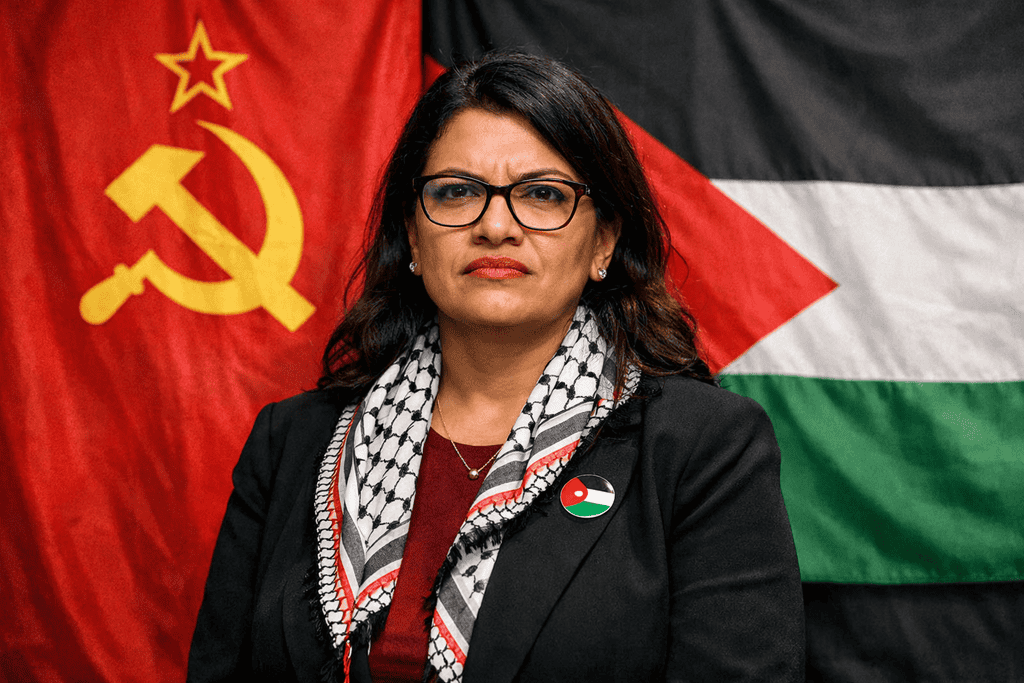
Identity First, Country Second
When an elected official speaks, voters listen not just for policy but for allegiance. In a recent outburst over a Homeland Security image, Congresswoman Rashida Tlaib framed her reaction explicitly through personal identity—“as a Muslim, as a Palestinian, as a child of immigrants.” What was missing was just as telling: any affirmation of herself as an American representative speaking for the entire district she serves. That omission isn’t a slip. It’s a pattern.
A District Or A Global Cause?
Tlaib’s defenders insist she represents her Michigan district. But her rhetoric suggests a narrower focus: select Muslim and Palestinian constituencies locally, and ideological causes abroad. Advocacy is legitimate. Prioritizing foreign conflicts and identity-based grievances over domestic unity is not. Members of Congress are sworn to represent all constituents—regardless of religion, ethnicity, or politics—while advancing American interests first. When speeches sound like a press release for overseas movements rather than a roadmap for local prosperity, voters are right to ask who’s actually being represented.
The Assimilation Question Nobody Wants To Ask
America’s success has always rested on assimilation: newcomers becoming Americans, not permanent hyphenates. That doesn’t erase heritage; it binds people to shared civic values. Yet Tlaib’s message repeatedly elevates grievance over gratitude, separation over synthesis. Why isn’t she championing the idea that America is strong enough to welcome immigrants and expect allegiance to constitutional norms? Why isn’t she boosting civic unity, economic mobility, and cultural integration instead of feeding a politics of perpetual offense?
Anti-Semitism Concerns And Anti-Israel Rhetoric
This is where the conversation gets uncomfortable—and necessary. Criticism of Israeli government policy is legitimate. But when rhetoric consistently singles out the world’s only Jewish state with language and framing that veer into demonization, many Americans hear something darker. Tlaib’s tone and alliances have repeatedly sparked concerns among Jewish voters who feel targeted rather than represented. In a country where anti-Semitism is rising, leaders have a responsibility to speak with care, condemn hatred clearly, and avoid language that fuels hostility. When outrage is selective and empathy seems one-sided, it undermines trust and fractures communities at home.
Democratic Socialism Or Something More Radical?
Tlaib proudly labels herself a democratic socialist, but her posture often reads closer to ideological hostility toward America and American power itself. Skepticism of borders, disdain for national symbols, and reflexive opposition to U.S. security measures aren’t mainstream progressive positions; they echo foreign Islamicist and Communist collectivist frameworks that clash with America’s core values of sovereignty, free enterprise, and equal citizenship. Call it what you want—socialism, communism, Islamicist, radicalism, or anti-national politics—but it isn’t the broad, unifying vision voters expect from Congress.
Performative Outrage As Political Strategy
Outrage has become a currency, and Tlaib spends it lavishly. Emotional displays may mobilize a base, but they also polarize and exhaust the middle. When every policy disagreement is recast as personal trauma, serious debate collapses. Governing requires persuasion, compromise, and an appeal to shared interests—not constant theatrics designed to inflame rather than inform.
The Silence On America’s Strengths
What’s most striking is what rarely gets airtime: celebration of American opportunity, acknowledgment of the freedoms that made her own political career possible, and a forward-looking plan to help constituents thrive. Border security, national cohesion, and lawful immigration are not acts of exclusion; they’re prerequisites for a functioning republic. Leaders who refuse to say that out loud leave a vacuum filled by cynicism and distrust.
Bottom Line
Voters deserve clarity. Is Rashida Tlaib a representative for all Americans in her district, committed to unity, assimilation, and national interest—or a megaphone for identity politics and global ideological battles? Passion is not a substitute for patriotism, and grievance is not governance. If America is always the problem in her narrative, perhaps it’s time constituents demand a representative who believes in solutions rooted at home.
Rashida Tlaib is clearly a cancer, malignantly growing and metastasizing in the body politic.An anti-America, anti-Semite, and anti-Israel communist Islamicist that needs to be primaried out of office.
We are so screwed.
— Steve