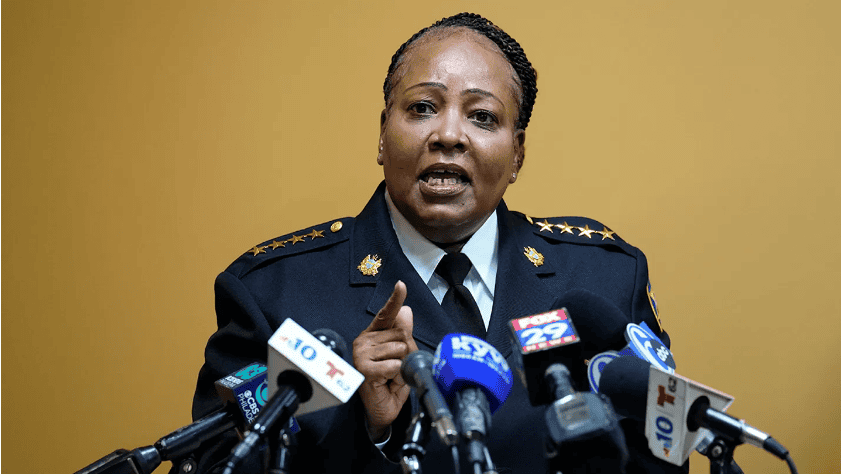
Philadelphia Sheriff Rochelle Bilal slammed U.S. Immigration and Customs Enforcement as “made-up, fake, wannabe law enforcement,” asserting that ICE’s actions violate both “legal law” and “moral law.”
Public Office Is Not A Personal Megaphone
There is a reason uniforms exist. They are not costumes. They are symbols of authority, restraint, and jurisdiction. When a law enforcement official steps in front of a microphone wearing a badge, every word carries the implied weight of the state. That power is supposed to be used to calm tensions, clarify facts, and reinforce lawful process—not to inflame crowds, mock other agencies, or audition for viral applause.
Yet we are now watching a disturbing trend: elected sheriffs, prosecutors, and other officials using their official status to publicly attack agencies outside their jurisdictions, often in language better suited to a street argument than to a sworn office. This is not courage. It is recklessness.
Jurisdiction Matters—And Ignoring It Is Dangerous
Jurisdiction is not a technicality. It is the backbone of order in a federal system. Local officials have authority within defined boundaries. Federal agencies operate under congressional mandate and executive authority. When a local official publicly declares that another lawful agency is “fake,” “wannabe,” or criminal—while standing in uniform—they are not offering legal analysis. They are eroding institutional legitimacy.
That erosion has consequences. Ordinary citizens do not parse statutory authority in real time. They hear a sheriff say, “These aren’t real cops,” and suddenly, federal agents become fair game. That is how words turn into confrontations, and confrontations turn into violence. Officials who know this—and they do—have no excuse.
Performative Outrage Is Not Leadership
Theatrical call-and-response chants, slang-laced taunts, and threats of retaliation may play well on social media, but they are poison in real life. Law enforcement leadership is supposed to de-escalate, not audition for applause. When an official frames another agency as an occupying force or a personal enemy, they are not defending the public. They are mobilizing resentment.
Worse, these statements are often made about incidents still under investigation, outside the speaker’s chain of command, and beyond their legal authority. That is not transparency. That is prejudice wrapped in a press conference.
Undermining Other Officials Fuels Social Unrest
Public trust in institutions is already fragile. When one official uses their platform to delegitimize another—especially across levels of government—it sends a clear signal: rules are optional, and authority is subjective. That message encourages exactly the kind of lawlessness these officials claim to oppose.
You cannot demand respect for your badge while teaching the public to sneer at someone else’s. You cannot call for “justice” while encouraging crowds to believe that certain officers are illegitimate by definition. That is how riots begin: not with facts, but with official-sanctioned contempt.
Sanctions Are Not Censorship—They Are Accountability
No one is arguing that officials should be silent. They can criticize policy through proper channels, testify before legislatures, or speak as private citizens without the trappings of office. What they should not do is weaponize their uniform to issue inflammatory judgments outside their jurisdiction.
Sanctions are appropriate when officials cross this line. Ethics investigations, censure, suspension, or removal should be on the table when conduct undermines public safety or encourages disorder. Accountability is not punishment; it is maintenance of the system.
If a rank-and-file officer spoke this way about another agency on duty, discipline would be swift. Leadership should not get a free pass simply because its audience is larger.
Bottom Line
Law enforcement authority depends on restraint, clarity, and respect for lawful boundaries. When officials in uniform publicly attack other agencies outside their jurisdiction—especially in language that invites confrontation—they are not protecting the public. They are destabilizing it. If law and order still mean anything, those who undermine it from positions of power must face real consequences.
We are so screwed.
— Steve