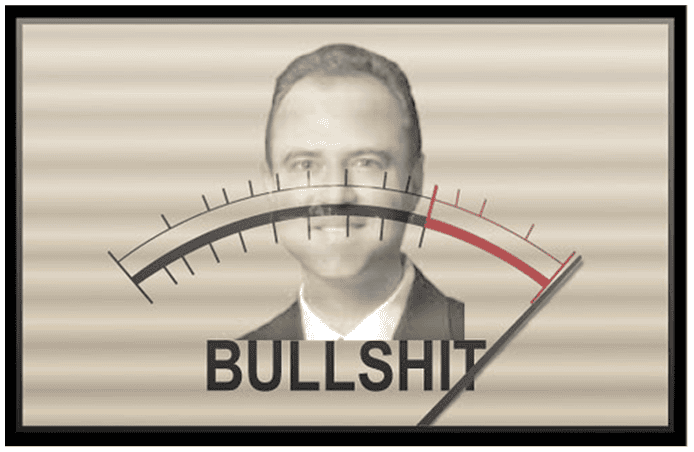
If hypocrisy were a renewable resource, Adam Schiff could power the entire West Coast. Watching Schiff solemnly declare that others “can’t be trusted to run a fair investigation” is like watching a pyromaniac lecture the fire department on safety protocols. The irony isn’t subtle. It’s deafening.
Schiff, a man whose political career has been marinated in leaks, media manipulation, and performative outrage, now wants the public to believe he’s the final authority on credibility. You don’t even need popcorn for this spectacle. The absurdity feeds itself.
The Patron Saint Of Prejudged Conclusions
Let’s get something straight. Adam Schiff has never met an investigation he didn’t want to pre-write. From breathless cable news appearances to confidently asserting evidence he later admitted he “couldn’t discuss,” Schiff has perfected the art of implying guilt first and worrying about facts later.
So when he warns that Kash Patel or Kristi Noem might “reach a certain conclusion,” the projection is almost cinematic. This is the same politician who spent years insisting outcomes were obvious long before investigators finished doing their jobs. Apparently, bias is only dangerous when someone else is holding the pen.
Leaks, Lies, And The Memory Hole
Schiff’s reputation didn’t come from nowhere. It was built leak by leak, insinuation by insinuation, with a press corps happy to play stenographer. Anonymous sources flowed. Corrections trickled. Accountability never arrived.
Now he’s deeply concerned about “credible and independent investigators.” That’s rich coming from someone who routinely tried cases in the court of public opinion, selectively releasing information when it suited a narrative and going silent when it didn’t. Trust lectures from Schiff land about as well as sobriety advice from a bartender at last call.
Suddenly A Federalism Scholar
Perhaps the most convenient transformation is Schiff’s sudden rediscovery of state jurisdiction. When federal power suits his goals, states are speed bumps. When it doesn’t, he’s waving the Tenth Amendment like a hall monitor with a whistle.
Yes, Minnesota has jurisdiction. No one seriously disputes that. But Schiff isn’t making a legal argument — he’s making a political one. He wants investigators “at the table” who are ideologically aligned and unlikely to challenge his preferred framing. Independence, in Schiff-speak, means agreement.
The Reckless Mouthpiece Complaining About Recklessness
Schiff accuses Kristi Noem of being a “reckless mouthpiece.” This from a man whose career highlights include breathless TV hits declaring bombshells that fizzled into footnotes. Calling someone reckless while standing on a mountain of rhetorical wreckage takes confidence. Or a total lack of self-awareness.
Worse, he condemns others for speaking without evidence while casually smearing motives and outcomes. The rule seems simple: accusations from Adam Schiff are responsible governance; accusations against his allies are dangerous misinformation.
Trust Me, Says The Man Who Burned The Bridge
Trust isn’t demanded. It’s earned. And Schiff spent years cashing it in for airtime and applause. Now he’s shocked — shocked — that the public might roll its eyes when he positions himself as the guardian of investigative purity.
This isn’t about justice for a victim. It’s about control of the narrative. It’s about who gets to decide which facts matter, which questions are allowed, and which conclusions are “acceptable.” Schiff doesn’t want fairness. He wants familiarity.
Bottom Line
When Adam Schiff says others can’t be trusted to run a fair investigation, what he really means is they can’t be trusted to agree with him. The irony is overwhelming, the hypocrisy is on-brand, and the performance is tired. If credibility were a prerequisite for moral lecturing, Schiff would have forfeited the microphone years ago.
We are so screwed.
— Steve