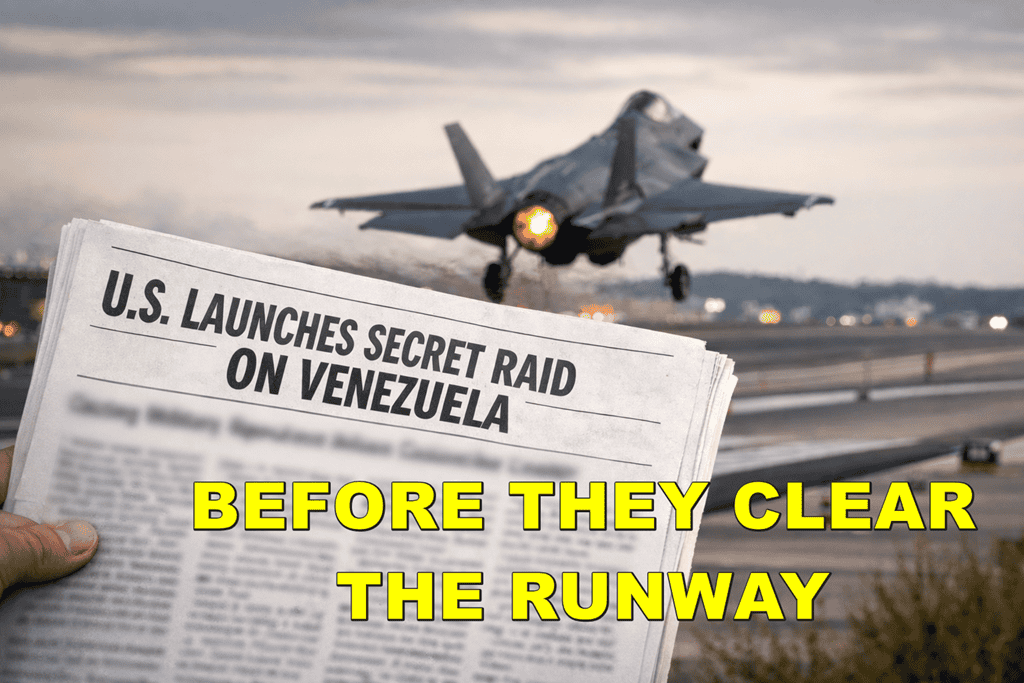
A Government That Can’t Keep A Secret.
Once upon a time, classified meant classified. Today, Washington leaks like a rusted-out bucket, and nobody seems embarrassed—least of all the people responsible. From the White House to the Pentagon, sensitive information leaks to the press with alarming regularity, often before the ink is dry on operational orders. We’re told to clap for “transparency,” but this isn’t transparency. It’s negligence dressed up as virtue, and it’s putting lives at risk.
What’s worse is how normalized it’s become. A leak isn’t treated like a crime scene anymore; it’s treated like a strategy memo. Anonymous officials whisper, favored reporters publish, reputations are managed, and then everyone pretends this is just how democracy works. It isn’t.
When The Media Shows More Discipline Than Politicians
Here’s the bitter irony: in the recent Venezuela operation, major newsrooms knew what was coming and chose to hold their fire. They delayed publication because they were warned that American troops could be endangered. Read that again. The press, so often accused of recklessness, showed restraint. They honored an old-school understanding that some information, at some moments, should not be blasted to the world.
Meanwhile, the political and bureaucratic class that actually holds the clearances continues to leak like it’s a competitive sport. Somehow, journalists can still recognize red lines, but officials sworn to protect secrets can’t. That should terrify anyone who cares about national security.
The Vanishing Consequences Problem
So let’s ask the obvious question: whatever happened to leak investigations and prosecutions? There was a time when unauthorized disclosures triggered aggressive probes. Careers ended. Charges were filed. People learned that classified information wasn’t a personal branding tool.
Today, investigations are announced with great fanfare and then quietly fade into the fog. Names are never named. Charges are never filed. The message is unmistakable: if you leak for the “right” reasons, or to the “right” people, you’ll be fine. That isn’t the rule of law. That’s selective enforcement.
Leaks As Political Weapons
Leaks are no longer about whistleblowing in the public interest. They’re about power. They’re used to box in presidents, sabotage rivals, launder internal dissent, and shape narratives without accountability. A well-timed leak can derail policy, inflame allies, and embolden adversaries—all without a single vote cast or responsibility taken.
And let’s be clear: hostile foreign intelligence services are watching all of this. They don’t need to hack us when we’re doing the work for them. Every unpunished leak teaches them exactly how porous our system has become.
Oversight Theater And Accountability Avoidance
Congress loves to hold hearings. Inspectors general love to write reports. Press secretaries love to say, “We take this very seriously.” But seriousness without consequences is just theater. If leaking classified information is truly dangerous, then failing to prosecute it is indefensible.
You cannot demand total secrecy from soldiers in the field while tolerating casual disclosure from officials in offices. You cannot praise “stealth and precision” after an operation while ignoring the fact that the plan was already circulating among insiders and reporters beforehand.
Bottom Line
The most disturbing part of all this isn’t that leaks happen. It’s that nobody seems interested in stopping them. When the media shows more discipline than the government, something is deeply broken. Until leaks are investigated aggressively and prosecuted consistently, no matter who leaks or why, Washington will keep hemorrhaging secrets, and eventually, the cost won’t just be embarrassment. It will be blood.
We are so screwed.
— Steve