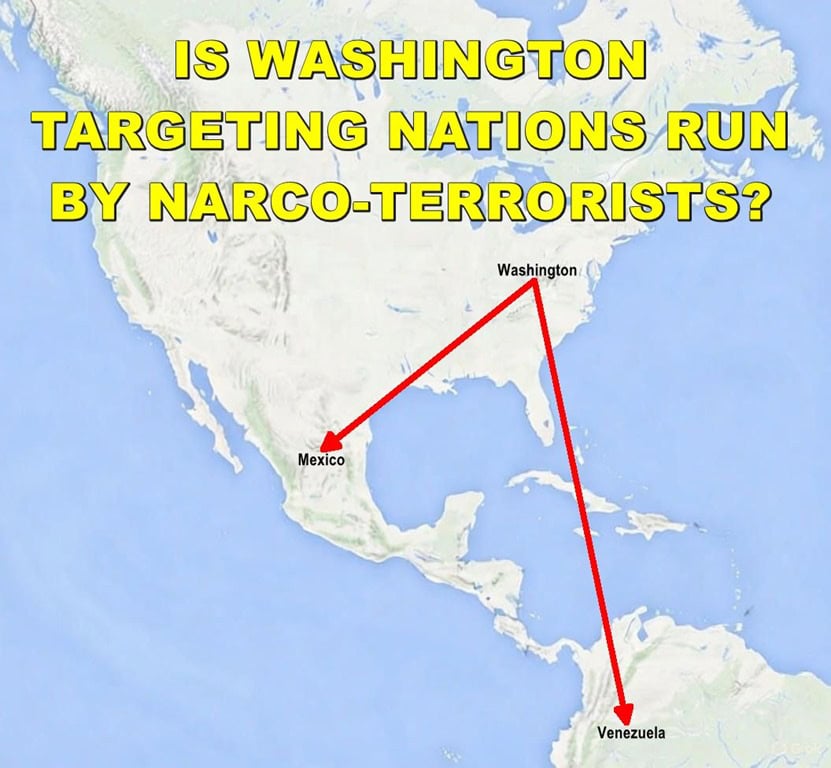
The Power of Regime Change: Bye-Bye Venezuelan President Maduro.
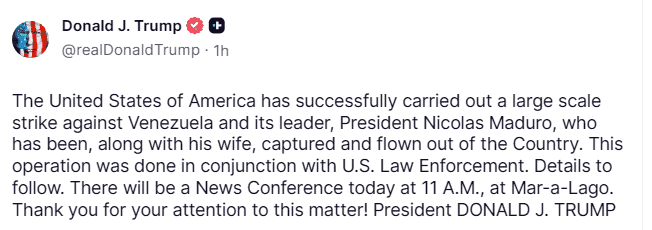
Same Explosions, Different Excuses
Explosions light up Caracas. Missiles hit military sites. Jets scream overhead. Civilians panic. And yet we’re told, calmly, smugly, that this is not a war. It’s “pressure.” It’s “law enforcement.” It’s “counter-narcotics.”
Sound familiar?
The same semantic gymnastics were rejected, rightly, when Vladimir Putin rolled tanks into Ukraine. Then, it was war. Full stop. No amount of Kremlin wordplay could sanitize it. But when Washington launches strikes on Venezuela, suddenly war becomes a matter of branding, not behavior.
This isn’t confusion. It’s hypocrisy by design.
How War Gets Rebranded As ‘Not War’
The U.S. government insists that strikes on Venezuela don’t constitute an act of war because they’re framed as limited, targeted actions against alleged criminal networks and a “narco-state” regime. The language matters more than the missiles.
Call it “counter-drug operations,” and the bombs are supposedly different. Invoke “national security,” and international borders become optional. Avoid a formal declaration of war, and the Constitution is treated like a suggestion.
This logic hinges on one dangerous idea: that war only exists if the attacker admits it.
By that standard, Russia could have avoided global condemnation by calling its invasion of Ukraine a “counter-NATO policing action.” No one bought that lie then. Why are we expected to swallow it now?
And, by that standard, Mexico is a legitimate target.
Selective Sovereignty And Convenient Law
Supporters of the strikes argue Venezuela forfeited its sovereignty by tolerating drug trafficking and election fraud. That’s a powerful claim—and an incredibly slippery one.
If criminal activity inside a country justifies foreign missile strikes, then no nation on Earth is safe. Drug routes pass through dozens of countries. Corruption stains countless governments. Yet only certain regimes are deemed fair game, usually the ones that refuse to align with U.S. interests.
Russia used a similar argument in Ukraine: corruption, extremists, security threats. The West dismissed it as imperial nonsense. Again, rightly so. But principles that only apply to your enemies aren’t principles at all.
They’re excuses.
No Declaration, No Debate, No Accountability
One of the clearest differences between real war and pretend war is public honesty. Wars require debate. Wars require buy-in. Wars require accountability.
“Operations” do not.
By avoiding the word “war,” leaders avoid Congress, public scrutiny, and legal consequences. The American people are told after the fact, once the explosions have already echoed across another capital city.
Putin used brute force and lies. Washington uses precision weapons and euphemisms. Different styles. Same result: bombs falling on a sovereign nation without its consent.
International Law Isn’t A Choose-Your-Own Adventure
Under international law, crossing borders to conduct military strikes is aggression unless justified by immediate self-defense or explicit authorization. Accusations, however serious, are not authorization.
Russia violated that rule in Ukraine. The U.S. risks violating it in Venezuela while insisting the rules don’t apply because the motives are “better.”
That argument doesn’t hold. The law doesn’t care about your intentions. Only your actions.
And missiles launched from warships are not a memo. They are an act of force. Pretending otherwise insults both intelligence and history.
Bottom Line
If Russia’s attack on Ukraine was war, then U.S. missile strikes on Venezuela are war too—whether Washington admits it or not. You don’t get to redefine violence because your flag is different. Bombs don’t become moral just because you call them policy.
War without honesty is still war. And pretending otherwise is how empires rot from the inside.
By this definition, Mexico is simply another target, with actions more egregious than Venezuela.
We are screwed. Something is going wrong in Washington.
— Steve