The Crime Nobody Wants To Name
There is a special kind of crime that doesn’t need a gun, a getaway car, or a ski mask. It wears a clipboard, files paperwork, and quietly erases the truth. The destruction of incriminating evidence is not a side issue, not a paperwork error, and not a “clerical problem.” It is a high-value crime because it attacks the one thing accountability depends on: proof.
When documents disappear at the exact moment scrutiny arrives, alarms should be blaring. Instead, we’re told to shrug, sympathize, and move along. That reflex is how corruption survives.
Missing Documents Are Not A Coincidence
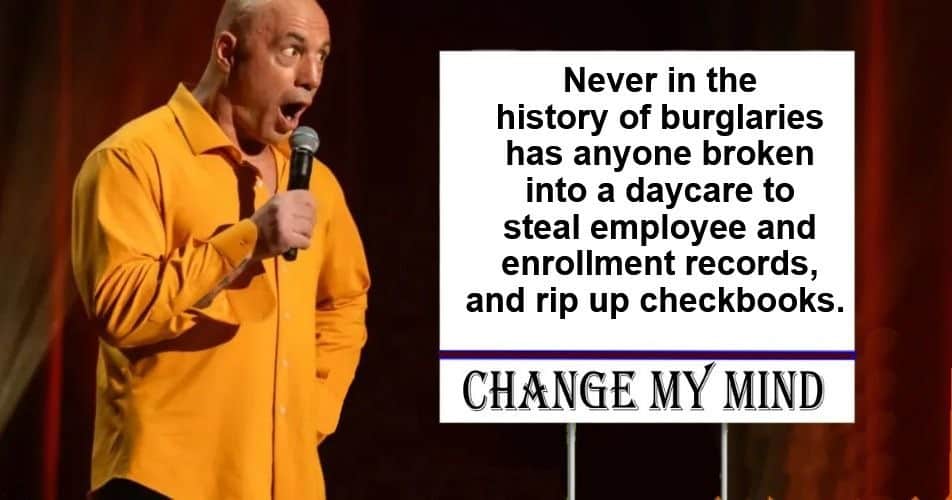
In Minnesota, a daycare center claimed that “important documents” conveniently vanished during an alleged burglary. Enrollment records. Employee files. Checkbooks. The very materials investigators would examine to determine whether everything was on the up-and-up.
Police, meanwhile, reported no documented loss at the time of the initial response. That contradiction alone should trigger intense public concern. Evidence doesn’t get to exist and not exist at the same time. Either the documents were stolen, or they weren’t. Either a crime occurred, or it didn’t. Anything in between is fog, and fog is where accountability goes to die.
The Oldest Trick In The Fraud Playbook
Whenever money is involved, the disappearance of records is never neutral. It is the oldest trick in the fraud playbook:
- No documents, no trail.
- No trail, no case.
- No case, no consequences.
This isn’t about any one daycare or any one community. It’s about a system that repeatedly encounters “lost,” “destroyed,” or “stolen” evidence whenever oversight gets uncomfortable. At some point, coincidence stops being plausible and starts being policy.
Weaponizing Victimhood To Avoid Scrutiny
The moment questions are asked, the conversation often pivots. Attention shifts from documents to feelings. From records to rhetoric. From accountability to claims of targeting and harassment.
Threats and hateful messages are unacceptable, full stop. But public sympathy cannot be used as a shield against legitimate scrutiny. Two things can be true at once: harassment is wrong, and missing records demand explanation. When emotional appeals replace transparency, the public loses twice.
Why Evidence Destruction Is A High-Value Crime
Destroying evidence isn’t just about hiding one bad act. It protects entire networks. It delays investigations until statutes expire. It forces prosecutors to settle for lesser charges or walk away entirely. It drains public trust while draining public funds.
When an assistant U.S. attorney says billions in welfare funds have been lost to fraud, the destruction of records isn’t a footnote. It’s a cornerstone. Fraud at scale requires administrative silence, missing paperwork, and institutional reluctance to ask hard questions.
Silence Is The Enabler
The most dangerous part of evidence destruction isn’t the act itself. It’s the collective decision to treat it as awkward rather than criminal. When leaders downplay it, media tiptoe around it, and agencies accept it, they normalize it.
That normalization tells bad actors exactly what they need to know: erase the proof, and you erase the problem.
Bottom Line
The destruction or disappearance of incriminating evidence should be treated as the serious, high-value crime it is. Not an inconvenience. Not a misunderstanding. Not a public relations issue. Evidence is the backbone of justice, and when it vanishes, justice collapses with it. If Minnesota, or any state, wants to stop fraud, it must start by treating missing documents not as bad luck, but as a five-alarm warning.
One might even compare the Somalis to Irish Travelers, both tight-knit communities where in-group ethics differ from out-group, enabling systematic fraud against the host society’s systems without internal stigma. And, for those miscreants who scream racism, it’s not racist to notice patterns, as similar scrutiny would apply to any group that engages in large-scale systemic fraud.
We are so screwed.
— Steve