Justice For Sale In Celebrity America.
There is a moment in every grotesque crime story when the narrative pivots. It stops being about dead victims and becomes a sympathy tour for the accused. That pivot happens faster when the family is wealthy, connected, and surrounded by publicists, attorneys, and friendly media stenographers. Suddenly, a double homicide isn’t a slaughter. It’s a “medical crisis.” The killer isn’t a killer. He’s a “psychotic victim” of pharmaceuticals, trauma, and everything except personal responsibility.
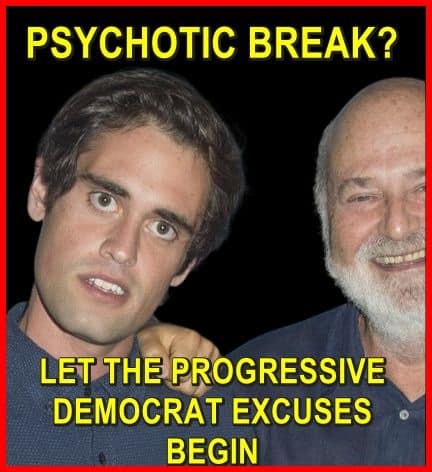
In the case involving the son of Hollywood royalty, Rob Reiner, the script flipped almost instantly. Two people were found brutally stabbed in their own mansion, throats slit in a scene that would be called savagery if it happened in a trailer park. But because the address was gated and the last name was famous, the story became a tragic misunderstanding wrapped in psychiatric jargon.
The Magic Shield Of Mental Health Excuses
Mental illness is real. Medication complications are real. But so is violence, and so is accountability. When someone is described by insiders as “erratic and dangerous,” when family members themselves warn police that he should be a suspect, and when a long trail of destruction, drug abuse, and violent outbursts exists, the public is supposed to ignore all of that and focus on one convenient explanation: the meds did it.
This is where money matters. A $70,000-a-month rehab facility doesn’t just offer treatment. It offers insulation. It creates a paper trail designed to reframe brutality as pathology. The accused isn’t violent; he’s “out of his head.” He’s not a threat; he’s “struggling.” Every act becomes an unfortunate side effect, not a conscious choice.
From Ticking Time Bomb To Tragic Victim
Friends reportedly described the accused as a ticking time bomb long before the killings. Walls punched. Property destroyed. Meth binges. Threats. Fear. These aren’t subtle warning signs. They are sirens. Yet after the blood is spilled, those warnings are retroactively repackaged as proof that he was a victim all along.
This isn’t compassion. It’s narrative laundering. It takes a pattern of escalating danger and runs it through a public relations rinse cycle until the only thing left is a sob story about pharmaceutical side effects. The dead are erased. The killer is centered.
Celebrity Parties And Selective Amnesia
Even the social details reek of privilege. A-list holiday parties. Famous hosts. Industry insiders who allegedly intervened to keep authorities from being called. If this were a working-class family, the police would have been there in minutes. Instead, discretion ruled the night.
Names like Conan O’Brien and Bill Hader float through the story, not because they matter to the victims, but because they reinforce the bubble. This is a world where bad behavior is managed, not confronted, until it explodes.
Two Systems, One Brutal Truth
There are two justice systems in America. In one, violence earns prison. In the other, it deserves a diagnosis, a team of attorneys, and a carefully crafted explanation about altered brain chemistry. When you’re wealthy and connected, your worst acts are rebranded as medical events. When you’re not, they’re crimes.
The public is being conditioned to accept that wealth can turn murder into a misunderstanding. That enough money can blur the line between killer and casualty. The right attorney can argue that a blade to the throat is really just a prescription gone wrong.
Bottom Line: Stop Confusing Sympathy With Surrender
Mental health awareness should never mean surrendering the idea of justice. Treatment and accountability are not mutually exclusive. But when celebrity, money, and influence collide, accountability is always the first thing sacrificed.
Two people are dead. That is the only fact that should matter. Everything else is spin.
We are so screwed.
— Steve