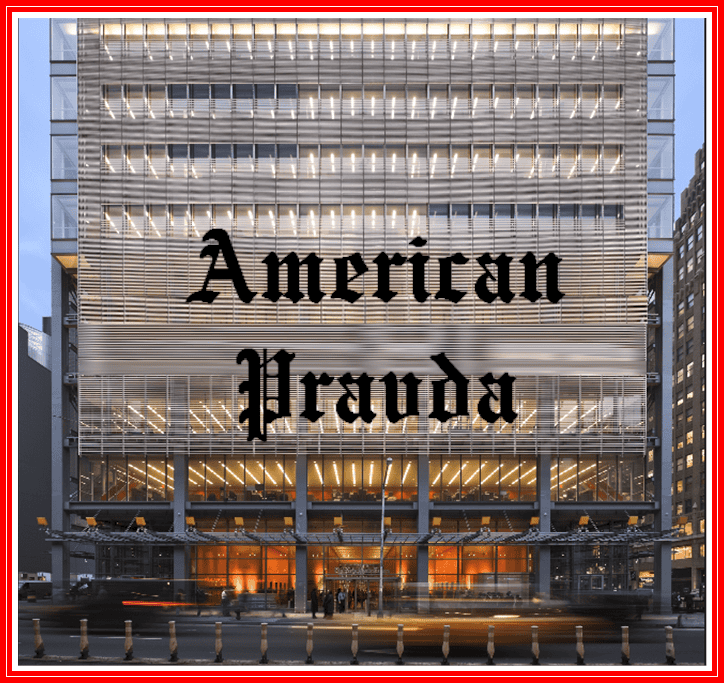
America’s Newspaper of Record Picks a Side – And It’s the Side Already Running the City.
Let’s get one thing crystal clear: the same New York Times that spent years lecturing us about “defending democracy” just published a glowing love letter to the people who already control Portland’s city government, budget, bureaucracy, and narrative, and pretended they’re the scrappy rebels fighting The Man.
That’s not journalism. That’s propaganda with a fact-checking department.
Who Actually Holds Power in Portland (Spoiler: Not the “Moderates”)
In the Gray Lady’s fairy tale, the Democratic Socialists of America bloc on the city council is courageous underdogs battling corporate greed and “mainstream politicians.” Reality check: these are the mainstream politicians now. They caucus together, vote together, mock dissenters in private Slack channels, and control every major committee. Their campaigns were bankrolled by public-sector unions and California millionaires who want to cosplay as revolutionaries.
They didn’t ride some nationwide red-wave-for-socialism. They gamed a charter reform that voters thought was about “modernizing government,” then packed the new districts, rewrote the rules, and installed their own people on every “independent” commission. That’s not a movement. That’s a very successful capture of the institutions, followed by the New York Times saluting it as plucky resistance.
The Consequences Are in Plain Sight – If You Bother to Look
While the Times waxes poetic about “deliberative governance,” Portland is living the actual experiment:
- Homeless encampments that swallow entire neighborhoods
- Gun murders at record levels
- A downtown that looks post-apocalyptic five years after COVID
- Ambulance response times are pushing 30 minutes in a city that brags about being “progressive.”
- Businesses are fleeing so fast that the commercial vacancy rate rivals Detroit’s
But sure, tell me again how the socialists are “taking time to study the issues” instead of admitting they have no idea how to run a city of 650,000 people.
When the Establishment Poses as the Insurgency
The cruelest joke is the cosplay itself. These councilors show up in keffiyehs and Palestine pins, quoting Fanon between votes to defund police and create racially exclusive programs – then go home to houses in the whitest, richest parts of the city. They’ve mastered the aesthetics of revolution while wielding institutional power more ruthlessly than the old-guard developers they claim to hate.
And the New York Times eats it up. They quote the socialists uncritically, frame every critic as a greedy centrist, and never once ask the obvious question: if you already run the city, who exactly are you “resisting”?
America’s Pravda Has Chosen Its Heroes
This isn’t about one bad article. It’s about a pattern. The New York Times has decided that “socialist” is now a feel-good brand for upper-middle-class college graduates who want radicalism without risk. They’ll fly a reporter 3,000 miles to Portland, have drinks with the right activists, collect the approved quotes, and file a story that reads like a DSA press release with better punctuation.
Meanwhile, the working-class Portlanders – black, white, Latino, Asian – who just want safe streets, functioning garbage pickup, and schools that teach reading instead of revolution get painted as the villains for noticing their city is falling apart.
That’s not journalism. That’s narrative enforcement for the regime that already won.
Bottom Line
If the New York Times can look at Portland’s socialist city council – flush with institutional power, union cash, and bureaucratic control – and still call them “outsiders,” then the paper isn’t just biased. It’s willfully blind, ideologically captured, or actively running interference for the new American nomenklatura.
Choose whichever explanation keeps you up at night.
Remember, the New York Times minimized the Holocaust, Stalin’s Holodomor, the deliberate mass starvation of Ukraine, and received a Pulitzer Prize while overlooking mass murder and human tragedy on an unbelievable scale. This rag is even worth lining birdcages.
We are being screwed.
— Steve