The “Record Low” Crime Rate That Doesn’t Add Up
So we’re being told, again, that America’s homicide rate is the lowest in modern history. Great news, right? The FBI is patting itself on the back, crime analysts are nodding along, and headlines are already drafted celebrating a “historic drop.”
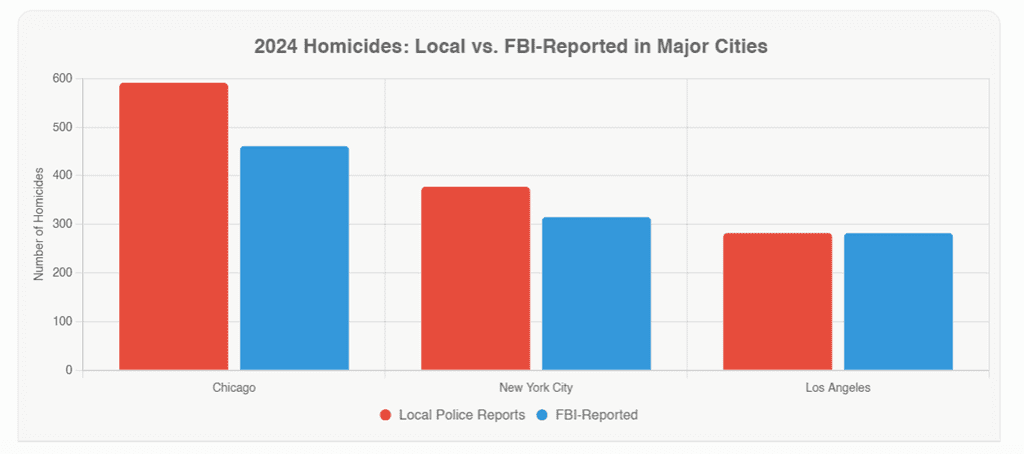
But here’s what has me furious: these glowing national numbers keep clashing with what residents actually see in major progressive communist democrat governed cities, many of which are battling visible waves of violence, carjackings, retail crime, and assaults. And every time these cities report their data, the numbers look suspiciously… neat. Too neat.
We’re long past the point where these discrepancies are just “quirks” in reporting. They’re systemic failures, and sometimes outright omissions, that distort national crime trends and hide the real problems the public faces with every day.
When Cities Don’t Report, The Whole System Breaks
It’s no secret that the FBI’s crime reporting system relies on states and cities voluntarily submitting accurate, timely data. Here’s where the anger kicks in:
Large blue cities, the ones with the most crime volume, are also the most inconsistent, incomplete, or late in their reporting, especially when trying to downplay the obvious racial disparity of perpetrators.
When a city underreports homicides or fails to update aggravated assault data, it doesn’t just skew local figures; it drags down the national averages, creating the illusion of progress where none exists.
Meanwhile, FBI leadership touts “double-digit drops,” as if everyone’s on the same page. But how solid is a “record low” when the largest urban contributors are leaving out whole categories of incidents?
The Missing Numbers Nobody Wants To Talk About
The glowing national report relies heavily on jurisdictions that consistently report.
But take a hard look at the big cities with chronic data gaps:
- Some classify shootings as “assaults” to avoid bumping homicide stats.
- Others use outdated systems that can’t even submit accurate NIBRS data.
- Several cities report months late, or skip entire quarters, without consequence.
- Misclassifying the racial, ethnic, or national origin of perpetrators to produce more “progressive” numbers.
- And then there’s the infuriating tactic of simply not counting deaths that happen after a victim reaches the hospital, quietly shifting them out of homicide tallies.
This isn’t a conspiracy; it is bureaucratic rot and statistical sleight of hand. Yet these same cities bask in the glow of “historic national improvements” that they helped dilute.
An Overburdened FBI Isn’t The Problem—Broken City Reporting Is
Credit where it’s due: the shift in FBI resource allocation, the increase in arrests, and the agency’s stronger field presence are real achievements. But federal success can’t mask municipal failure.
You cannot fix what you refuse to measure. And too many city leaders treat accurate crime data like a political liability rather than a public safety necessity.
The result? A national picture painted with missing brushstrokes, and we’re all expected to applaud like the canvas is complete.
The Public Deserves the Truth—Not “Optimistic Previews”
When FBI leadership announces that the homicide rate is the “lowest in modern history,” that statement should be airtight. Unshakable. Based on full participation by every major city.
Instead, we get early previews, glowing forecasts, and celebratory quotes—all while the elephants in the room (New York, Chicago, Philadelphia, Los Angeles, and others) continue struggling to maintain transparent reporting systems.
Until those cities fix their data pipelines, reform their reporting culture, and stop playing political games with crime statistics, national numbers will remain half-story, half-optics.
And frankly, Americans are tired of being sold a narrative that collapses the moment you step onto a city sidewalk and see reality for yourself.
Bottom Line: Fix The Reporting, Then Celebrate the Trend
If crime truly is dropping nationwide, fantastic. Celebrate it. Build on it. Learn from the cities leading the improvement.
But stop pretending the system isn’t full of gaping reporting anomalies concentrated in the largest blue-run cities. Until those issues are addressed, every “historic low” will be tainted by the same unanswered question: What numbers aren’t we seeing?
I was waiting for FBI Director Kash Patel to yell “Bullshit” instead of taking a victory lap. Perhaps the truth will be reflected in the footnotes when the report is “officially” published.
We are so screwed.
— Steve