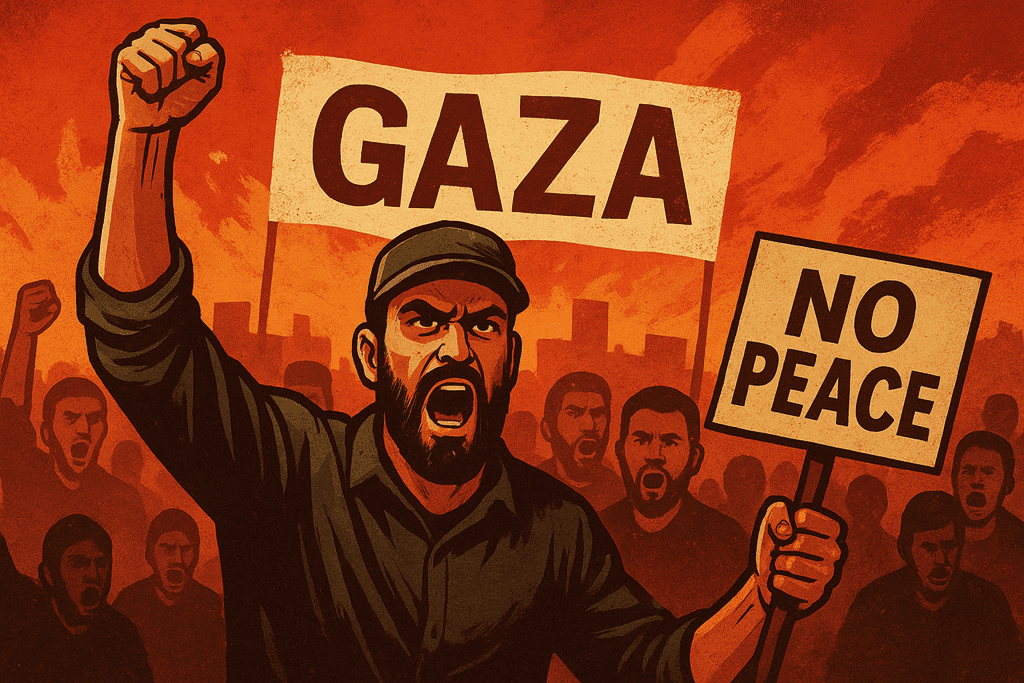
Hamas Stands Defiant Against Foreign Interference.
It’s astonishing how quickly the world forgets who actually controls Gaza. Despite endless media narratives suggesting a fragile peace is within reach, the reality on the ground is far more stubborn. Hamas and allied Palestinian factions are firmly in control of the besieged enclave, and they aren’t shy about rejecting what they see as foreign-imposed solutions.
The latest U.N. Security Council resolution, aimed at installing an international governing board and stabilization force in Gaza, has been met with fierce resistance. Hamas and its partners in Gaza have made it abundantly clear: they will not be pawns in a U.S.-led plan masquerading as a “peace initiative.”
The factions argue that the resolution undermines Palestinian self-determination. According to residents on the ground, the so-called international force is a thinly veiled attempt to impose external control, stripping Palestinians of their right to manage their own affairs. Moamen Abdul-Malek, a Gaza City resident, bluntly summed it up: “We don’t need forces from Arab or foreign countries to rule us. We are the people of this country, and we will bear responsibility for it.”
Trump’s Peace Plan: A Blueprint for Palestinian Subjugation
The Trump-backed peace plan, despite being hailed in some quarters as a step toward resolution, is widely viewed in Gaza as a betrayal. Hamas sees it not as a path to peace but as a framework that entrenches Israeli dominance and marginalizes Palestinian rights. Stripping resistance groups of their weapons, as proposed, isn’t just impractical; it’s an affront to the principle that occupied peoples have a legitimate right to defend themselves. As one Gaza resident noted, the plan “would strip the resistance of its weapons, despite the fact that resistance is a legitimate right of peoples under occupation.”
Meanwhile, the resolution conveniently ignores the daily realities Palestinians face in the West Bank and Gaza: unchecked Israeli attacks, settlement expansions, and the persistent denial of fundamental rights. Palestinians aren’t looking for vague assurances or empty gestures; they want autonomy, justice, and an end to the occupation.
Jihad Isn’t Over, and Islam Is Uncompromising
It’s not just Gaza’s political factions that are resisting foreign dictates. On a broader ideological level, voices from Qatar’s religious establishment are asserting that the struggle is existential. Ahmad Al-Muhammadi, a preacher with Qatar’s Waqf Ministry, made it clear that the conflict between Islam and its adversaries is not temporary or negotiable. In his words, Islam “neither compromises nor reconciles” with those who oppose it. This framing emphasizes that the ongoing conflict is not merely about borders or governance—it is a clash of values, identities, and futures.
Al-Muhammadi highlights that the battle is as much cultural and strategic as it is religious. Control over territories, resources, and historical sites, such as Jerusalem, makes this struggle multidimensional. These realities explain why Hamas and other factions are not willing to simply acquiesce to foreign-imposed “solutions.” For them, and for many across the region, resistance is not a choice—it’s a continuation of a centuries-long fight for survival, sovereignty, and identity.
Bottom Line: The World Needs to Wake Up
Anyone looking at Gaza today must confront a simple fact: peace cannot be imposed from Washington, Doha, or the U.N. Security Council. Attempts to install puppet administrations or disarm resistance groups will be met with rejection. Palestinians, both on the streets of Gaza and in the ideological discourse of the region, are making it abundantly clear, they will not surrender their rights, their autonomy, or their faith to fit someone else’s blueprint for “peace.”
Gaza is a testament to resilience, and Hamas is not stepping aside. Until the international community recognizes that, every plan, every resolution, and every “peace initiative” will remain nothing more than another paper tiger.
We are so screwed if we believe the Islamicist fairy tale of peaceful coexistence.
— Steve