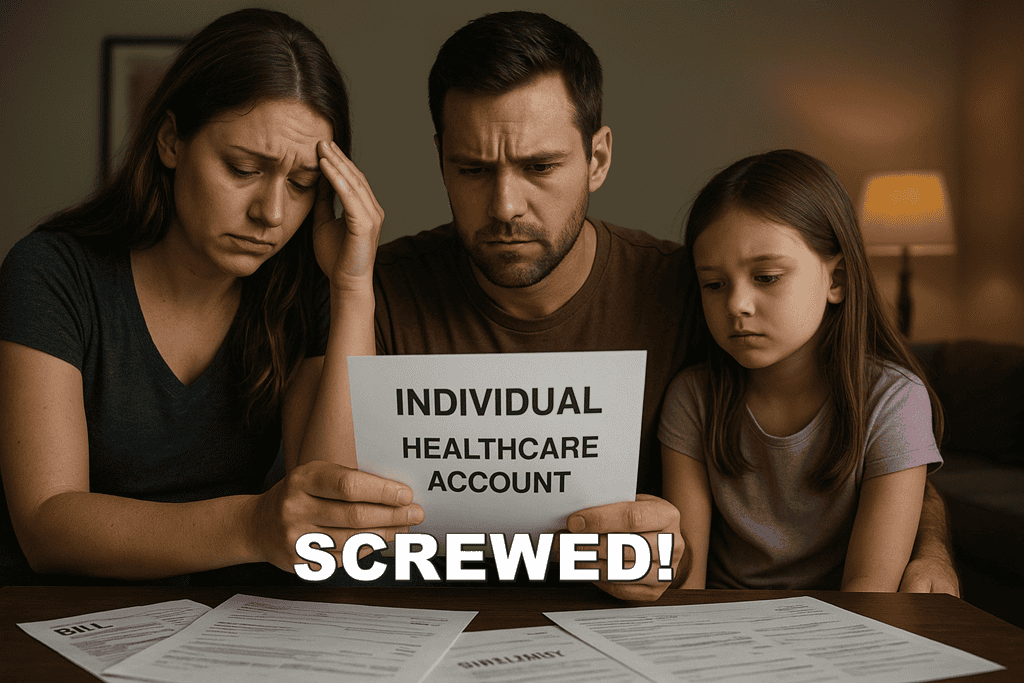
They Call It “Empowerment.” I Call It a Trap.
Lawmakers in Washington are floating a new idea: instead of sending Affordable Care Act (ACA) subsidies straight to insurance companies, they want to deposit the money into individual healthcare accounts for each of us to manage.
Sounds empowering, right? You get the subsidy cash, you decide which plan to buy, and you pay your premiums yourself. Freedom!
Except that for millions of Americans barely scraping by, this “freedom” could easily turn into a nightmare.
When Premiums Rise, Who’s Left Holding the Bag?
Here’s the problem: health insurance premiums are already set to rise next year. Without the automatic tax credit payments that currently go straight to insurers, individuals will have to front those premiums themselves, using money that lands in their new government-funded accounts.
If those premiums spike, as many expect, people will have a brutal choice:
Pay the full premium out of the subsidy account and maybe dip into their own pocket,
Or delay the payment and risk losing coverage altogether.
For anyone juggling rent, groceries, childcare, and gas prices, that subsidy money might start looking like an emergency fund, not a healthcare payment.
Let’s Be Real — People Will Use the Money for Something Else
Supporters of this plan like to pretend that people will always act rationally and prioritize health insurance. But when you’re behind on rent or facing a car repair that could cost you your job, health insurance premiums feel like a luxury.
That subsidy money, thousands of dollars for some families, could end up paying utility bills, school supplies, or medical debt. Once it’s spent, it’s gone. And when the insurance company doesn’t get its premium, coverage lapses.
No coverage means no preventive care, no prescription discounts, and no safety net when disaster strikes. One missed payment could send millions right back to the uninsured pool that the ACA worked so hard to shrink.
From Predictable Coverage to Constant Panic
Right now, the system is automatic. Your subsidy is applied directly to your premium each month, and you stay covered unless you actively cancel.
Under the proposed model, everything changes.
Every individual would need to:
- Keep track of subsidy deposits,
- Manually pay premiums on time,
- Navigate confusing payment portals,
- And deal with insurers when payments bounce or arrive late.
Miss one step? Your plan could terminate without warning. The safety net turns into a tightrope.
Insurance Companies Won’t Wait for Late Payments
From the insurer’s perspective, this new model is a logistical headache. Instead of getting a steady, guaranteed stream of federal payments, they’d rely on millions of individuals to pay their premiums on time — a cash-flow disaster waiting to happen.
Insurers might respond by raising rates even higher to offset late payments and new administrative costs. And when rates go up, fewer people enroll. When fewer people enroll, risk pools shrink. When risk pools shrink, prices go up again.
It’s a vicious circle, and ordinary people get crushed in the middle.
The Federal Budget Looks Better — But Real People Pay the Price
On paper, this system could save the government money. If people fail to use all their subsidy funds — or lose coverage due to missed payments — Washington spends less. Budget victory!
But it’s a hollow victory. The real cost shows up in unpaid hospital bills, emergency room visits, and lost productivity. Local clinics and hospitals end up eating those costs, which get passed back to taxpayers anyway.
The government saves a few billion in subsidies and spends it later cleaning up the fallout.
The Illusion of Choice
Proponents call this a “market-based solution.” But let’s be honest — choice means nothing if you can’t afford the options. For low- and middle-income Americans, managing healthcare dollars doesn’t feel like empowerment. It feels like another chore in a system that already treats us like accountants of our own survival.
Giving people control of subsidy money doesn’t fix the affordability crisis. It just outsources the stress to the very people least equipped to handle it.
Bottom Line: What Happens Next?
If this version of “personal responsibility” becomes law, millions could lose their coverage within months. The uninsured rate could climb again, insurers could retreat from the marketplaces, and emergency rooms could fill with people who thought they were “empowered” until the bills came due.
This isn’t empowerment. It’s abandonment disguised as reform.
While the Affordable Care Act is flawed and cannot survive without government subsidies, which the Democrats “sunsetted” at the end of 2024, they’ve effectively set the stage for premium shock in January, leaving millions of working families vulnerable to skyrocketing costs and disrupted coverage. It is unknown how the ACA can be reformed to cure its structural flaws.
We are so screwed.
— Steve