Crying Over Competition
France’s energy giant, TotalEnergies, based in Courbevoie, France, is throwing a tantrum over U.S. liquefied natural gas production. “We’re building too much,” whines CEO Patrick Pouyanné, as if American energy growth is somehow a crime. Let’s be clear: most of the world is starving for more LNG. India, Europe, and even China are lining up for reliable energy. The only people whining are those whose profits might shrink if they face real competition.
Market Reality Doesn’t Care
U.S. LNG projects are financed with long-term contracts. Demand is guaranteed before a single drop of gas leaves the plant. Global LNG consumption is skyrocketing, coal is being phased out, and AI-driven energy needs are climbing. The “glut” scare? A fantasy designed to protect entrenched European and Russian interests.
Profits Over Progress
While TotalEnergies worries about falling margins, Europe and allies gain cheaper, more reliable energy. Meanwhile, Putin loses leverage, and the U.S. strengthens its energy position. If complaining about free-market competition is the best the French can do, they’re showing exactly why America must keep producing.
Cheap Energy is a Myth Dressed in Numbers
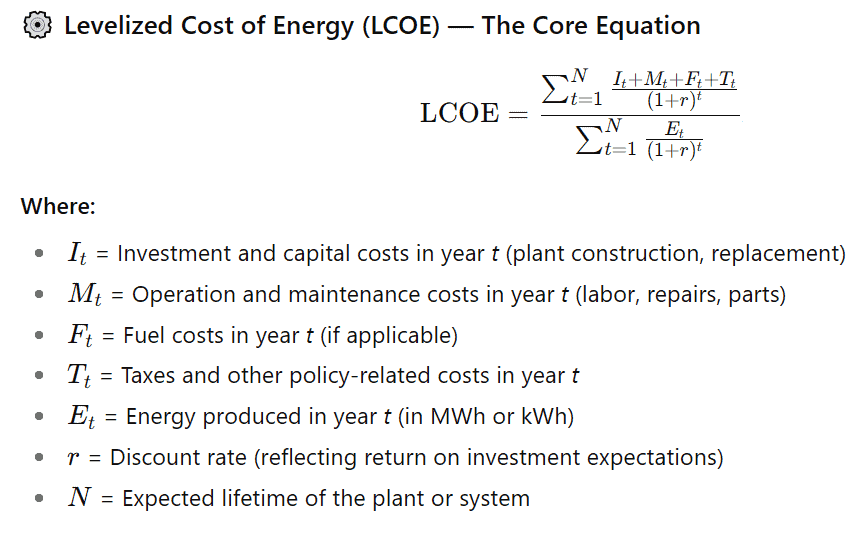
The cost of energy isn’t just the number on your monthly bill, far from it. It’s a reflection of an entire industrial and financial ecosystem: the power plants themselves, the engineers and operators who run them, the maintenance crews who keep everything from exploding turbines to failing transformers in line, the investors expecting a return, and yes, the taxes funneled to local, state, and federal coffers.
Every cent you think is “cheap” is actually a measure of all these moving parts. When people say, “nuclear energy is so cheap,” what they really mean is, “we’re ignoring the full economic cost and hoping you don’t notice.” The steel, concrete, and uranium aren’t free. The highly skilled labor isn’t free. The financing for multi-billion-dollar infrastructure isn’t free. And yet the narrative continues to be sold as an altruistic windfall to consumers.
“The cost of energy reflects far more than the price of fuel. It embodies the full lifecycle of production — the construction and upkeep of power plants, the livelihoods of the people who operate them, the returns that sustain investment, and the taxes that support every level of government.”
Every time someone touts “cheap energy,” someone else is bleeding money. The producers—the companies and their investors—take the hit, or worse, they cut corners and push hidden costs onto the public, often in the form of environmental damage, deferred maintenance, or political lobbying.
The Lobbyists’ Playground
If you think energy is cheap, consider who really sets the rules. Producers hire armies of lobbyists who cozy up to government officials. They wine, dine, and line pockets to maintain a delicate balance: prices high enough to protect their profits, low enough to avoid consumer revolt. That’s right—the “affordable energy” you think you’re getting is partially manufactured through a combination of political sleight-of-hand and public ignorance.
Meanwhile, mega-companies like TotalEnergies grumble about oversupply and falling prices while actively working to suppress competition elsewhere. Do you recall the French energy giant advising the U.S. to slow down LNG production? That’s not A concern for the global market. That’s profit protection. It’s about making sure someone else’s cheaper energy doesn’t undermine their margins—even if that means holding back energy that could power millions more homes and businesses.
Cheap Energy Hurts Everyone
Here’s the paradox: when energy is “cheap” for consumers, it’s often devastating for producers. And because producers are embedded in the global economic system, their losses ripple outward. Jobs are threatened. Investments dry up. Governments see shrinking tax revenue. The shockwave hits everyone, not just the energy sector.
Think of energy like blood in an economy. Cheap energy for consumers may feel like a boost in the short term, but if producers can’t survive, the system collapses. Infrastructure deteriorates, innovation stalls, and the economy becomes more fragile. You can’t have a truly stable market by pretending that energy is “free” to produce.
For The Economists: All Others Can Ignore This
The Bottom Line
Every watt of energy carries the weight of its creation. The steel and concrete, the engineers and operators, the investors who back it, the taxes that ripple through society—they all converge in the price you see at the meter. Energy isn’t just a commodity; it’s a mirror of the economy itself.
When pundits promise cheap energy, take them with a grain of salt. There’s no magic formula. The price reflects real costs and tradeoffs. The question isn’t whether energy can be cheap—it’s whether we’re willing to pay attention to who bears the hidden costs. Spoiler: if you’re only looking at the price tag, you’re ignoring the very people and systems that make it possible.
Next time a politician mentions cheap energy, ask them whose hand is in his pocket, grabbing his balls.
— Steve