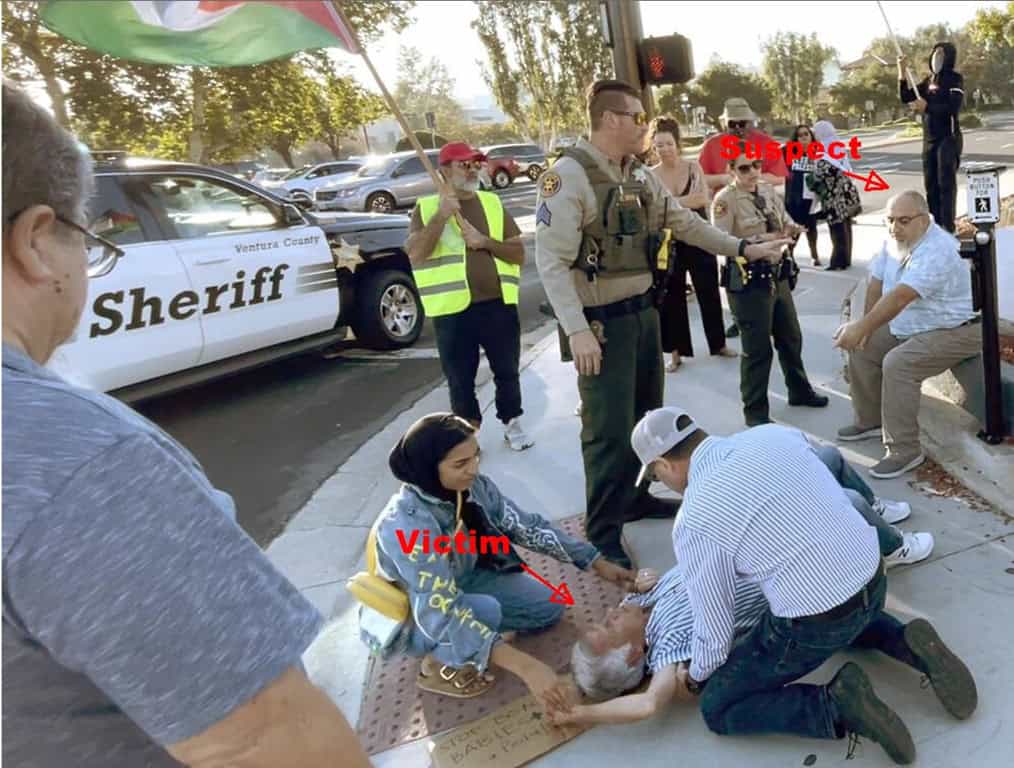
On November 5, 2023, a confrontation between pro-Israel and pro-Palestinian demonstrators in Thousand Oaks, California, left 69-year-old Paul Kessler dead at the scene. Witnesses report that Kessler was allegedly struck by a megaphone, fell backward, and hit his head, and the Ventura County Medical Examiner later ruled his death a homicide.
The Arrest and Charges
Loay Abdelfattah Alnaji, a 50-year-old Moorpark College professor, was arrested and charged in connection with Kessler’s death. Prosecutors allege that Alnaji struck Kessler with a megaphone, causing the fatal fall. Alnaji has pleaded not guilty, maintaining he was not responsible and that he was several feet away when the incident occurred. He remains on administrative leave, and his trial is pending.
This case highlights the delicate balance between ensuring accountability and respecting the due process of law. When high-profile incidents like this take months to reach trial, communities can feel justice is painfully slow.
Legal Proceedings and Evidence
In May 2024, Alnaji’s preliminary hearing concluded with a judge ruling that there was sufficient evidence for the case to proceed to trial. Prosecutors presented over 600 pieces of evidence, including video footage and witness testimonies, to support their case. The defense argued that Kessler’s pre-existing medical conditions, including a brain tumor affecting his balance, contributed to his fall.
As of this date, Alnaji is still employed by Moorpark College and his official page displays a religious Islamic website below his email address.
Justice Delayed, Justice Denied?
The phrase “justice delayed is justice denied” resonates deeply in situations like this. For Kessler’s family, friends, and the wider community, the waiting period can feel endless, leaving grief mixed with frustration and doubt. Timely justice is not just a legal imperative—it is a moral one. When trials are postponed or proceedings are slow, public confidence in the justice system can waver, and victims’ families may feel their suffering is compounded by bureaucratic delay.
The Broader Implications
Beyond the courtroom, the Thousand Oaks tragedy prompts reflection on the responsibilities of demonstrators, the importance of safe public protest, and the social tensions surrounding political expression. How can communities passionately voice their beliefs while ensuring the safety of all participants? How can authorities manage protests to prevent confrontation from escalating into tragedy?
The case also sparks a broader societal conversation about the intersection of free speech, political activism, and public safety. While the legal process unfolds, these questions remain urgent.
Bottom Line: Moving Forward
Almost two years after the incident, the trial pre-conference is scheduled for October 13, 2025, with the jury trial scheduled for October 20, 2025.
The community is watching closely. The incident serves as a stark reminder of the human cost when public disputes escalate into violence and highlights the critical importance of accountability and timely justice. For Kessler’s loved ones, and for society at large, the question remains: when justice is delayed, is it truly justice at all?
We are so screwed.
— Steve