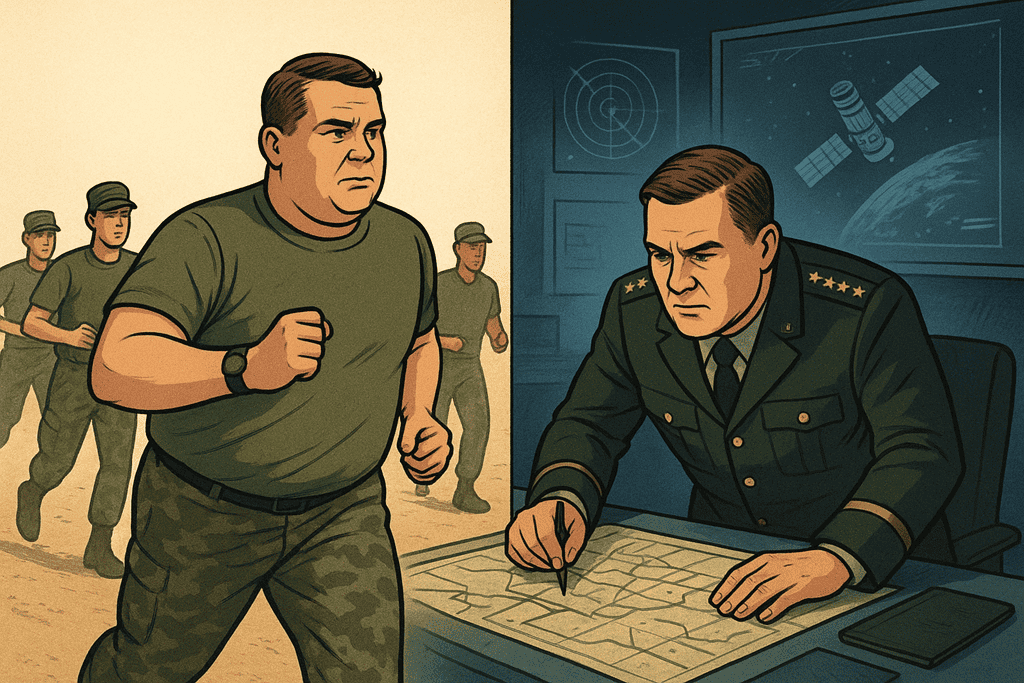
This week at Marine Corps Base Quantico, Secretary of Defense Pete Hegseth threw down a gauntlet that rattled the brass. In a fiery speech to hundreds of generals and admirals, he declared war on what he called “woke garbage” and “fat generals.” Effective immediately, every service member, from privates to four-stars, must meet strict weight requirements, pass physical fitness tests twice a year, and embrace daily training.
“Frankly, it’s tiring to look out at combat formations and see fat troops,” Hegseth said. “Likewise, it’s completely unacceptable to see fat generals and admirals in the halls of the Pentagon. It’s a bad look.”
The directive is part of a broader culture shift. Alongside tighter grooming standards, a return to the “highest male standard only” for combat tests, and a rollback of what Hegseth called “weaponized definitions” of hazing and toxic leadership, the Pentagon is being reshaped under a tougher, leaner philosophy. President Trump, who joined Hegseth on stage, promised that together they would build a force “stronger, tougher, fiercer, faster than it has ever been before.” Ironic, because a plump Trump is not exactly a shining exemplar of physical fitness.
On the surface, the message is straightforward: leaders must present themselves professionally. A fit general inspires fit troops. Standards at the top set the tone for the ranks below. But beneath the applause lines lies a deeper question: Does America risk mistaking appearances for effectiveness?
The Symbolism of Fitness
At the junior level, fitness is not symbolic; it’s a matter of survival. Infantrymen march with 80-pound packs, Marines fight through exhaustion, and pilots endure crushing G-forces. Their bodies are weapons. Physical discipline is inseparable from performance.
For generals and admirals, the picture is different. By the time an officer earns stars, they no longer storm trenches or kick down doors. Their battleground is intellectual: strategy rooms, war councils, and geopolitical negotiations. Their weapons are foresight, judgment, and the ability to out-think America’s adversaries.
Still, there is value in symbolism. Soldiers notice when their leaders hold themselves to high standards. A general who stays fit signals self-discipline, credibility, and respect for the uniform. Optics do matter, at least to a point. Nothing new here, General George S. Patton believed strict fitness and sharp grooming were marks of discipline, famously insisting that a soldier’s appearance reflected his fighting spirit and readiness for war.
The Risk of Confusing Image and Substance
The danger lies in overcorrection. By doubling down on weigh-ins and fitness tests for top brass, the Pentagon risks elevating aesthetics over effectiveness. Leaner generals won’t necessarily mean smarter generals.
History offers plenty of reminders. Winston Churchill, overweight and often in poor health, nevertheless steered Britain through its darkest hour with razor-sharp intellect and indomitable will. General George Marshall, architect of victory in World War II and later the architect of the Marshall Plan, wasn’t known for his physique, but for his vision. Waistlines rarely measure great strategists.
The military’s most pressing problems are not flabby generals but flabby doctrine. Bureaucratic paralysis, outdated procurement, and a culture of risk aversion pose far greater threats than a few extra pounds around a commander’s midsection.
The Warrior of the Future
Modern warfare underscores this tension. America’s enemies are not waiting to test our generals’ mile times; they are probing our networks, challenging our satellites, and exploiting AI. The next decisive battle may be fought in cyberspace, not on a beachhead.
This doesn’t mean fitness is irrelevant. The warrior of the future must be both athlete and intellectual — sharp in body and sharper in mind. A visibly disciplined general can inspire trust, but victory will hinge on how well that general understands drone swarms, cyber defenses, and great-power strategy.
Put differently: a six-pack doesn’t beat China. Smart doctrine does.
Bottom Line: Finding the Balance
Hegseth’s crackdown will resonate with troops tired of double standards, where enlisted members face strict discipline while senior leaders grow complacent. His push for accountability and discipline has merit. No soldier should see their commanding general as a symbol of sloppiness.
But America must be careful not to confuse performance with presentation. The sharpest weapon a nation has isn’t always muscle — it’s the mind.
The balance we need is clear: leaders who are fit enough to inspire, but wise enough to outthink adversaries. The general who wins America’s next war will not necessarily be the one who runs the fastest mile. It will be the one who sees the battlefield most clearly, makes the toughest calls, and leads with conviction.
We are so screwed.
— Steve