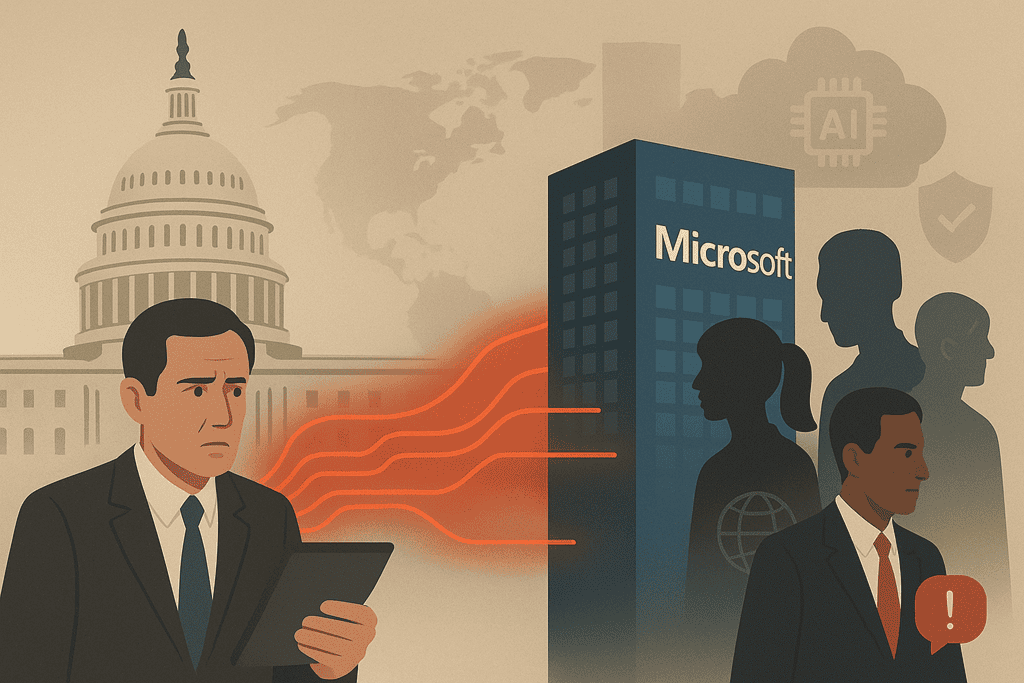
The Growing Role of Private Contractors in Government Operations
In modern governance, private contractors play an increasingly pivotal role, from cloud computing to AI analytics. Companies like Microsoft provide essential infrastructure and services to federal agencies, sometimes handling sensitive information and critical national security tasks. While outsourcing can increase efficiency, it also exposes governments to risks when contractors are staffed with personnel who are politically motivated or ideologically extreme.
The Case of Lisa Monaco and Microsoft
Recent events illustrate the potential dangers. Former Deputy Attorney General Lisa Monaco joined Microsoft as President of Global Affairs, sparking public controversy. Critics, including former President Donald Trump, have argued that individuals with hyper-partisan backgrounds may pose national security risks when employed by contractors working closely with government agencies.
Monaco’s extensive history in government, including her tenure as Deputy Attorney General under the Biden administration, combined with Microsoft’s extensive contracts with U.S. agencies, underscores potential concerns about impartiality and national security. During her time in federal service, she was involved in high-profile and politically charged investigations and controversies, including those surrounding the Hillary Clinton email investigation, the Benghazi attacks, Ukraine-related policy decisions, and the Russia collusion inquiries. While her direct role in each case varied, her proximity to these events situates her within a highly politicized environment, raising questions about how ideological alignment and prior political roles might influence decision-making in a corporate context that intersects with critical government functions. In short, the combination of partisan history and access to sensitive infrastructure amplifies the potential risks for government reliance on contractors like Microsoft.
How Ideological Employees Can Influence Policy Decisions
Employees with strong political or ideological leanings can, intentionally sabotage or unintentionally, influence the operations of the companies they serve, which in turn affects the government. From shaping AI algorithms to controlling access to sensitive data, the presence of hyper-partisan personnel can blur the line between private corporate priorities and public policy objectives. This dynamic can undermine trust in both government institutions and contractors.
National Security Implications
When contractors manage sensitive government operations, even subtle biases can have real-world consequences. In Monaco’s case, Trump’s statements centered on the removal of her security clearances and access to intelligence, emphasizing the potential national security risks posed by ideological actors in contractor roles. Governments must be vigilant to ensure that such individuals do not compromise classified or critical operational functions.
The Risks of Foreign Talent in Critical Government Contractor Roles
Microsoft, like many global technology companies, employs engineers from around the world, including China. While this international talent pool can drive innovation, it also raises security and confidentiality concerns when these engineers have access to systems used by U.S. government agencies. In sensitive areas such as cloud infrastructure, artificial intelligence, and cybersecurity, the involvement of foreign personnel, even without malicious intent, can create vulnerabilities. Governments relying on contractors must carefully evaluate not only the corporate policies and ethical standards of these companies but also the backgrounds and oversight of employees handling critical data and systems. The presence of foreign engineers illustrates the broader challenge of balancing global workforce needs with national security imperatives.
Microsoft, Israel, and the Risks of Contractor Influence on Sensitive Operations
Earlier this month, Microsoft faced a significant controversy involving its services provided to the Israeli military. After investigating claims that a division had developed a system to track Palestinians’ phone calls, Microsoft announced it would terminate cloud-based storage and artificial intelligence subscriptions for that unit. The decision highlights the delicate position of private contractors who operate at the intersection of global business, ethical concerns, and government contracts. It also highlights how employees with strong ideological perspectives—or executives with prior government experience—can influence corporate decisions that have significant geopolitical implications. For U.S. agencies relying on Microsoft’s infrastructure, such developments illustrate the potential risks of depending on private contractors whose internal policies and ethical stances may sometimes conflict with national or international strategic priorities.
Lessons for Government Oversight
Robust Vetting Procedures: Governments must thoroughly vet contractor personnel, particularly for positions that impact national security. Prior political affiliations or ideological biases should be part of the assessment.
- Clear Guidelines for Influence: Contractors should have explicit rules separating employee opinions from policy execution.
- Regular Audits and Transparency: Continuous monitoring of contractor activities helps prevent the misuse of sensitive information and maintains public trust.
- Contingency Plans: Governments should be ready to mitigate risks if ideological influence or hyper-partisan behavior surfaces within a contractor.
Bottom Line: Maintaining Balance Between Government Efficiency and National Security
Private contractors bring innovation and efficiency to government operations, but unchecked ideological influence can compromise both security and policy integrity. The Lisa Monaco-Microsoft example highlights the importance of thorough vetting, robust oversight, and awareness of how hyper-partisan or ideologically driven employees can impact critical government functions. By implementing strict governance and monitoring frameworks, governments can effectively harness the benefits of public-private partnerships while minimizing associated risks.
We are so screwed.
— Steve