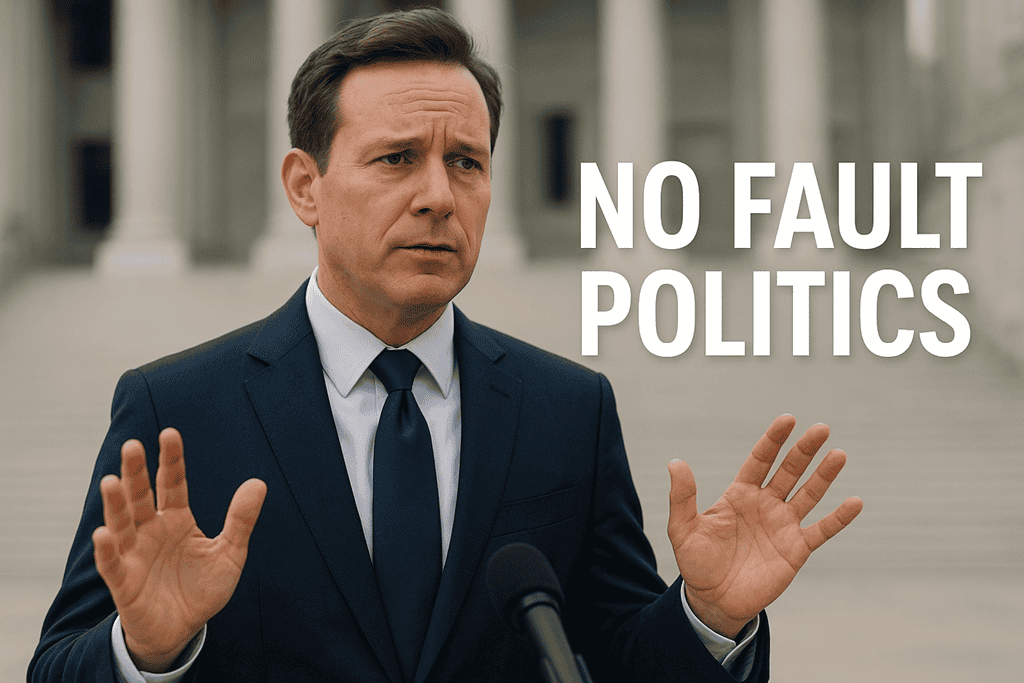
In today’s political climate, accountability often feels optional. Welcome to no-fault politics, where leaders rarely apologize for the outcomes of their decisions—whether economic, social, or environmental. From policy failures to unintended crises, politicians often operate in an insulated manner from real-world consequences.
Over the next ten years, the lack of accountability could reshape governance, public trust, and societal stability.
The Culture of Political Evasion
Apologies are rare in political halls. Mismanaged healthcare, failed infrastructure projects, and economic missteps are often met with deflection or denial. In a no-fault political system, admitting mistakes is seen as a liability, while evasion becomes strategic.
The result? Growing citizen cynicism, reduced voter turnout, and weakening of democratic institutions.
Economic Consequences of No Accountability
When leaders fail to own their decisions, economic risks multiply. Poor fiscal management—unchecked borrowing, mismanaged taxes, or ineffective stimulus programs—can spiral into crises.
Ten-Year Economic Projection:
- Short-term (1–3 years): Rising public debt, increasing inflation pressures.
- Medium-term (4–7 years): Inefficient programs consume resources without results; infrastructure continues to deteriorate.
- Long-term (8–10 years): Higher risk of financial crises, widening income inequality, higher taxes, and reduced social services.
Social Fallout of No-Fault Leadership
The effects extend beyond economics. Policies impacting healthcare, education, and public safety have direct societal consequences. Ignoring mistakes weakens social cohesion.
Ten-Year Social Projection:
- Short-term: Disadvantaged communities suffer disproportionately; public trust erodes.
- Medium-term: Inequality in healthcare, education, and law enforcement grows; social polarization intensifies.
- Long-term: Civic engagement declines, generational cynicism rises, and social unrest becomes more frequent.
Environmental Blind Spots
No-fault politics also exacerbates environmental risks. Delayed climate action, lax regulations, and ignoring scientific warnings create long-term vulnerabilities.
Ten-Year Environmental Projection:
- Short-term: Accelerated pollution, deforestation, and habitat loss.
- Medium-term: Increased natural disasters and higher costs for emergency response.
- Long-term: Irreversible ecological damage, lagging policy corrections, and heightened global vulnerabilities.
The Self-Perpetuating Political Cycle
No-fault politics creates a feedback loop. Leaders who avoid responsibility face minimal consequences, encouraging future politicians to do the same. This reinforces a culture of impunity and undermines effective governance.
Breaking the Cycle of No Accountability
Addressing this crisis requires systemic reform. Citizens must demand transparency and hold leaders accountable. Independent watchdogs, stronger media oversight, and legal mechanisms for policy review can reduce insulation that allows no-fault behavior to thrive.
Without action, economic instability, social fractures, environmental degradation, and political cynicism are likely to worsen over the next decade.
Bottom Line: Why Accountability Matters
No-fault politics isn’t just a trend—it’s a structural problem. Without acknowledging mistakes or taking corrective action, leaders risk steering society into a decade of avoidable crises. Accountability, transparency, and responsibility are not weaknesses—they are prerequisites for sustainable governance.
The real question is whether society will demand leaders who can say, “I’m sorry.”
We are so screwed.
— Steve