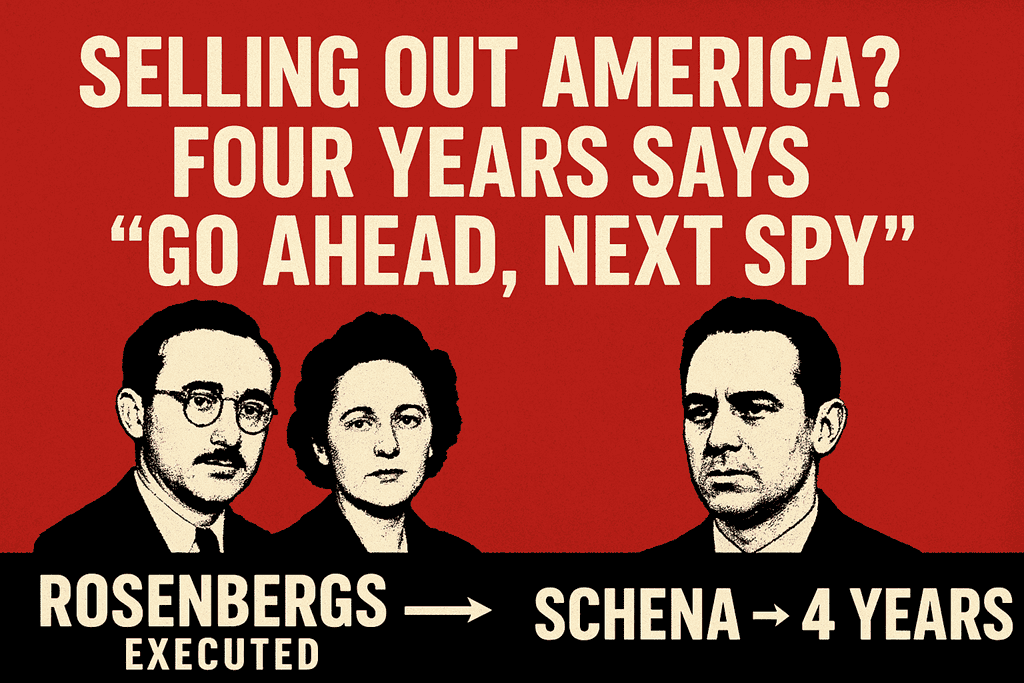
Let’s be clear: when a U.S. government official with a top secret clearance sells secrets to a hostile foreign power, that’s not “a mistake,” that’s not “a lapse in judgment.” That is espionage. That is betrayal at the highest level. And yet, time after time, the punishments handed down in these cases are insultingly light — a slap on the wrist for crimes that put every American at risk.
Case in point: Michael Charles Schena, a Department of State employee, just got sentenced to 48 months, four measly years, after being caught red-handed selling U.S. national defense information to people he believed were working for the Chinese government.
Four years? That’s what you get for robbing a convenience store with a fake gun. That’s what you get for a drug trafficking conviction in some states. But here we’re talking about a man who:
-
Accepted cash payments and burner devices from handlers in Peru.
-
Photographed and transmitted classified documents marked SECRET.
-
Knowingly provided intelligence to people he believed were agents of the People’s Republic of China.
This wasn’t some naïve intern duped on LinkedIn. Schena traveled internationally, took cash, and actively sent secret materials to a hostile foreign power. The FBI caught him mid-act. And for all that? Four years.
Espionage Isn’t a Technicality — It’s Betrayal
For those who like to hide behind legal definitions, here’s a refresher: espionage is the act of collecting or transmitting defense information to a foreign nation. It doesn’t matter if it’s wartime. It doesn’t matter if the country is an “official enemy.” Espionage is espionage.
In the U.S., treason has a very narrow definition under the Constitution; you have to be literally giving aid and comfort to a nation we’re at war with. Since Congress hasn’t declared war since 1942, modern cases like Schena’s don’t fall under treason. Fine.
But the Espionage Act? That’s built for this. Julius and Ethel Rosenberg were executed in 1953 under espionage charges for giving secrets to the Soviets, and that was during peacetime. No war declaration required.
So why, in 2025, does a State Department employee selling secrets to China get a lighter sentence than a white-collar fraudster?
A System That Rewards Betrayal
It’s hard not to notice a pattern here: if you’re a low-level worker who exposes corruption, you get the book thrown at you. But if you’re a government insider who sells out the country for cash, somehow judges and prosecutors bend over backward to act like you deserve mercy.
Meanwhile, China aggressively targets U.S. officials to steal secrets, and the only message this 48-month sentence sends is: “Don’t worry, if you get caught, you’ll be out in time to catch the next election cycle.”
Enough Excuses
Espionage is not a victimless crime. It jeopardizes military operations, compromises intelligence networks, and puts American lives in danger. Every time someone like Schena leaks classified information, the consequences ripple far beyond the courtroom.
Four years? That’s not punishment. That’s probation with a layover.
Bottom Line
Fact check: Julius and Ethel Rosenberg gave nuclear secrets to the Soviets during peacetime — executed.
Fact check: Michael Schena sold U.S. defense secrets to China — gets four years.
Yes, four years. That’s less than some burglars and less than some drug traffickers. And this traitor knowingly betrayed his country, took cash, traveled internationally, and transmitted classified info.
If the United States wants to take national security seriously, espionage convictions need to come with real consequences. That means decades behind bars, not a glorified sabbatical. Anything less is an open invitation for the next insider looking to make a quick buck at the expense of their country.
Because right now, the system doesn’t look like justice. It looks like betrayal piled on top of betrayal.
We are so screwed.
— Steve