The Forced Migration: A Personal Journey
Recently, I was forced to switch blog hosts due to unforeseen circumstances. My old hosting vendor, after years of service, discontinued their aging platform and recommended newer, more secure alternatives. That transition, which I initially expected to be a straightforward technical move, quickly turned into a journey through 18 years of my own digital history.
As I exported and migrated post after post, I started noticing the cracks. Some links no longer worked, others redirected to irrelevant pages, and images once carefully embedded were nowhere to be found. Certain posts reflected views I no longer held, while some ideas still felt surprisingly relevant. This personal experience led me to wonder: if my blog, maintained over nearly two decades, is riddled with digital cruft, what does that say about the internet as a whole?
The Growing Weight of Digital Cruft
It seems the web, like any living ecosystem, accumulates layers of history, some vital and some vestigial. Millions of blogs, forums, and personal websites have been created, updated, and abandoned over the past twenty-plus years. Each hyperlink, embedded video, and reference can become brittle over time, subject to what researchers call “link rot” or outright deletion. In my migration, I discovered firsthand how fragile even carefully curated content can be.
The scale of digital cruft is staggering. Studies suggest that a significant percentage of web links decay within just a few years. One analysis showed that nearly 25% of links in scholarly articles break within five years, and personal blogs often fare worse. Images vanish, videos are removed, and entire platforms fade into obscurity. Multiply that by the millions of pages created daily, and the internet is as much a museum of forgotten ideas as it is a source of current knowledge.
In the context of computing and the internet, “cruft” refers to anything in a system, website, or codebase that is redundant, outdated, unnecessary, or poorly maintained, yet still remains. It can slow down performance, create confusion, or clutter the user experience.
Some common examples of cruft include:
- Broken or outdated links on websites
- Old posts or content that no longer reflect current information or views
- Redundant code in software or websites that no longer serves a purpose
- Unused files or media left behind during updates or migrations
- Obsolete features in applications that no one uses
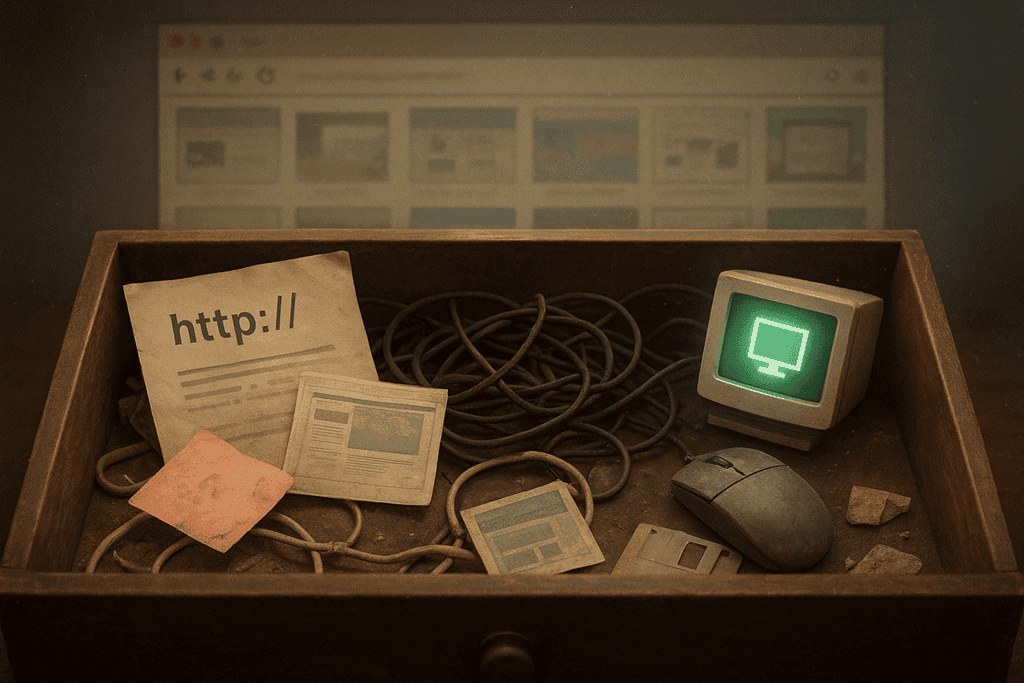
In short, cruft is the digital “junk drawer”—things that accumulate over time and can weigh down a system if not periodically cleaned up.
Relevance vs. Preservation
But this issue goes beyond broken links or lost media. It raises deeper questions about relevance, authority, and longevity. How much of the content online genuinely reflects the present state of knowledge? How much is historical residue, a snapshot of opinions, references, or news that no longer applies? For bloggers and creators, these questions are practical, not just philosophical. Maintaining a digital presence over the long term requires regular review, pruning outdated content, and updating links or references to ensure accuracy.
For me, the migration was an opportunity to confront the tension between preservation and relevance. Some older posts, while nostalgic, no longer reflected my current perspective and could even mislead readers about my current thinking. Others, however, contained insights and reflections that felt surprisingly enduring. In a sense, managing a long-term blog is much like curating a library: some volumes are historical artifacts, while others remain valuable references.
Lessons From the Broader Blogosphere
This pattern is reflected across the blogosphere. Countless websites, once thriving communities of thought and debate, have vanished or become inaccessible. The content that remains is uneven, a patchwork of evergreen wisdom, outdated opinions, and digital debris. As the web grows, so does its history—and without care, much of it risks being lost to time.
Digital Cruft: Burden and Chronicle
Ultimately, digital cruft is both a burden and a chronicle. It reminds us of how far we’ve come, but it can also obscure the path forward. For anyone managing a long-term digital presence, the lesson is clear: review and refresh content regularly, migrate or archive old posts with care, and be deliberate about which links, media, and ideas you preserve. In an age when information is constantly evolving, these steps are essential to maintaining credibility, relevance, and usefulness.
Bottom Line
The internet is not just expanding—it is aging. Without intentional maintenance, much of its history may dissolve into the void, leaving only fragments of what once was. My migration, though challenging, was a stark reminder of the delicate balance between keeping history alive and keeping content meaningful. In the end, the cruft tells a story: of growth, change, and the relentless passage of digital time.
Therefore, I have chosen to archive, but not migrate my content as a bulk endeavor. I will migrate selected posts, along with their original dates, as appropriate.
Time to clean house.
— Steve